Mission-critical systems in aerospace must be rigorously tested. Only in this way can performance and safety be ensured. Artificial intelligence can assist in testing here.
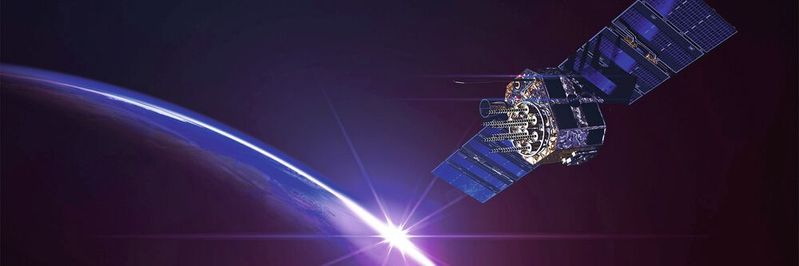
Software tests: With the help of artificial intelligence, sensitive and simultaneously highly stressed components can be tested for use in space.
(Image: Keysight)
Over the past decade, the space industry has changed. No longer are governments driving space exploration; instead, private companies and billionaire entrepreneurs are pushing the boundaries of what was considered possible just ten years ago. The result is explosive growth and a veritable gold rush in space.
Space missions are commonplace today, with SpaceX alone conducting more than one flight per week in 2022 [1]. From building the next generation of reusable rockets to expanding communications satellites in low Earth orbits to reaching planets in deeper regions of the solar system with the goal of sending humans to Mars—innovation knows no bounds! However, to achieve these goals, it is crucial that the technology delivers the expected performance.
Technology is heavily stressed
The harsh environment of space is challenging for the technology used. From the stresses during launch, the enormous temperature fluctuations, the effects of radiation in orbit, to the challenges of communication and the amount of space debris—these hurdles should not be underestimated. Therefore, hardware and software must be resilient enough to withstand these stresses and continue to function as expected.
Space equipment and technology are extremely complex and increasingly reliant on software. In the 1970s, for instance, satellites had little to no software compared to today's mega-satellite constellations that depend on software-driven services for communication.
Extensively test hardware with AI
To ensure these technologies function reliably, they must be rigorously tested in all possible scenarios. Given the sheer amount of code, manual tests are impractical due to reasons such as complexity, cost, and time.
The use of AI-driven software automation is the only way to ensure that the technology is space-ready. Intelligent automated testing can provide insights into launch and orbit readiness. Every possible scenario must be tested quickly and thoroughly. This is crucial, and artificial intelligence helps teams identify where potential problems are most likely to occur. This allows issues to be resolved before the physical launch. In this way, it is ensured that software and technology deliver the desired results.
Interactive systems must function reliably
Testing code for compliance is not sufficient in any environment, especially not in the harsh environment of space. Using automated tests to test through the eyes of the user—in addition to the entire user experience, functionality, performance, and usability—means that the tests accurately reflect what the user does.
For example, it is crucial to assess how the systems work together and understand the space. It is necessary to comprehend the interface of these systems. Developers can ensure that what is displayed to operators in mission control is also what is being sent and received. When humans are on board, interactive systems must provide reliable and accurate information that is visually easy to interpret. For instance, the data may be correct, but if a control panel obscures the information or the values are cut off, this must be recognized and corrected before the spacecraft enters orbit.
Automated tests for the Orion spacecraft
Another advantage of AI-driven testing is that it accelerates the development of technological advancements. Moreover, the tests can be easily scaled as the technology matures and more complexity is integrated. This is crucial given the rapid growth and developments in the space industry. Consequently, companies and authorities are increasingly relying on automated testing.
An example of this is NASA, which has integrated the intelligent automation platform Eggplant [2] from Keysight Technologies. NASA engineers test whether the software in the Orion spacecraft [3] delivers the expected and required performance under various demanding scenarios. To monitor the status of spaceflight and issue instructions to the crew, the cockpit is equipped with software-based digital displays that replace the old approach of using vast amounts of paper documents.
Testing is also conducted in orbit
The Orion developers utilize automation to dynamically assess the software's user-friendliness and ensure it is reliable and delivers the expected performance. For instance, it is verified whether the digital cockpit provides astronauts with the correct information. The end result is a significantly more efficient and thorough method for testing the entire lifecycle.
But testing isn't only done on Earth. Many additional tests are conducted while Orion is in orbit to monitor the spacecraft's condition and control capabilities. This is crucial, for instance, if an emergency occurs and communication with the mission control center on Earth is interrupted.
Date: 08.12.2025
Naturally, we always handle your personal data responsibly. Any personal data we receive from you is processed in accordance with applicable data protection legislation. For detailed information please see our privacy policy.
Consent to the use of data for promotional purposes
I hereby consent to Vogel Communications Group GmbH & Co. KG, Max-Planck-Str. 7-9, 97082 Würzburg including any affiliated companies according to §§ 15 et seq. AktG (hereafter: Vogel Communications Group) using my e-mail address to send editorial newsletters. A list of all affiliated companies can be found here
Newsletter content may include all products and services of any companies mentioned above, including for example specialist journals and books, events and fairs as well as event-related products and services, print and digital media offers and services such as additional (editorial) newsletters, raffles, lead campaigns, market research both online and offline, specialist webportals and e-learning offers. In case my personal telephone number has also been collected, it may be used for offers of aforementioned products, for services of the companies mentioned above, and market research purposes.
Additionally, my consent also includes the processing of my email address and telephone number for data matching for marketing purposes with select advertising partners such as LinkedIn, Google, and Meta. For this, Vogel Communications Group may transmit said data in hashed form to the advertising partners who then use said data to determine whether I am also a member of the mentioned advertising partner portals. Vogel Communications Group uses this feature for the purposes of re-targeting (up-selling, cross-selling, and customer loyalty), generating so-called look-alike audiences for acquisition of new customers, and as basis for exclusion for on-going advertising campaigns. Further information can be found in section “data matching for marketing purposes”.
In case I access protected data on Internet portals of Vogel Communications Group including any affiliated companies according to §§ 15 et seq. AktG, I need to provide further data in order to register for the access to such content. In return for this free access to editorial content, my data may be used in accordance with this consent for the purposes stated here. This does not apply to data matching for marketing purposes.
Right of revocation
I understand that I can revoke my consent at will. My revocation does not change the lawfulness of data processing that was conducted based on my consent leading up to my revocation. One option to declare my revocation is to use the contact form found at https://contact.vogel.de. In case I no longer wish to receive certain newsletters, I have subscribed to, I can also click on the unsubscribe link included at the end of a newsletter. Further information regarding my right of revocation and the implementation of it as well as the consequences of my revocation can be found in the data protection declaration, section editorial newsletter.




:quality(80)/p7i.vogel.de/wcms/93/1f/931f9289c146b87bfc571af18c6e62dc/abb-00-1772x996v1.jpeg "Based on field experiments and computer simulations, the authors demonstrate how the successful wrapping process can occur in two phases. (Source: Mattheck)")
:quality(80)/p7i.vogel.de/wcms/2a/1a/2a1a277aa63c39bbc85bb8794ef1002a/0129058056v1.jpeg "Deliveries in the defence sector increased by 30 percent year-on-year. (Image: ©Andreas Schneider - stock.adobe.com)")
:quality(80)/p7i.vogel.de/wcms/03/95/0395e59275f1a9c12973dfe84b185be2/funding-20symbolbild-1920x1080v1.png "(Picture:Mohamed_hassan)")
:quality(80)/p7i.vogel.de/wcms/e5/56/e55673c27e9a1a0bb666af21a2a45c8a/airbusv1.jpeg "Paris, France—Simulation of Pléiades Neo Next (Image:Airbus DS 2026 )")
:quality(80)/p7i.vogel.de/wcms/1c/90/1c909a6a0c80f73a5f280a407041f811/ecoclean-fb-20hpo-1-v-2100x1181v1.jpeg "(Picture: Ecoclean)")
:quality(80)/p7i.vogel.de/wcms/5b/56/5b5641950ea23698ed573826fa124059/t4748s-2400x1349v1.jpeg "(Picture: NanoXplore)")
:quality(80)/p7i.vogel.de/wcms/a8/0d/a80d68ff622fc01952ee53a75d220f53/syt-20hd-20600-20stecker-20--205zu4-202500-20x-201977-2700x1519v1.png "Rosenberger OSI’s Heavy Duty 600 fiber-optic connectivity ensures reliable, high-performance data transmission for SYT Technologies’ optronic systems, even under extreme environmental conditions. (Image:Rosenberger OSI)")
:quality(80)/p7i.vogel.de/wcms/c1/80/c180ace150e784fb8ff6af01cd569c18/202201-006-600-cern-1920x1080v1.png "(Picture: CERN)")
:quality(80)/p7i.vogel.de/wcms/5a/5e/5a5ee37b363a7ca06e69d8e8a5820d31/aribus-20skynopy-454x255v1.jpeg "Pierre Bertrand (left), CEO and Co-Founder of Skynopy, and Éric Even (right), Senior Vice President, Head of Space Digital, Airbus. (Photo Credit: Skynopy)")
:quality(80)/p7i.vogel.de/wcms/9e/8b/9e8b37c0ccf87d1d69805d0639dcad9d/launch-vehicle-spectrum-at-andoya-space-c-isar-aerospace-2026-01-30-083741-ruml-4007x2254v1.jpeg "(Picture: Isar Aerospace)")
:quality(80)/p7i.vogel.de/wcms/b3/da/b3dab43a52a2d38e349cc6d7b46c4985/close-up-irus-comp-00000-1366x768v1.webp "A closeup to IRUS (Picture: Astroscale)")
:quality(80)/p7i.vogel.de/wcms/f3/62/f3624698d73ab28f9401d27707390499/sms-isr-photo-peregrine-1220-1217x684v1.png "The MC-55A Peregrine aircraft will give the Royal Australian Air Force information superiority and serve as strategic assets for future Australian Defence Force operations. (Picture: L3Harris)")
:quality(80)/p7i.vogel.de/wcms/a2/83/a2834934b7b64c86a2071c7d40deab79/evolution-wifi-3840x2158v1.png "The evolution of WiFi according to Qualcomm. (Copyright: Qualcomm)")
:quality(80)/p7i.vogel.de/wcms/3b/30/3b306e8e4a378f13cdb12b3107c5c642/curtiss-wright-2026-425x239v1.jpeg "(Image:Curtiss-Wright, Green Hills Software)")
:quality(80)/p7i.vogel.de/wcms/07/0f/070f2f6a28e954422c60a0e15cb73471/0128576617v1.jpeg "The aerospace industry is under great pressure to develop faster, plan more efficiently, and utilize resources better. Quantum computing can help with this. (Image:freely licensed on Pixabay)")
:quality(80)/p7i.vogel.de/wcms/2b/f9/2bf900b5ce266b0407709cc936482482/0128247466v1.jpeg "Space satellites: \"The construction and deployment of NTN have never been easier.\" (Image:AI-generated)")
:quality(80)/p7i.vogel.de/wcms/0d/a0/0da03913dcae9f6d52d63bb046163a4d/1-2026-01-23-14-41-53-478-1275x717v1.jpeg "German Defence Minister Boris Pistorius met with his Italian counterpart Guido Crosetto to discuss the future of bilateral defence cooperation. (Source: MINISTERO DELLA DIFESA, Italy)")
:quality(80)/p7i.vogel.de/wcms/f4/2d/f42d58935394a644250ee0ae826c3c4e/asul-effektorcontainer-732x412v1.webp "The ASUL C-UAS system, enhanced with a weapon station. (Picture: Hensoldt AG)")
:quality(80)/p7i.vogel.de/wcms/7d/91/7d9177cdeae2a4d0e2a429a9d3e1bf9b/airbus-992x558v1.png "(Image:Airbus Helicopters )")
:quality(80)/p7i.vogel.de/wcms/9e/d2/9ed26d1fea971818e76545fe78858bfc/opex-2026-portugal-4087x2301v1.jpeg "(Image: Portuguese Armed Forces)")
:quality(80)/p7i.vogel.de/wcms/67/4c/674c54baa745be497cecb716826af339/stahlwille-hero-1807x1016v1.jpeg "A new modular tool solution designed for safety, precision, and mobility in aviation maintenance. (Source: STAHLWILLE)")
:quality(80)/p7i.vogel.de/wcms/0d/01/0d01a051ba894332a8091e3a3f9394e1/hytorc-defense-solutions-boxersatz-1899x1068v1.jpeg "HYTORC’s Defence Solutions toolkit, proven on the GTK Boxer, enables safe, traceable fastening of critical components across multiple Bundeswehr platforms. (Source: Image: HYTORC)")
:quality(80)/p7i.vogel.de/wcms/f1/ab/f1ab7543976a5ac7364579f3106a3774/-e2-80-8b-e2-80-8bground-20container-20system-20for-20the-20eurofighter-20weapon-20system-20phot-20hensoldt-20agclipboard-07-25-2025-01-1022x575v1.jpeg "The GSCS: A fully shielded, self-sufficient ground system for mission and maintenance data processing, developed by HENSOLDT and steep for the Eurofighter weapon system. (Bild: HENSOLDT AG)")
:quality(80)/p7i.vogel.de/wcms/df/51/df515af8bbf143620acdd03a32870e10/yukondtk-3142-img-6096-gh-bauteil--20retuschiert-komprimiert-5001x2814v1.jpeg "High-precision cleaning of gearbox housings using fully integrated systems: seamless interaction between external gantry crane loading and robotic unloading ensures optimal process efficiency. (Bild: BvL Oberflächentechnik GmbH)")
:fill(fff,0)/p7i.vogel.de/companies/64/fe/64fec73b1a2fb/logo-master-ggbbytimken-286blue.jpeg "logo-master-ggbbytimken-286blue (GGB)")
:quality(80)/p7i.vogel.de/wcms/03/ee/03ee4a0432c83875e75602b49c2509a6/0118830961v1.jpeg "The integration of artificial intelligence in satellites enables faster, autonomous decision-making processes and optimizes the use of data downlink bandwidths in space. (Image:AMD)")
:quality(80)/p7i.vogel.de/wcms/e4/9b/e49b68797f0853b3da11f020bc451baf/0124240663v1.jpeg "The Mars Perseverance Rover (Source: Image Courtesy of NASA/JPL – Cal Tech)")