In the "STair" project, Diehl Aviation, Ensinger, ThermHex, and the Fraunhofer Institute for Microstructure of Materials and Systems IMWS are developing new thermoplastic lightweight components for aircraft cabins that can be processed faster and are more environmentally friendly.
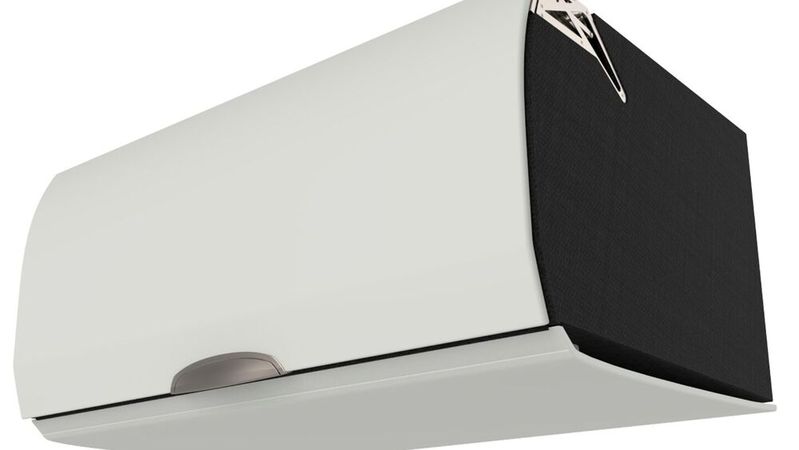
Thermoplastic sandwich structures are intended to enable the efficient production of luggage compartments in aircraft cabins, such as this overhead bin.
(Image: Diehl Aviation Laupheim GmbH)
Lightweight solutions are essential for aviation. Every kilogram of weight saved reduces fuel consumption and, consequently, emissions. This helps achieve sustainability goals while also minimizing the impact of rising CO2 pricing. In the cabin, sandwich-structured components are often used for elements such as luggage compartments or galley walls: thin, solid face sheets enclose a lightweight core. This enables robust yet very light constructions. Currently, thermoset components with phenolic resin-based face sheets and a honeycomb core made of aramid paper dominate in this area.
Researchers at Fraunhofer IMWS have now developed the Thermoplastic Sandwich Moulding technology. This technology enables the use of thermoplastic plastics for such applications. Diehl Aviation Laupheim GmbH, Ensinger GmbH, ThermHex Waben GmbH, and Fraunhofer IMWS aim to demonstrate its feasibility by April 2027 in the "STair" project. "The advantages would be significant: thermoplastic systems can be processed much faster, with better energy and material efficiency. This is particularly relevant for the cabin, which is renewed multiple times over the lifecycle of an aircraft. They are also recyclable and do not require environmentally harmful solvents," says Dr.-Ing. Ralf Schlimper, who leads the subproject at Fraunhofer IMWS.
Save 30 percent energy compared to thermoset plastics
The targeted energy savings during processing amount to around 30 percent compared to the state-of-the-art and the use of thermoset plastics. Production waste is to be directly recycled in semi-finished product manufacturing by up to 80 percent. Solvent emissions during production are to be reduced by up to 80 percent.
To make these results possible, the first step is to adapt the Thermoplastic Sandwich Moulding technology to process high-temperature-resistant thermoplastic sandwich structures (HT-TP sandwiches), which are specifically designed to meet the requirements of the aviation industry. The method represents a very efficient and highly automated one-shot process combining thermoforming and functionalization via injection molding. However, the corresponding process steps (shaping, joining, and functionalization) must be further developed for the use of HT thermoplastic plastics.
Europe’s security landscape is changing rapidly
(Source: VCG)
As defence budgets rise and EU programmes expand, civil technology providers are becoming vital contributors to Europe’s strategic autonomy. The event will act as a neutral platform for dialogue between technology suppliers, integrators, and decision-makers shaping the next generation of European defence capabilities and aims to open doors between civil industry and defence procurement, providing practical insights.
"We will examine various components from the cabin, initially defining requirements and then developing and testing the corresponding solutions for semi-finished products, sample materials, attractive aesthetics of the components, as well as forming and processing procedures along different process routes. The goal is to establish a technology platform, also utilizing simulation tools. The components should be no heavier than current thermoset solutions and meet all existing aviation requirements so that the results can be quickly brought to market. Lastly, we are also considering accompanying life cycle analyses and recycling concepts," says Schlimper.
At Fraunhofer IMWS, the focus is primarily on researching efficient thermoforming processes. HT semi-finished products (flat sandwich panels with thermoplastic honeycomb or foam cores and face sheets made of fiber-reinforced thermoplastic plastics) are to be processed into 3D-shaped components and component parts. For this purpose, they are first heated and then quickly transferred into the forming tool, which is to be developed as part of the project. There, 3D thermoforming takes place at temperatures above 200°C (approx. 392°F). In addition to the high temperature, a challenge lies in the complex processing behavior. The lightweight core is to be largely preserved across the surface, while monolithic end areas on component edges are to be achieved, requiring the complete melting and compression of the core. The project is also investigating hybrid sandwich structures with a combined core (e.g., a honeycomb core in the surface area and a foam core in geometrically more complex component regions). This increases the complexity of both processing procedures and the analysis of material behavior.
"We have extensive prior knowledge for this process, including supporting modeling approaches and the appropriate technical equipment. This allows us to systematically study aspects such as component geometry, edge and rim finishes, as well as interfaces with functional elements," says Schlimper. The institute also has suitable methods for analyzing operational and long-term behavior, such as strain measurements, morphological investigations with X-ray CT, and accelerated aging tests. Additionally, the project team will explore the possibilities of material recycling, such as the properties of components containing recyclates from production scraps.
Date: 08.12.2025
Naturally, we always handle your personal data responsibly. Any personal data we receive from you is processed in accordance with applicable data protection legislation. For detailed information please see our privacy policy.
Consent to the use of data for promotional purposes
I hereby consent to Vogel Communications Group GmbH & Co. KG, Max-Planck-Str. 7-9, 97082 Würzburg including any affiliated companies according to §§ 15 et seq. AktG (hereafter: Vogel Communications Group) using my e-mail address to send editorial newsletters. A list of all affiliated companies can be found here
Newsletter content may include all products and services of any companies mentioned above, including for example specialist journals and books, events and fairs as well as event-related products and services, print and digital media offers and services such as additional (editorial) newsletters, raffles, lead campaigns, market research both online and offline, specialist webportals and e-learning offers. In case my personal telephone number has also been collected, it may be used for offers of aforementioned products, for services of the companies mentioned above, and market research purposes.
Additionally, my consent also includes the processing of my email address and telephone number for data matching for marketing purposes with select advertising partners such as LinkedIn, Google, and Meta. For this, Vogel Communications Group may transmit said data in hashed form to the advertising partners who then use said data to determine whether I am also a member of the mentioned advertising partner portals. Vogel Communications Group uses this feature for the purposes of re-targeting (up-selling, cross-selling, and customer loyalty), generating so-called look-alike audiences for acquisition of new customers, and as basis for exclusion for on-going advertising campaigns. Further information can be found in section “data matching for marketing purposes”.
In case I access protected data on Internet portals of Vogel Communications Group including any affiliated companies according to §§ 15 et seq. AktG, I need to provide further data in order to register for the access to such content. In return for this free access to editorial content, my data may be used in accordance with this consent for the purposes stated here. This does not apply to data matching for marketing purposes.
Right of revocation
I understand that I can revoke my consent at will. My revocation does not change the lawfulness of data processing that was conducted based on my consent leading up to my revocation. One option to declare my revocation is to use the contact form found at https://contact.vogel.de. In case I no longer wish to receive certain newsletters, I have subscribed to, I can also click on the unsubscribe link included at the end of a newsletter. Further information regarding my right of revocation and the implementation of it as well as the consequences of my revocation can be found in the data protection declaration, section editorial newsletter.
More sustainable solutions for cabin components in aircraft
If the project partners are successful, significantly more sustainable solutions for cabin components in aircraft will become possible. "With our approach, emissions can be significantly reduced both during production and at the end of the lifecycle, while still meeting aesthetic and functional requirements," says Schlimper. "A major advantage is that our collaboration covers all aspects of the value chain, from material production to component manufacturing. This promises good chances of success."
Dr.-Ing. Jochen Pflug, Managing Director of ThermHex Waben GmbH: "Step by step, we are transferring our recyclable lightweight thermoplastic honeycomb sandwich materials with 'STair' from the automotive to the aerospace industry. In doing so, we are successfully combining opportunities for cost reductions and production automation with the industry's required performance targets. I am enthusiastic and grateful for the opportunity to further develop our products together with strong partners."
The project is funded by the Federal Ministry for Economic Affairs and Energy (BMWi) as part of the Aviation Research Program (LuFo Klima VII-1).




:quality(80)/p7i.vogel.de/wcms/80/8f/808f1574133b76d80917117476c6fa86/0128717658v1.jpeg "In the Lime project, companies from the aviation and battery industries are working on a battery system for hybrid-electric aircraft. (Image:freely licensed on Pixabay)")
:quality(80)/p7i.vogel.de/wcms/08/41/084162ba2f22a5121b5fb9ae80376681/0128878642v1.jpeg "Boeing aircraft from the 737 Max series seem to be in high demand. The US aircraft manufacturer has received two major orders for numerous aircraft of this type within a short period ... (Image:Boeing)")
:quality(80)/p7i.vogel.de/wcms/05/8c/058caa5dbf4b73a9f6ccb285c3516f6f/5g-20symbolbild-201-1911x1076v1.png "(Source: Cliff Hang)")
:quality(80)/p7i.vogel.de/wcms/b0/76/b07669c5087dc403d42bb2869fb4c7da/wachstum-20firma-201-1920x1080v1.jpeg "(Source: Gerd Altmann)")
:quality(80)/p7i.vogel.de/wcms/e1/a1/e1a17b04805259757937dd80d6d21afd/turbopump-1280x720v1.png "HiPace 300 M vacuum pump (Copyright: Pfeiffer Vacuum+Fab Solutions)")
:quality(80)/p7i.vogel.de/wcms/31/6b/316b07ef3beb3ab6c024deff9f24089a/0128870683v1.jpeg "Space Forge plans to grow crystal nuclei on board the ForgeStar-1 satellite, which will be used on Earth for further processing into larger single crystals. (Image:Space Forge)")
:quality(80)/p7i.vogel.de/wcms/fd/41/fd416dec805c5f1914fa551e2c7e399b/0128555915v1.jpeg "Thermoplastic sandwich structures are intended to enable the efficient production of luggage compartments in aircraft cabins, such as this overhead bin. (Image:Diehl Aviation Laupheim GmbH)")
:quality(80)/p7i.vogel.de/wcms/aa/a2/aaa2a9189e0151f5fbbd10b1d032be44/phlux-20sensors-1920x1079v1.jpeg "These tiny sensors can transform the performance of premium hunting and professional shooting optics. (Copyright: Phlux Technologies)")
:quality(80)/p7i.vogel.de/wcms/88/3c/883c5fb73148076699a26a79584a5be5/vicor-20bild-202-1920x1079v1.jpeg "Vicor Factorized Power Architecture separates the functions of DC-DC conversion into independent modules. Using radiation-tolerant modules, the BCM bus converter provides the isolation, the PRM regulator provides the regulation and the VTM current multiplier performs the DC transformation. (Copyright: Vicor)")
:quality(80)/p7i.vogel.de/wcms/5f/5f/5f5f8e2b6021f735668580701c6d8fd2/0128902152v1.jpeg "The research aircraft Halo, used as part of the NAWDIC measurement campaign, is stationed at Shannon Airport in Ireland during this time. (Image:ETH Zurich | Tuule Müürsepp)")
:quality(80)/p7i.vogel.de/wcms/31/95/3195a835aa2b40bb7316952f210cdec2/flamingo-1-20vyoma-2048x1151v1.jpeg "Vyoma's Flamingo-1 satellite, during the end-to-end testing campaign on ground. (Bild:Vyoma)")
:quality(80)/p7i.vogel.de/wcms/6c/39/6c39a6bba2d3e933adba7d5ce8c73fc1/mikrochiip-20pr-20image-1012x569v1.jpeg "(Bild:Mikrochip Technology)")
:quality(80)/p7i.vogel.de/wcms/3b/30/3b306e8e4a378f13cdb12b3107c5c642/curtiss-wright-2026-425x239v1.jpeg "(Image:Curtiss-Wright, Green Hills Software)")
:quality(80)/p7i.vogel.de/wcms/07/0f/070f2f6a28e954422c60a0e15cb73471/0128576617v1.jpeg "The aerospace industry is under great pressure to develop faster, plan more efficiently, and utilize resources better. Quantum computing can help with this. (Image:freely licensed on Pixabay)")
:quality(80)/p7i.vogel.de/wcms/2b/f9/2bf900b5ce266b0407709cc936482482/0128247466v1.jpeg "Space satellites: \"The construction and deployment of NTN have never been easier.\" (Image:AI-generated)")
:quality(80)/p7i.vogel.de/wcms/55/5a/555a11977b7e54106a34da9916386570/0127837769v1.jpeg "Quantum entanglement is expected to enable faster and more secure internet in the future. (Image:AI-generated)")
:quality(80)/p7i.vogel.de/wcms/9e/d2/9ed26d1fea971818e76545fe78858bfc/opex-2026-portugal-4087x2301v1.jpeg "(Image: Portuguese Armed Forces)")
:quality(80)/p7i.vogel.de/wcms/94/a6/94a6db759ec56124512385c5df7916de/0128547165v1.jpeg "Green light for the new battle tank of the Bundeswehr. KNDS Germany and Rheinmetall have received the official approval from the authorities. The new combat system is unofficially referred to as Leopard 3 but is only an interim solution. Read more about it here ... (Image:Blazer)")
:quality(80)/p7i.vogel.de/wcms/48/3d/483da5685e526d67477ef63efe8e2ad8/0128454692v1.jpeg "The Norwegian company Kongsberg Defence & Aerospace builds, among other things, surveillance and reconnaissance satellites. Now they are partnering with drone specialist Helsing to provide Europe’s skies with a kind of “Big Brother” against attacks ... (Image:Kongsberg)")
:quality(80)/p7i.vogel.de/wcms/12/a7/12a7fef4425909f1be34dab62f1b373e/scenario-hot-spot-detection-ai-generated-spinverse-20oy-1291x727v1.png "The autonomous drone is intended to provide information about smouldering hotspots even before the fire brigade arrives, thereby significantly easing the work of the emergency services. (Image: © Spinver)")
:quality(80)/p7i.vogel.de/wcms/67/4c/674c54baa745be497cecb716826af339/stahlwille-hero-1807x1016v1.jpeg "A new modular tool solution designed for safety, precision, and mobility in aviation maintenance. (Source: STAHLWILLE)")
:quality(80)/p7i.vogel.de/wcms/0d/01/0d01a051ba894332a8091e3a3f9394e1/hytorc-defense-solutions-boxersatz-1899x1068v1.jpeg "HYTORC’s Defence Solutions toolkit, proven on the GTK Boxer, enables safe, traceable fastening of critical components across multiple Bundeswehr platforms. (Source: Image: HYTORC)")
:quality(80)/p7i.vogel.de/wcms/f1/ab/f1ab7543976a5ac7364579f3106a3774/-e2-80-8b-e2-80-8bground-20container-20system-20for-20the-20eurofighter-20weapon-20system-20phot-20hensoldt-20agclipboard-07-25-2025-01-1022x575v1.jpeg "The GSCS: A fully shielded, self-sufficient ground system for mission and maintenance data processing, developed by HENSOLDT and steep for the Eurofighter weapon system. (Bild: HENSOLDT AG)")
:quality(80)/p7i.vogel.de/wcms/df/51/df515af8bbf143620acdd03a32870e10/yukondtk-3142-img-6096-gh-bauteil--20retuschiert-komprimiert-5001x2814v1.jpeg "High-precision cleaning of gearbox housings using fully integrated systems: seamless interaction between external gantry crane loading and robotic unloading ensures optimal process efficiency. (Bild: BvL Oberflächentechnik GmbH)")

:quality(80)/p7i.vogel.de/wcms/0a/d3/0ad3f61da1f9761268a38c0832d2248f/0119573504v1.jpeg "A fuselage segment made of thermoplastic CFRP materials was produced in original size for the first time in a research project. This was intended to enable a thorough assessment of feasibility as well as ecological and economic advantages and disadvantages. The thermoplastic composite fuselage section weighs significantly less than commonly used sections today. (Image:Clean Aviation)")
:quality(80)/p7i.vogel.de/wcms/cc/85/cc85b2644d866337caea1cbf85c5ed42/0118327329v1.jpeg "The MFFD aircraft fuselage segment, completed through thermoplastic welding, at the Fraunhofer Society in Stade. (Image:Fraunhofer IFAM)")