Electrification of aviation is a key pillar of the European climate strategy. With HECATE, a scalable high-voltage architecture for hybrid regional aircraft is taking shape. An international consortium is developing new power distribution technologies, digital twins, and EMC concepts.
Projects like HECATE aim to lay the technological foundation for future hybrid-electric successors by developing scalable high-voltage distribution architectures.
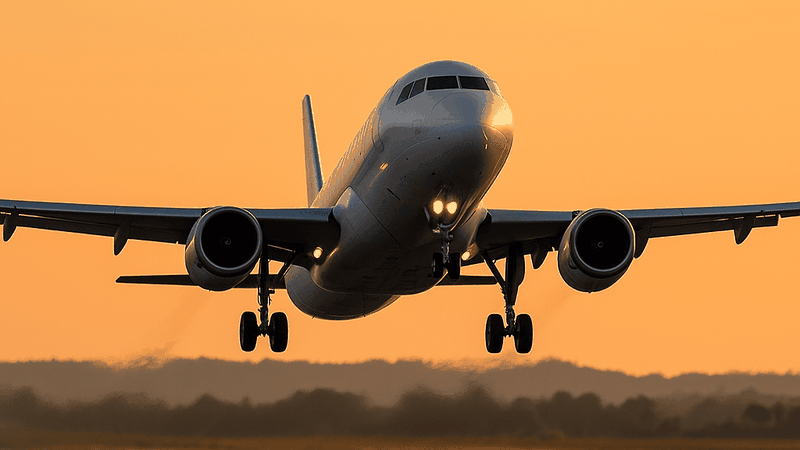
(Bild: KI-generiert)
The electrification of air transport is widely regarded as a central challenge on the path to a climate-neutral Europe. Especially in regional aviation, hybrid propulsion systems offer a realistic opportunity to significantly reduce emissions. With the European research project HECATE, an international consortium aims to fundamentally rethink electric power distribution in aircraft and establish the technological foundations for hybrid regional aircraft.
HECATE stands for Hybrid ElectriC regional Aircraft distribution TEchnologies. The project is part of the Clean Aviation Joint Undertaking, a European Union funding initiative under Horizon Europe. It was launched in January 2023 and is scheduled to run for three years. The total project budget is approximately €45.16 million, with around €34.21 million provided through EU funds. Additional financial support is coming from the United Kingdom via its Research & Innovation funding programs.
At the heart of the project is the development of a high-voltage electric power distribution architecture designed for outputs exceeding 500 kilowatts and extending into the megawatt range. The objective is to create a scalable, efficient, and certifiable system architecture suitable for next-generation hybrid regional aircraft. The consortium is pursuing a holistic system design approach that includes both primary and secondary distribution systems, power electronics, cable and connector solutions, electromagnetic compatibility (EMC) management, digital twins, and thermal management.
By the end of 2025, the project aims to demonstrate a complete ground-based system at Technology Readiness Level (TRL) 5. This means that the developed architecture will be tested and validated under realistic operational conditions. The demonstration is planned to take place in an integrated test environment known as the “Copper Bird,” which enables the evaluation of electrical systems in an aircraft-representative setting.
One of the core challenges addressed by the project is the integration of high-voltage systems into the aircraft environment. This includes considerations related to electrical safety, weight management, EMC performance, and cooling of high-power components. Special emphasis is placed on modularity and system integration to ensure adaptability to a range of aircraft concepts. Advanced modeling techniques—including digital twins—are being used to support design, simulation, and system optimization.
Regulatory and certification-related issues are also a central concern. Close collaboration with the European Union Aviation Safety Agency (EASA) and with standardization bodies such as EUROCAE is intended to ensure that the developed systems meet future airworthiness certification requirements. In parallel, lifecycle assessments and sustainability evaluations are being conducted to quantify and optimize the environmental and climate impact of the new system architecture.
The HECATE consortium brings together 37 partners from ten countries, including major industry players such as Collins Aerospace (project coordinator), Safran, Airbus Defence & Space, Leonardo, Thales, and Diehl Aerospace. It also includes specialized SMEs, universities, and research institutions such as Aalborg University, the University of Bayreuth, UNISA, and the Fraunhofer Institute. This interdisciplinary setup is intended to accelerate the transfer of research findings into market-ready technologies.
By the summer of 2024, key milestones had already been reached. The so-called Preliminary Design Review (PDR) for the core components of the system architecture was successfully completed. This included elements such as power converters, control systems, and parts of the primary and secondary distribution networks. The consortium is now preparing for the Critical Design Review (CDR), a prerequisite for building the planned ground demonstrator.
HECATE is a strategically significant project: It lays the foundation for the electrification of regional aviation in Europe and supports the EU’s climate goals in the aviation sector. At the same time, it strengthens the technological competitiveness of European aerospace companies in what is expected to become a highly contested market segment. The technologies developed under HECATE could be integrated into future demonstrator programs under Clean Aviation Phase II and, over the longer term, enter service in next-generation regional aircraft.
Date: 08.12.2025
Naturally, we always handle your personal data responsibly. Any personal data we receive from you is processed in accordance with applicable data protection legislation. For detailed information please see our privacy policy.
Consent to the use of data for promotional purposes
I hereby consent to Vogel Communications Group GmbH & Co. KG, Max-Planck-Str. 7-9, 97082 Würzburg including any affiliated companies according to §§ 15 et seq. AktG (hereafter: Vogel Communications Group) using my e-mail address to send editorial newsletters. A list of all affiliated companies can be found here
Newsletter content may include all products and services of any companies mentioned above, including for example specialist journals and books, events and fairs as well as event-related products and services, print and digital media offers and services such as additional (editorial) newsletters, raffles, lead campaigns, market research both online and offline, specialist webportals and e-learning offers. In case my personal telephone number has also been collected, it may be used for offers of aforementioned products, for services of the companies mentioned above, and market research purposes.
Additionally, my consent also includes the processing of my email address and telephone number for data matching for marketing purposes with select advertising partners such as LinkedIn, Google, and Meta. For this, Vogel Communications Group may transmit said data in hashed form to the advertising partners who then use said data to determine whether I am also a member of the mentioned advertising partner portals. Vogel Communications Group uses this feature for the purposes of re-targeting (up-selling, cross-selling, and customer loyalty), generating so-called look-alike audiences for acquisition of new customers, and as basis for exclusion for on-going advertising campaigns. Further information can be found in section “data matching for marketing purposes”.
In case I access protected data on Internet portals of Vogel Communications Group including any affiliated companies according to §§ 15 et seq. AktG, I need to provide further data in order to register for the access to such content. In return for this free access to editorial content, my data may be used in accordance with this consent for the purposes stated here. This does not apply to data matching for marketing purposes.
Right of revocation
I understand that I can revoke my consent at will. My revocation does not change the lawfulness of data processing that was conducted based on my consent leading up to my revocation. One option to declare my revocation is to use the contact form found at https://contact.vogel.de. In case I no longer wish to receive certain newsletters, I have subscribed to, I can also click on the unsubscribe link included at the end of a newsletter. Further information regarding my right of revocation and the implementation of it as well as the consequences of my revocation can be found in the data protection declaration, section editorial newsletter.
Whether and when a fully electric regional aircraft will take to the skies remains to be seen. What is certain, however, is that without initiatives like HECATE, there will be no sound technological basis for making that leap.




:quality(80)/p7i.vogel.de/wcms/0c/2c/0c2c1e0fe6dd4396ea5a5e6867f73692/bravetech-web-final-4204x2363v1.jpeg "(Source: EDA)")
:quality(80)/p7i.vogel.de/wcms/8a/d3/8ad3ae1e0dbacbb4e2b86dbf1c8ad35e/pentagon-ai-3838x2157v1.jpeg "The Pentagon pushes to embed several AI Platforms in classified operations. (Picture: AI-generated illustration.)")
:quality(80)/p7i.vogel.de/wcms/b4/93/b4938c8015a199ad0c93c0e6121a222a/tbvlqxeig7b28bdakm5fgl7nqzr0x6kmcvbrjsz045fckebse3lpuocy4thjnbox1qfojc8noi2liaflibnfbqg8znq57p3qnddowexg6eyqooccfzs-jncsktdbfxbxxuictuw4ert6tbflviq8wrnfgvwnjblrbl0nciijmefegsjyrtavx8hkr8kr6xvu-2400x1350v1.jpeg "An Iron Dome air defence launcher fires an interceptor missile during operations in 2021. (Photo: IDF Spokesperson’s Unit, Wiki Commons (CC BY-SA 3.0))")
:quality(80)/p7i.vogel.de/wcms/b2/8f/b28faa98f05fb550a0d3392f43134d64/0131010326v1.jpeg "Due to the threat posed by China, Taiwan is turning to drones for armaments. The picture shows an example of this. German drone manufacturers are now increasingly seeking contact with partners on the \"potato island\". (Source: Taiwan Drones)")
:quality(80)/p7i.vogel.de/wcms/d7/af/d7af4bc810cccf8776c81e5576e0b05d/liebherr-alm-machine-campsas-copyright-liebherr-800x533-w800-800x450v1.jpeg "(Source: Liebherr)")
:quality(80)/p7i.vogel.de/wcms/4e/30/4e30dfffc4a19c22f1131538778658f8/04-aus-einer-hand--f-c3-bchrende-20stahl--und-schmiedel-c3-b6sungen-f-c3-bcr-die-r-c3-bcstungsindustriev1.jpeg "Dillinger is the only supplier in Germany to be comprehensively approved in accordance with TL 2350-0000, and its Difender armor steels cover almost all of the Bundeswehr's requirements. The picture shows the Fuchs armored transport vehicle. (Source: Rheinmetall)")
:quality(80)/p7i.vogel.de/wcms/04/c5/04c559cc29adcd71a473b628d6aa7087/chatgpt-20image-2027--20apr--202026-2c-2001-27-59-1536x864v1.png "For the first time, China has imposed sanctions on European defence manufacturers over their dealings with Taiwan. (Picture: AI generated, ChatGPT)")
:quality(80)/p7i.vogel.de/wcms/a2/ff/a2ff11a8617ed088375fcc81ec7eb8e5/aluminum-ingots-6-20151016-1339386186-3648x2052v1.jpeg "Aluminium from smelters in the Gulf region count for 13 per cent of German imports. (Photo: Wikimedia Commons, CC BY-SA 4.0)")
:quality(80)/p7i.vogel.de/wcms/5c/11/5c11007aaa749981fa63c79b735c1366/20260420-ariane-64-launch-1018x573v1.png "Ariane 6 is set to launch for the second time in a four-booster configuration from Kourou. (Source: Arianespace)")
:quality(80)/p7i.vogel.de/wcms/5d/39/5d39a8ad1e0ad6b47e0a84c60edb5f40/ksc-20260411-ph-fmx01-0002orig-1200x800-1200x675v1.jpeg "(Source: SpaceX)")
:quality(80)/p7i.vogel.de/wcms/48/0c/480ca4a429f9c387b495879c09c4de9d/natilus-horizon-render-1920x1079v1.png "The Natilus Horizon passenger plane during liftoff. (Source: Natilus)")
:quality(80)/p7i.vogel.de/wcms/ad/f4/adf46e90c630d90dfad7aece46113c29/nasa-image-from-orion-space-capsule-to-earth-898x505v1.jpeg "Infineon IR HiRel's radiation-hardened semiconductors support the electronic system inside the Orion capsule. (Source: NASA)")
:quality(80)/p7i.vogel.de/wcms/eb/98/eb98363f4ac45e45731b0ca9d778d3af/vlad-aivazovsky-circuit-board-8221377-3823x2152v1.png "(Source: Vlad Aivazovsky on Pixabay)")
:quality(80)/p7i.vogel.de/wcms/2e/97/2e9773af320eac77ae3a29811ca4dabd/touchwaves-flight-jacket-1504x846v1.jpeg "Touchwaves’ haptic technology is designed for seamless, low-profile integration into standard-issue flight gear, providing critical sensory data without adding bulk or restricting movement (Source: Touchwaves)")
:quality(80)/p7i.vogel.de/wcms/27/32/27322d250fb21c5dc25c4e203d12f280/unif-sweden-916799-3264x1836v1.jpeg "Helsing’s expansion into Stockholm underscores the growing role of AI-driven technologies in strengthening Nordic and European defence capabilities. (Source: Unif on Pixabay)")
:quality(80)/p7i.vogel.de/wcms/51/05/510508999711379694f345af8cbf6441/0130929992v1.jpeg "At Rheinmetall, billion-dollar contracts are pouring in. Now the Bundeswehr has ordered systems worth over a billion euros, including those for the digitalization of individual infantry soldiers, so they can meet modern requirements on the battlefield ... (Image:Rheinmetall)")
:quality(80)/p7i.vogel.de/wcms/92/7d/927d241d8718196f4e70064ab0f9d31a/dsc04220-1440x809v1.jpeg "As part of a ceremonial conference on “whole-of-government defence and resilience”, Fraunhofer FKIE provided its first insights into research and innovation topics at its new institute site in Leipzig. Prof. Dr Christoph Igel, Deputy Director of Fraunhofer FKIE and network spokesperson for the Saxon research network “Innovation in Integrated Security and Sustainability” (I2SN), opened the conference. (Source: Fraunhofer FKIE/Jörg Riethausen)")
:quality(80)/p7i.vogel.de/wcms/7c/03/7c039e78ecf1bf358e631728c1811565/edited-1672x940v1.png "EDA Deputy Chief Executive Anders Sjöborg (left) together with ESA Director General Josef Aschbacher and respective teams at the signing ceremony in Brussels
(Source: EDA )")
:quality(80)/p7i.vogel.de/wcms/f9/2f/f92f1ef8c739c34c70d99f7b0997621b/stra007-20--20cover-20image-5472x3076v1.jpeg "(Source: Stratasys)")
:quality(80)/p7i.vogel.de/wcms/5e/18/5e184e4961f190c86a1ea3227104cab5/26pm03-20kompakte-20l-c3-b6sungen-20f-c3-bcr-20luft--20und-20raumfahrt-202-2362x1329v1.jpeg "(Picture: Keysight)")
:quality(80)/p7i.vogel.de/wcms/67/4c/674c54baa745be497cecb716826af339/stahlwille-hero-1807x1016v1.jpeg "A new modular tool solution designed for safety, precision, and mobility in aviation maintenance. (Source: STAHLWILLE)")
:quality(80)/p7i.vogel.de/wcms/0d/01/0d01a051ba894332a8091e3a3f9394e1/hytorc-defense-solutions-boxersatz-1899x1068v1.jpeg "HYTORC’s Defence Solutions toolkit, proven on the GTK Boxer, enables safe, traceable fastening of critical components across multiple Bundeswehr platforms. (Source: Image: HYTORC)")
:quality(80)/p7i.vogel.de/wcms/f3/4e/f34ed744bb30817d3432c7ad522e6f30/engine-1v1.jpeg "Engineering with aluminium profiles really can be this easy – the item Engineeringtool and its smart functions help you save valuable time. (Source: item)")
:quality(80)/p7i.vogel.de/wcms/fb/8e/fb8e5ae2aa27bcf3e466815505ca4ff2/alumin-1v1.jpeg "The aluminium profile technology of the item Building Kit System has been used to build a huge variety of structures for decades. (Source: item)")
:quality(80)/p7i.vogel.de/wcms/be/84/be84bbede3e40b1101cd3efa35a6ffa0/overview-of-20work-bench-design-in-productionv1.jpeg "With modular work bench design, you can convert or extend a work bench with ease by changing or adding accessories. This means changes can be implemented quickly and cost-effectively, thus boosting quality and productivity. (Source: item)")
:fill(fff,0)/p7i.vogel.de/companies/64/fe/64fec73b1a2fb/logo-master-ggbbytimken-286blue.jpeg "logo-master-ggbbytimken-286blue (GGB)")
:fill(fff,0)/p7i.vogel.de/companies/69/6d/696de2483d115/logo--fastems-rgb-horizontal.jpeg "logo--fastems-rgb-horizontal (Fastems)")
:quality(80)/p7i.vogel.de/wcms/80/8f/808f1574133b76d80917117476c6fa86/0128717658v1.jpeg "In the Lime project, companies from the aviation and battery industries are working on a battery system for hybrid-electric aircraft. (Image:freely licensed on Pixabay)")
:quality(80)/p7i.vogel.de/wcms/7c/53/7c53a80172195de2af6f9bb0d5299427/decarbonise-aviation-sm-img-480x270v1.jpeg "Rolls-Royce will lead the EU-funded UNIFIED project to demonstrate UltraFan engine technology for next-generation, climate-neutral narrowbody aircraft. (Source: Rolls-Royce)")