Across the globe, rapid production and innovative deployment of Unmanned Aerial Vehicles are redefining modern warfare, with additive manufacturing at the frontline of the battlefield revolution, writes Foster Ferguson, Vice President, Industrial Business at Stratasys.
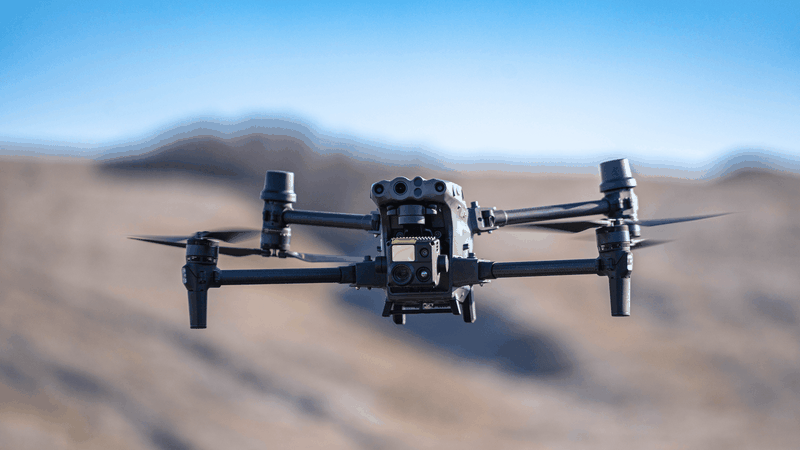
3D printing accelerates UAV innovation: Additively manufactured components enable rapid design, localized production, and field-ready adaptability in modern conflicts.
(Source: Stratasys (Shutterstock))
The future of air superiority is not just in the skies—it’s on the factory floor. And increasingly, that factory floor is wherever additive manufacturing systems are deployed.
In today’s contested environments, where threats evolve daily and conventional supply chains face unprecedented stress, factors such as speed, adaptability, and localised production have become mission-critical. Unmanned Aerial Vehicles (UAVs)—once the product of years-long development pipelines—are now being designed, tested, and deployed in weeks or even days, with critical systems and components being replenished through additive manufacturing on the frontline.
The frantic pace of activity is a catalyst for future UAV development, and an exciting period of further innovation awaits.
UAV use in dynamic military environments
So, let’s examine the recent deployment of UAVs in ongoing conflicts before assessing how additive manufacturing has matured into a strategic capability—one that enables defence forces to rapidly iterate, produce complex components in-theatre, and respond to changing mission requirements in real time.
Ukraine acts as a microcosm of recent developments. In the early days of the war, Ukraine deployed UAVs extensively, carrying out numerous precision air strikes using Turkish-made Bayraktar TB2 UAVs. Ukrainian armed forces were able to operate them in relatively uncontested airspace during the early stages of the Russian invasion, scoring multiple high-profile successes.
However, the Ukraine conflict has also provided other lessons, notably the speed at which battlefield circumstances can change. Russia quickly reinforced its air defences along the 600-mile front, and these new capabilities meant the Bayraktar UAV soon became a less common sight in the sky.
According to the European Council for Foreign Relations (ECFR), what followed was an unprecedented period of UAV innovation on both sides. Russian and Ukrainian armed forces looked to deploy new platforms in smarter ways, and in a matter of months, as many as 100 different types of UAVs were developed and introduced. These UAVs ranged from palm-sized ‘first person view’ (FPV) systems to larger wingspan models. Some of these UAVs were bought from established defence suppliers, while others were put together in a piecemeal fashion by Ukraine and Russia themselves, or upgraded from civilian platforms.
The ECFR says the impressively fast innovation circles in the early stages of the Ukraine war have ushered in a new normal for UAV development. Long gone are the days of protracted procurement, which comprised a well-worn path of conceptualization, prototyping, testing, approval, manufacturing, and market introduction. In its place is a rapid-fire design and development process critical to asserting power and averting defeat. Indeed, in 2024 alone, Ukraine produced an incredible 1.3 million UAVs of various types, including reconnaissance, strike, and FPV kamikaze UAVs, virtually doubling output from the previous year.
The role of additive manufacturing in UAV innovation
The adoption of additive manufacturing proved vital during this intense period of innovation. Ukrainian forces have used it to produce 3D-printed UAV parts to adapt commercially available UAVs for precision strikes and anti-armour missions. By adding 3D-printed fins to existing munitions, military support teams could turn commercially available systems into tactical assets, providing flexibility and versatility in fast-moving battlefield environments.
Furthermore, the conflict in Ukraine has led to a growing interest among armed forces globally in how additive manufacturing might be used to increase flexibility in future combat situations. The US Air Force, for example, recently demonstrated the assembly and deployment of a 3D-printed UAV within a 24-hour window. Other defence departments, such as the UK Ministry of Defence, have also been experimenting with additive manufacturing for spare part production across air, land and sea platforms.
Date: 08.12.2025
Naturally, we always handle your personal data responsibly. Any personal data we receive from you is processed in accordance with applicable data protection legislation. For detailed information please see our privacy policy.
Consent to the use of data for promotional purposes
I hereby consent to Vogel Communications Group GmbH & Co. KG, Max-Planck-Str. 7-9, 97082 Würzburg including any affiliated companies according to §§ 15 et seq. AktG (hereafter: Vogel Communications Group) using my e-mail address to send editorial newsletters. A list of all affiliated companies can be found here
Newsletter content may include all products and services of any companies mentioned above, including for example specialist journals and books, events and fairs as well as event-related products and services, print and digital media offers and services such as additional (editorial) newsletters, raffles, lead campaigns, market research both online and offline, specialist webportals and e-learning offers. In case my personal telephone number has also been collected, it may be used for offers of aforementioned products, for services of the companies mentioned above, and market research purposes.
Additionally, my consent also includes the processing of my email address and telephone number for data matching for marketing purposes with select advertising partners such as LinkedIn, Google, and Meta. For this, Vogel Communications Group may transmit said data in hashed form to the advertising partners who then use said data to determine whether I am also a member of the mentioned advertising partner portals. Vogel Communications Group uses this feature for the purposes of re-targeting (up-selling, cross-selling, and customer loyalty), generating so-called look-alike audiences for acquisition of new customers, and as basis for exclusion for on-going advertising campaigns. Further information can be found in section “data matching for marketing purposes”.
In case I access protected data on Internet portals of Vogel Communications Group including any affiliated companies according to §§ 15 et seq. AktG, I need to provide further data in order to register for the access to such content. In return for this free access to editorial content, my data may be used in accordance with this consent for the purposes stated here. This does not apply to data matching for marketing purposes.
Right of revocation
I understand that I can revoke my consent at will. My revocation does not change the lawfulness of data processing that was conducted based on my consent leading up to my revocation. One option to declare my revocation is to use the contact form found at https://contact.vogel.de. In case I no longer wish to receive certain newsletters, I have subscribed to, I can also click on the unsubscribe link included at the end of a newsletter. Further information regarding my right of revocation and the implementation of it as well as the consequences of my revocation can be found in the data protection declaration, section editorial newsletter.
The message is clear: the design and production of UAVs have changed. From “traditional” multi-purpose UAVs to smaller, nimbler attack UAVs, accelerated design and production are now expected to meet the more dynamic nature of modern warfare—and additive manufacturing is helping to lead the charge.
Printing lighter, stronger UAV parts across platforms
Now, let’s examine in greater depth how additive manufacturing can support the development of unmanned aircraft across various UAV platforms. From small, rudimentary reconnaissance tools with limited range to long-endurance platforms capable of intelligence gathering, target acquisition and precision strikes, additive manufacturing helps engineers design better-performing parts in less time while eliminating supply chain/inventory challenges.
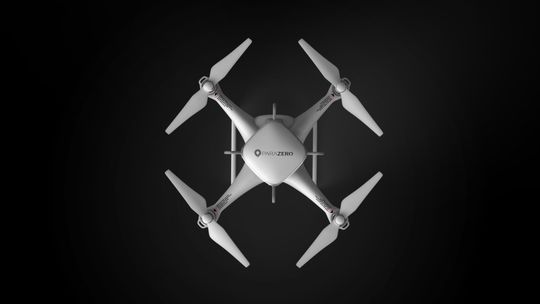
A Taga UAV prototype printed using Stratasys J35 Pro. Source: Stratasys
(Source: Stratasys)
Taga, a manufacturing engineering company specializing in industrial design, is a case in point. It has been using a Stratasys J35™ Pro PolyJet™ 3D printer to accelerate UAV development – specifically through faster and more effective testing of new parts.
On one project, Taga was developing a safety feature for UAVs to improve UAV rotary durability. The rotary needed a high level of flexibility, and engineers were uncertain about the best level of rigidity. With the J35 Pro, Taga has adopted multi-material printing, with the combination of flexible and rigid materials enabling them to design prototypes to meet various product needs. The J35 Pro was used to quickly print four different samples with varying levels of rigidity, which immediately enabled Taga’s clients to prove and then adopt the appropriate design.
Beyond this example, additive manufacturing has proof points in several key areas. As mentioned, it leads to faster prototyping and iteration and the creation of lightweight and high-strength structures. In addition, it supports customization and mission-specific adaptability, with multi-material printing encouraging embedded functionality. Additive manufacturing also results in localized production and quicker maintenance, opening up the possibility of damaged UAVs being repaired in the field. In short, additive manufacturing represents a highly adaptable technology for UAV design, development and operation.
Foster Ferguson, Vice President Industrial Business bei Stratasys.
(Source: Stratasys)
Bright future for additive manufacture in UAV applications
In summary, recent conflicts have revolutionized how UAVs are designed, built, and used, with additive manufacturing emerging as a critical enabler of this increased innovation. The ability to rapidly iterate and scale designs, manufacture locally, and eliminate supply chain uncertainty has proved a highly desirable characteristic on the moving chessboard of military engagement—and will undoubtedly continue to be so.
Consequently, Stratasys will continue to help customers drive the ascent of additive manufacturing in UAV development. As we look forward to a renewed period of innovation, we believe the sky really is the limit.




:quality(80)/p7i.vogel.de/wcms/f6/95/f6954fa7c09ba58863a3730f5e384a62/arek-socha-on-pixabay-1707x960v1.jpeg "A new national space strategy brings together UK’s plans for growth, defence, and national security to help reindustrialise the UK. (Source: Arek Socha on Pixabay)")
:quality(80)/p7i.vogel.de/wcms/63/0f/630f214fa760b8c7f7f7d6279d411fcf/d4ceed8f2f52-2026-08-30-hydef-06--msc4159-1200x675v1.webp "(Source: Diehl Defence)")
:quality(80)/p7i.vogel.de/wcms/4e/7d/4e7d38327c6c928b403249e3c24a2a7c/0132118791v1.jpeg "Porsche Holding SE announces that it is once again turning to rocket technology. Following its investment in Isar Aerospace, the company is now acquiring a stake in a U.S. firm ... (Source: Porsche)")
:quality(80)/p7i.vogel.de/wcms/1c/08/1c082bbd9d05b634168b617aa26fcdcf/safe-bg-lv-ro-v1-991x557v1.png "(Source: European Commission)")
:quality(80)/p7i.vogel.de/wcms/0a/14/0a1495d9b570ae32a5a7cc748b9a3c60/st-hannover-035-1920x1079v1-999x562v1.jpeg "Fastening technology you can experience first-hand—visitors to Schraubtec in Bochum (Germany) can see it for themselves at the Ruhr Congress on September 30, 2026. (Source: PHOTOVISION-DH GmbH)")
:quality(80)/p7i.vogel.de/wcms/cd/a9/cda92b173afa9d0b455d4f11b281c9ea/0094-to-image--capstone-cdr-1440x810v1.png "(Source: Terran Orbital)")
:quality(80)/p7i.vogel.de/wcms/e0/45/e045bc5414d7263fb308bdd501b5fcc1/0133113962v1.jpeg "The HSWL 354 is the transmission used, for example, in the Leopard 2 main battle tank. Renk manufactures this system and is now preparing to significantly increase its cycle time. As a result, Renk is placing greater emphasis on the military sector as a customer ... (Source: Renk)")
:quality(80)/p7i.vogel.de/wcms/a1/5c/a15c2aeba563d5bc3e11fb879b21eb2c/0132989650v1.jpeg "FSS, the flexible clamping system for varying free-form surfaces, is designed for the aerospace industry and other sectors. (Source: Römheld GmbH Friedrichshütte)")
:quality(80)/p7i.vogel.de/wcms/46/8e/468effa87546a2b036dc88ca40e2843e/129fbcac92ce7da872b13af0281b0799-l-png-1920x1079v1.webp "(Source: Arianespace)")
:quality(80)/p7i.vogel.de/wcms/8f/10/8f10697d4bfbd70edf615cca76eaedfd/pete-linforth-on-pixabay-1920x1080v1.jpeg "(Source: Pete Linforth on Pixabay / AI-generated)")
:quality(80)/p7i.vogel.de/wcms/0f/99/0f99561bf51818af92b2960656405aa5/roland-4d-pippes-on-pixabay-1460x820v1.jpeg "(Source: Roland 4D Pippes on Pixabay)")
:quality(80)/p7i.vogel.de/wcms/05/49/054906f874b94ef08b09d5920396e27d/airbus-h160-1920x1079v1.jpeg "Airbus H160 (Source: Airbus)")
:quality(80)/p7i.vogel.de/wcms/9d/8a/9d8addea8cc4e6f7a4793563ca397f2a/ai-im-milit-r-1672x940v1.png "(Source: KI-generiert / Gemini)")
:quality(80)/p7i.vogel.de/wcms/7f/5f/7f5fba2c729ec3aa256bf1a18d74529b/ai-chip-1672x940v1.png "(Source: KI-generiert / Gemini)")
:quality(80)/p7i.vogel.de/wcms/64/1b/641b6474b2a614cde7730c89ef2a3015/2026-09-09-rheinmetall-veroeffentlicht-battlesuite-schnittstellen-e8c18194-1225x690v1.jpeg "Rheinmetall’s Battlesuite provides a modular digital platform for connecting and integrating sensors, hardware and software components. (Source: Rheinmetall AG)")
:quality(80)/p7i.vogel.de/wcms/6f/fe/6ffef325e7f233cc3521943158eb1ebd/0132763535v1.jpeg "Two companies are planning to establish, for the first time in 2027, an optical laser communication link directly between a satellite in low Earth orbit (LEO) and a re-entering spacecraft. (Source: ATMOS Space Cargo)")
:quality(80)/p7i.vogel.de/wcms/8f/f9/8ff91b78b26cb5a2b8a29e39835005b1/2026-09-10-repmus-teaser-images-retouched-dsc01292-1024x683-1024x576v1.jpeg "(Source: Quantum Systems GmbH)")
:quality(80)/p7i.vogel.de/wcms/bf/4a/bf4a237e60d3d4bd1bbdbad918f3c697/airbus-defence-and-space-3-1280x720v1.jpeg "(Source: Airbus Defence and Space)")
:quality(80)/p7i.vogel.de/wcms/e0/d1/e0d112a0d54a4fa9603ec855f7d25b47/t-rex-content-photo-jpg-pc-adaptive-990-medium-988x556v1.jpeg "Swarm of UAVs conducting a fully autonomous collaborative swarm mission. (Source: Lockheed Martin)")
:quality(80)/p7i.vogel.de/wcms/79/fc/79fcaa7ca33e393b11a4740d7d8f3dbe/vilkasss-handshake-9459740-1911x1076v1.jpeg "(Source: Vilius Kukanauskas on Pixabay)")
:quality(80)/p7i.vogel.de/wcms/90/a8/90a849f0023f11d1eb642eb4751a0321/bild2-h-c3-a4nel-ict-20truck-20and-20trailer-20parts-4320x2429v1.jpeg "Product information is visible at all times and retrieval of items
is confirmed by employees directly on the display of the Hänel MP 14 N
controller. (Source: René Marks)")
:quality(80)/p7i.vogel.de/wcms/4e/ca/4ecaa39f247490eded591b652c33aee3/thilmann-hcp-web-20kleiner-20ausschnitt-1442x811v1.jpeg "Entering the defence market can be challenging for start-ups, says HCP Sense CEO Ansgar Thilmann. (Picture: HCP Sense)")
:quality(80)/p7i.vogel.de/wcms/7a/51/7a511b80041d3f1335f3a5aa56fe75da/delivery-7022432-1280-1280x720v1.png "(Source: Mohamed_hassan)")
:quality(80)/p7i.vogel.de/wcms/f9/2f/f92f1ef8c739c34c70d99f7b0997621b/stra007-20--20cover-20image-5472x3076v1.jpeg "(Source: Stratasys)")
:quality(80)/p7i.vogel.de/wcms/ec/a9/eca9062ccbe4b042f8515846340410d8/aerospace-and-defence-stairways-platforms-and-much-morev1.jpeg "Modular constructions enable flexible modification. That applies to larger structures such as stairways and platforms, too. And that means aerospace and defence companies can reconfigure their maintenance platforms fast (itemitem)")
:quality(80)/p7i.vogel.de/wcms/30/2a/302a7b5723ad38fbde812fd3a468ad04/safety-on-stairways-in-industry-key-considerationsv1.jpeg "Stairways and platforms are used widely in maintenance and assembly areas in the aerospace and defence sectors. (Source: item)")
:quality(80)/p7i.vogel.de/wcms/f3/4e/f34ed744bb30817d3432c7ad522e6f30/engine-1v1.jpeg "Engineering with aluminium profiles really can be this easy – the item Engineeringtool and its smart functions help you save valuable time. (Source: item)")
:fill(fff,0)/p7i.vogel.de/companies/64/fe/64fec73b1a2fb/logo-master-ggbbytimken-286blue.jpeg "logo-master-ggbbytimken-286blue (GGB)")
:fill(fff,0)/p7i.vogel.de/companies/69/6d/696de2483d115/logo--fastems-rgb-horizontal.jpeg "logo--fastems-rgb-horizontal (Fastems)")
:fill(fff,0)/images.vogel.de/vogelonline/companyimg/84700/84735/65.jpg "logo_item_rgb_neu.jpg ()")

:quality(80)/p7i.vogel.de/wcms/f9/2f/f92f1ef8c739c34c70d99f7b0997621b/stra007-20--20cover-20image-5472x3076v1.jpeg "stra007-20--20cover-20image-5472x3076v1 (Source: Stratasys)")
:quality(80)/p7i.vogel.de/wcms/75/fa/75faaf83c7d7b9870f5c6b58f961493d/dsc05636-2560x1441v1.png "Across NATO's eastern flank, a new wave of defence‑industrial cooperation is gaining speed. German drone and defence‑AI companies, led by Quantum‑Systems and Helsing, are shifting key parts of Europe’s UAV ecosystem into the operational reality of Ukraine’s contested airspace. Here, a swarm‑ready C4ISR drone backbone is beginning to take shape in support of NATO operations—one factory, one sortie, one data link at a time. (Source: Quantum Systems GmbH)")