



:quality(80)/p7i.vogel.de/wcms/be/0b/be0b550a4fc2724afeed0713f65e7675/spexer-anechoic-chamber-1280x720v1.png "(Source: Hensoldt AG)")
:quality(80)/p7i.vogel.de/wcms/6f/0f/6f0fc6e3348925946d77fa2339e53005/0130142731v1.jpeg "Heidelberger Druckmaschinen Aktiengesellschaft establishes a joint venture with Ondas. The aim is to provide and market effective drone defence systems in Europe and Ukraine. (Source: Ondas)")
:quality(80)/p7i.vogel.de/wcms/05/29/05295a4f758848ae6c027cc78947453c/17818f1a7b12-banner-format-970x546v1.jpeg "(Source: Diehl Defence)")
:quality(80)/p7i.vogel.de/wcms/44/2f/442f8206549c08b8fd79666b1e2c1096/suv-20wald-1536x864v1.png "(Source: AI-generated)")
:quality(80)/p7i.vogel.de/wcms/2e/15/2e15396bd28d5cc96f2c339a6b7bf1e8/l3harris-disco-1220-1217x684v1.jpeg "(Source: L3Harris Technologies)")
:quality(80)/p7i.vogel.de/wcms/0c/70/0c701a79c1f183921b8ee9341ef61db8/0129694966v1.jpeg "Robonode's DVK Development Kit: This is available through Codico's sample shop. (Image:8DEVICES)")
:quality(80)/p7i.vogel.de/wcms/7c/12/7c123d3888ed3a37a83b0793be569f00/hon-aero-hguide-i700-imu-comp-view-2880x1440-1024x576v1.webp "(Source: Honeywell)")
:quality(80)/p7i.vogel.de/wcms/62/06/6206d30afc9c4f286f4ecf4cedf575c5/stark-20virtus-20side-1920x1079v1.jpeg "To be introduced into service with the Bundeswehr: The “Virtus” developed by Stark has a range of up to 100 km and is designed to engage targets on the battlefield. (Picture: STARK Defence)")
:quality(80)/p7i.vogel.de/wcms/b4/ae/b4ae65d3fb3903a13571d9ea3e61da8a/mock-up-vleo-def-1920x1079v1.jpeg "Illustration of the VLEO-DEF satellite in orbit (Source: EDA)")
:quality(80)/p7i.vogel.de/wcms/11/c8/11c8d30d75151329d2700176eb7a0383/0130110840v1.jpeg "Zenadrone, a subsidiary of Zenatec, is working on developing an operational low-cost drone as a disposable concept (symbol image). The first prototype already exists. In the future, it is intended to counter increasing enemy drone attacks without significant financial effort... (Source: Zenadrone)")
:quality(80)/p7i.vogel.de/wcms/c8/4c/c84cef4bf459f1280823827c3e3615c2/7cf414af-d41d-46ac-b22b-890f9f32d24c-2048x1151v1.jpeg "In Manching, Germany, Airbus is currently preparing two Valkyries for their first flight with its European mission system. The picture shows one of them. (Source: Airbus)")
:quality(80)/p7i.vogel.de/wcms/e3/d7/e3d7de9cfaac27f48ee6e162f9b309e9/0128899731v1.jpeg "Here, Lufthansa's first anniversary aircraft lands in Frankfurt. (Image:Lufthansa)")
:quality(80)/p7i.vogel.de/wcms/06/37/0637c7dd3fab9b00a8e96f98133cd1dc/260304-d-d0477-1005-5892x3317v1.png "A B-52H Stratofortress idles prior to taking off in support of Operation Epic Fury in March 2026. (Source: U.S. Air Force)")
:quality(80)/p7i.vogel.de/wcms/13/2b/132bb2831ae98c4c3bdd0ee2990ba1eb/bareways-20deck-20--20crisis-20coordination-20platformv1.jpeg "(Source: Bareways)")
:quality(80)/p7i.vogel.de/wcms/93/f1/93f1e4dba53b2c9589fab17a525df55e/adobestock-163119218-2480x1394v1.jpeg "(Source: Kernkonzept GmbH)")
:quality(80)/p7i.vogel.de/wcms/8d/76/8d764c984e44153da8f0dfa88cd6d75e/0129843677v1.jpeg "A successful drone attack on two data centers of the Amazon subsidiary AWS shows that the danger of drones is virtually unavoidable in modern warfare ... (Source: Cerberus)")
:quality(80)/p7i.vogel.de/wcms/14/d3/14d3e0847d222af54aa5ab625480507f/0130015022v1.jpeg "A German-French battle tank project was approved some time ago (symbol image). But a modern drive system is also needed for it. This is now being developed by Rolls-Royce Power Systems and ZF in the coming years... (Image:Rheinmetall)")
:quality(80)/p7i.vogel.de/wcms/bd/21/bd2191aab59c430b3c74a2be07120333/image-196-1294x728v1.png "(Image:SkyDefender © Thales)")
:quality(80)/p7i.vogel.de/wcms/d4/dc/d4dc9a59e1698ae295b1e6e64a29a55b/geralt-handshake-5768632-1280-1280x720v1.jpeg "Rheinmetall and Nooteboom Trailers are collaborating on the development and marketing of heavy equipment trailer systems designed for transporting modern tracked and wheeled military vehicles. (Image:Gerd Altmann from Pixabay)")
:quality(80)/p7i.vogel.de/wcms/22/54/2254d1e2667aff755e7aba0bcaf2eb42/0130021093v1.jpeg "Daimler Truck and Quantum Systems are jointly developing unmanned military vehicles. (Image:Quantum Systems)")
:quality(80)/p7i.vogel.de/wcms/f9/2f/f92f1ef8c739c34c70d99f7b0997621b/stra007-20--20cover-20image-5472x3076v1.jpeg "(Source: Stratasys)")
:quality(80)/p7i.vogel.de/wcms/5e/18/5e184e4961f190c86a1ea3227104cab5/26pm03-20kompakte-20l-c3-b6sungen-20f-c3-bcr-20luft--20und-20raumfahrt-202-2362x1329v1.jpeg "(Picture: Keysight)")
:quality(80)/p7i.vogel.de/wcms/67/4c/674c54baa745be497cecb716826af339/stahlwille-hero-1807x1016v1.jpeg "A new modular tool solution designed for safety, precision, and mobility in aviation maintenance. (Source: STAHLWILLE)")
:quality(80)/p7i.vogel.de/wcms/0d/01/0d01a051ba894332a8091e3a3f9394e1/hytorc-defense-solutions-boxersatz-1899x1068v1.jpeg "HYTORC’s Defence Solutions toolkit, proven on the GTK Boxer, enables safe, traceable fastening of critical components across multiple Bundeswehr platforms. (Source: Image: HYTORC)")
:quality(80)/p7i.vogel.de/wcms/f3/4e/f34ed744bb30817d3432c7ad522e6f30/engine-1v1.jpeg "Engineering with aluminium profiles really can be this easy – the item Engineeringtool and its smart functions help you save valuable time. (Source: item)")
:quality(80)/p7i.vogel.de/wcms/fb/8e/fb8e5ae2aa27bcf3e466815505ca4ff2/alumin-1v1.jpeg "The aluminium profile technology of the item Building Kit System has been used to build a huge variety of structures for decades. (Source: item)")
:quality(80)/p7i.vogel.de/wcms/be/84/be84bbede3e40b1101cd3efa35a6ffa0/overview-of-20work-bench-design-in-productionv1.jpeg "With modular work bench design, you can convert or extend a work bench with ease by changing or adding accessories. This means changes can be implemented quickly and cost-effectively, thus boosting quality and productivity. (Source: item)")
Surviving the Shakeout How LEO Satellites Are Shaping the Future of the Space Industry
Related Vendors
:fill(fff,0)/p7i.vogel.de/companies/69/6d/696de2483d115/logo--fastems-rgb-horizontal.jpeg "logo--fastems-rgb-horizontal (Fastems)")
:fill(fff,0)/images.vogel.de/vogelonline/companyimg/84700/84735/65.jpg "logo_item_rgb_neu.jpg ()")
In recent years, the arrival of well-established commercial launch services has brought launch costs down significantly lowering the barrier to entry. This has opened the market to new players and innovators in the low Earth orbit (LEO) satellite industry. In parallel with reduced launch costs, satellites have decreased from the size of a bus to something you can hold in your hand. The combination of lower launch costs and smaller satellite size is reducing the overall mission cost. Gone are the days of space missions belonging only to space agencies such as NASA and legacy satellite companies.
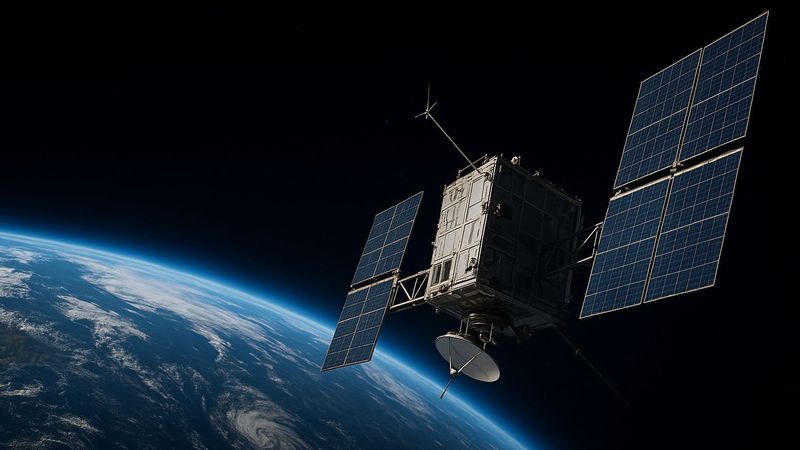
Commercial space applications are rapidly growing in non-space industries such as energy and mining, agriculture, automotive, telecom, medical and education. Companies in these industries are investing in space to differentiate and expand service offerings to diversify revenues. This “Space-for- Earth” economy industry disruption is driving new use cases, capabilities, and users for satellite-based data. There are many examples of the space sector already playing a role in non-space industries. Geospatial satellite technology helps the mining industry by identifying areas for oil exploration and providing imagery of mining sites. Global positioning systems (GPS) satellite technology guides rideshare services such as Uber and Lyft and as the automotive industry moves towards a driverless future, the accuracy of maps becomes a priority.
Satellite data helps the agricultural industry make more informed crop development decisions by improving weather forecasts. Satellite technology is changing access to healthcare for remote regions worldwide and satellite data is advancing medical knowledge.The private sector is increasingly and actively securing assets in space with these efforts driven by the need for internet access and data. We expect exponential growth of this data-based, Space- for-Earth economy and we expect the emergence of a “Space-for- Space” economy with space-based services and products to support life in Space.
Sign in or register and read on
Please log in or register and read this article. To be able to read this article in full, you must be registered. Free registration gives you access to exclusive specialist information.
Already registered? Log in here
:quality(80)/p7i.vogel.de/wcms/87/64/8764805769502526a7f6a32c767c22cd/0124246561v1.jpeg "0124246561v1 (Source: Analog Devices)")
:quality(80)/p7i.vogel.de/wcms/07/80/0780587811285666948630124f0443cd/20220817-mtg-i-platforms-005-med--c-ohb-1920x1079v1.png "A large MTG-I satellite platform/bus in a cleanroom, mounted horizontally on an APCO Technologies “MTG S/C Integration Dolly (SID)”. The spacecraft’s internal structure, harnessing, and thermal insulation are visible, with red protective covers on multiple interfaces. (Source: OHB SE)")