In 2025, the aerospace industry was under massive transformational pressure. This is because air travel remains attractive, geopolitical tensions push for prioritized defense programs, and a new space race is beginning. This increases the pressure on manufacturers, airlines, airports, and space companies to develop faster, plan more efficiently, and utilize resources better.
The aerospace industry is under great pressure to develop faster, plan more efficiently, and utilize resources better. Quantum computing can help with this.
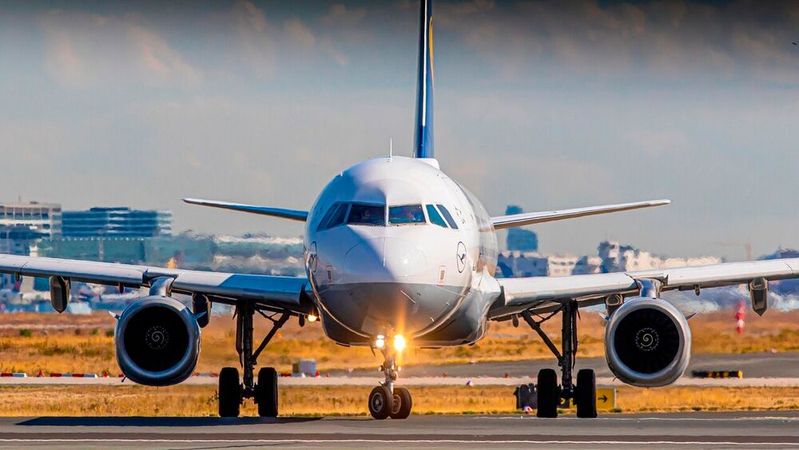
(Image: freely licensed on Pixabay)
Classic computing methods in aerospace are increasingly reaching their limits. Systems are becoming more complex, and the number of variables is rising, requiring enormous computational effort for many issues today. Quantum computing addresses this and expands the industry's toolbox. It promises advances in simulation, optimization, signal detection, and material research. Numerous companies are already testing initial applications. As in so many industries, quantum computing is gaining momentum in the aerospace industry as well. The potential can already be identified particularly clearly in three areas.
Faster Aircraft Development Through Quantum-Assisted Simulation
The development of new aircraft is time-consuming and expensive. Wind tunnel tests and numerical flow simulations (Computational Fluid Dynamics, CFD) tie up research capacities and budgets for years. Quantum computing can accelerate these processes by enabling particularly precise digital simulations and reducing the number of physical tests.
This is not an abstract vision of the future but the focus of concrete projects. Companies like Boeing and Rolls-Royce are exploring quantum algorithms to optimize engine performance and wing geometries. Rolls-Royce, for instance, is working on quantum-based approaches to reduce fuel consumption and emissions. Both are gaining importance as airlines increasingly have to meet stricter climate regulations.
When engineers simulate flow and combustion using quantum or hybrid methods, they can refine their designs faster and more efficiently. This significantly shortens development cycles. The transition from purely classical to hybrid quantum-classical methods enables more complex simulations without escalating costs. With more powerful quantum computers, the realization of fully mapping entire aircraft systems as digital twins becomes increasingly likely. This would reduce time to market and make research and development more efficient. Future aircraft could thus be developed and manufactured faster and more cost-effectively than today.
Europe’s security landscape is changing rapidly
(Source: VCG)
As defence budgets rise and EU programmes expand, civil technology providers are becoming vital contributors to Europe’s strategic autonomy. The event will act as a neutral platform for dialogue between technology suppliers, integrators, and decision-makers shaping the next generation of European defence capabilities and aims to open doors between civil industry and defence procurement, providing practical insights.
The operation of airlines and airports is a highly complex logistical task. Thousands of flights must be scheduled, gates assigned, crews managed, and aircraft optimally deployed. Even today, these tasks push traditional computer architectures to their limits.
This is where significant potential lies for aviation logistics, as quantum computing is particularly well-suited to these optimization gaps. An example is route planning. Quantum algorithms take many variables into account simultaneously and find solutions in a short time, whereas classical systems would take significantly longer. Airlines can dynamically adjust flight routes, for instance, based on weather data, fuel targets, and airspace capacities. An experiment by NASA and its partners suggests that quantum-based route optimization has the potential to measurably reduce flight times. On a large scale, this would significantly lower fuel consumption. Quantum computing thus serves as both a lever for cost reduction and a tool for achieving sustainability goals.
Airports also benefit from quantum-assisted optimization. Arrivals, departures, and gate assignments can be more closely aligned with reality and recalculated more frequently. This allows operators to better manage delays and plan rotations more reliably.
Logistics companies face similar challenges. Planning transport chains and package routes using quantum-optimized methods shortens delivery times, reduces fuel consumption, and optimizes vehicle utilization. The underlying problem structures are similar to many issues in aviation.
Date: 08.12.2025
Naturally, we always handle your personal data responsibly. Any personal data we receive from you is processed in accordance with applicable data protection legislation. For detailed information please see our privacy policy.
Consent to the use of data for promotional purposes
I hereby consent to Vogel Communications Group GmbH & Co. KG, Max-Planck-Str. 7-9, 97082 Würzburg including any affiliated companies according to §§ 15 et seq. AktG (hereafter: Vogel Communications Group) using my e-mail address to send editorial newsletters. A list of all affiliated companies can be found here
Newsletter content may include all products and services of any companies mentioned above, including for example specialist journals and books, events and fairs as well as event-related products and services, print and digital media offers and services such as additional (editorial) newsletters, raffles, lead campaigns, market research both online and offline, specialist webportals and e-learning offers. In case my personal telephone number has also been collected, it may be used for offers of aforementioned products, for services of the companies mentioned above, and market research purposes.
Additionally, my consent also includes the processing of my email address and telephone number for data matching for marketing purposes with select advertising partners such as LinkedIn, Google, and Meta. For this, Vogel Communications Group may transmit said data in hashed form to the advertising partners who then use said data to determine whether I am also a member of the mentioned advertising partner portals. Vogel Communications Group uses this feature for the purposes of re-targeting (up-selling, cross-selling, and customer loyalty), generating so-called look-alike audiences for acquisition of new customers, and as basis for exclusion for on-going advertising campaigns. Further information can be found in section “data matching for marketing purposes”.
In case I access protected data on Internet portals of Vogel Communications Group including any affiliated companies according to §§ 15 et seq. AktG, I need to provide further data in order to register for the access to such content. In return for this free access to editorial content, my data may be used in accordance with this consent for the purposes stated here. This does not apply to data matching for marketing purposes.
Right of revocation
I understand that I can revoke my consent at will. My revocation does not change the lawfulness of data processing that was conducted based on my consent leading up to my revocation. One option to declare my revocation is to use the contact form found at https://contact.vogel.de. In case I no longer wish to receive certain newsletters, I have subscribed to, I can also click on the unsubscribe link included at the end of a newsletter. Further information regarding my right of revocation and the implementation of it as well as the consequences of my revocation can be found in the data protection declaration, section editorial newsletter.
New Materials for Aerospace
The search for lighter, more durable, and heat-resistant materials is a core area of aerospace development. Quantum computing can accelerate this process by simulating molecular interactions, thereby supporting work on new alloys, coatings, and composite materials.
Aircraft manufacturers are already examining how quantum algorithms can advance material research. The focus is on high-entropy alloys that withstand extreme temperatures in hypersonic flight, as well as corrosion-resistant coatings that extend the lifespan of structures. Lightweight composite materials are particularly important. Using quantum-based models, the ratio of weight to load-bearing capacity can be specifically optimized. This improves fuel efficiency.
More precise simulations make it possible to predict mechanical, thermal, and chemical properties more accurately. This reduces companies' need for prototype testing, potentially resulting in significant research cost savings and shorter development cycles. Additionally, there is the concept of quantum-assisted digital twins of materials. Engineers can virtually test the behavior of new materials under real-world stresses even before the first physical prototype is created. This makes material development faster and more predictable.
Outlook: Radar, Satellites, and new Cruising Altitudes
The examples mentioned only mark the beginning of the transformation phase. Quantum computing has the potential to fundamentally change other areas of aerospace. This includes the optimization of satellite constellations, where orbits and positions are planned to balance coverage, latency, and collision risks, as well as signal detection in complex radar systems. Modern radars process large amounts of data from many sensors and evaluate multiple threat characteristics simultaneously. This increases accuracy but makes processing significantly more computationally intensive. Quantum algorithms can help identify relevant signals more quickly and reduce false alarms.
Many aerospace companies are already investing in quantum computing to gain an advantage. With each new hardware generation, the chances increase for faster aircraft development, more efficient airspace management, and new material classes that enable longer product lifespans and new cruising altitudes. For the industry, the question is no longer whether quantum computing will make a difference, but how quickly the technology can be integrated into their processes. Only those who invest early in quantum expertise, skilled professionals, and a clear application strategy will secure a measurable edge. (se)
*Head of Marketing and Business Development at Classiq




:quality(80)/p7i.vogel.de/wcms/f6/95/f6954fa7c09ba58863a3730f5e384a62/arek-socha-on-pixabay-1707x960v1.jpeg "A new national space strategy brings together UK’s plans for growth, defence, and national security to help reindustrialise the UK. (Source: Arek Socha on Pixabay)")
:quality(80)/p7i.vogel.de/wcms/63/0f/630f214fa760b8c7f7f7d6279d411fcf/d4ceed8f2f52-2026-08-30-hydef-06--msc4159-1200x675v1.webp "(Source: Diehl Defence)")
:quality(80)/p7i.vogel.de/wcms/4e/7d/4e7d38327c6c928b403249e3c24a2a7c/0132118791v1.jpeg "Porsche Holding SE announces that it is once again turning to rocket technology. Following its investment in Isar Aerospace, the company is now acquiring a stake in a U.S. firm ... (Source: Porsche)")
:quality(80)/p7i.vogel.de/wcms/1c/08/1c082bbd9d05b634168b617aa26fcdcf/safe-bg-lv-ro-v1-991x557v1.png "(Source: European Commission)")
:quality(80)/p7i.vogel.de/wcms/0a/14/0a1495d9b570ae32a5a7cc748b9a3c60/st-hannover-035-1920x1079v1-999x562v1.jpeg "Fastening technology you can experience first-hand—visitors to Schraubtec in Bochum (Germany) can see it for themselves at the Ruhr Congress on September 30, 2026. (Source: PHOTOVISION-DH GmbH)")
:quality(80)/p7i.vogel.de/wcms/cd/a9/cda92b173afa9d0b455d4f11b281c9ea/0094-to-image--capstone-cdr-1440x810v1.png "(Source: Terran Orbital)")
:quality(80)/p7i.vogel.de/wcms/e0/45/e045bc5414d7263fb308bdd501b5fcc1/0133113962v1.jpeg "The HSWL 354 is the transmission used, for example, in the Leopard 2 main battle tank. Renk manufactures this system and is now preparing to significantly increase its cycle time. As a result, Renk is placing greater emphasis on the military sector as a customer ... (Source: Renk)")
:quality(80)/p7i.vogel.de/wcms/a1/5c/a15c2aeba563d5bc3e11fb879b21eb2c/0132989650v1.jpeg "FSS, the flexible clamping system for varying free-form surfaces, is designed for the aerospace industry and other sectors. (Source: Römheld GmbH Friedrichshütte)")
:quality(80)/p7i.vogel.de/wcms/46/8e/468effa87546a2b036dc88ca40e2843e/129fbcac92ce7da872b13af0281b0799-l-png-1920x1079v1.webp "(Source: Arianespace)")
:quality(80)/p7i.vogel.de/wcms/8f/10/8f10697d4bfbd70edf615cca76eaedfd/pete-linforth-on-pixabay-1920x1080v1.jpeg "(Source: Pete Linforth on Pixabay / AI-generated)")
:quality(80)/p7i.vogel.de/wcms/0f/99/0f99561bf51818af92b2960656405aa5/roland-4d-pippes-on-pixabay-1460x820v1.jpeg "(Source: Roland 4D Pippes on Pixabay)")
:quality(80)/p7i.vogel.de/wcms/05/49/054906f874b94ef08b09d5920396e27d/airbus-h160-1920x1079v1.jpeg "Airbus H160 (Source: Airbus)")
:quality(80)/p7i.vogel.de/wcms/9d/8a/9d8addea8cc4e6f7a4793563ca397f2a/ai-im-milit-r-1672x940v1.png "(Source: KI-generiert / Gemini)")
:quality(80)/p7i.vogel.de/wcms/7f/5f/7f5fba2c729ec3aa256bf1a18d74529b/ai-chip-1672x940v1.png "(Source: KI-generiert / Gemini)")
:quality(80)/p7i.vogel.de/wcms/64/1b/641b6474b2a614cde7730c89ef2a3015/2026-09-09-rheinmetall-veroeffentlicht-battlesuite-schnittstellen-e8c18194-1225x690v1.jpeg "Rheinmetall’s Battlesuite provides a modular digital platform for connecting and integrating sensors, hardware and software components. (Source: Rheinmetall AG)")
:quality(80)/p7i.vogel.de/wcms/6f/fe/6ffef325e7f233cc3521943158eb1ebd/0132763535v1.jpeg "Two companies are planning to establish, for the first time in 2027, an optical laser communication link directly between a satellite in low Earth orbit (LEO) and a re-entering spacecraft. (Source: ATMOS Space Cargo)")
:quality(80)/p7i.vogel.de/wcms/8f/f9/8ff91b78b26cb5a2b8a29e39835005b1/2026-09-10-repmus-teaser-images-retouched-dsc01292-1024x683-1024x576v1.jpeg "(Source: Quantum Systems GmbH)")
:quality(80)/p7i.vogel.de/wcms/bf/4a/bf4a237e60d3d4bd1bbdbad918f3c697/airbus-defence-and-space-3-1280x720v1.jpeg "(Source: Airbus Defence and Space)")
:quality(80)/p7i.vogel.de/wcms/e0/d1/e0d112a0d54a4fa9603ec855f7d25b47/t-rex-content-photo-jpg-pc-adaptive-990-medium-988x556v1.jpeg "Swarm of UAVs conducting a fully autonomous collaborative swarm mission. (Source: Lockheed Martin)")
:quality(80)/p7i.vogel.de/wcms/79/fc/79fcaa7ca33e393b11a4740d7d8f3dbe/vilkasss-handshake-9459740-1911x1076v1.jpeg "(Source: Vilius Kukanauskas on Pixabay)")
:quality(80)/p7i.vogel.de/wcms/90/a8/90a849f0023f11d1eb642eb4751a0321/bild2-h-c3-a4nel-ict-20truck-20and-20trailer-20parts-4320x2429v1.jpeg "Product information is visible at all times and retrieval of items
is confirmed by employees directly on the display of the Hänel MP 14 N
controller. (Source: René Marks)")
:quality(80)/p7i.vogel.de/wcms/4e/ca/4ecaa39f247490eded591b652c33aee3/thilmann-hcp-web-20kleiner-20ausschnitt-1442x811v1.jpeg "Entering the defence market can be challenging for start-ups, says HCP Sense CEO Ansgar Thilmann. (Picture: HCP Sense)")
:quality(80)/p7i.vogel.de/wcms/7a/51/7a511b80041d3f1335f3a5aa56fe75da/delivery-7022432-1280-1280x720v1.png "(Source: Mohamed_hassan)")
:quality(80)/p7i.vogel.de/wcms/f9/2f/f92f1ef8c739c34c70d99f7b0997621b/stra007-20--20cover-20image-5472x3076v1.jpeg "(Source: Stratasys)")
:quality(80)/p7i.vogel.de/wcms/ec/a9/eca9062ccbe4b042f8515846340410d8/aerospace-and-defence-stairways-platforms-and-much-morev1.jpeg "Modular constructions enable flexible modification. That applies to larger structures such as stairways and platforms, too. And that means aerospace and defence companies can reconfigure their maintenance platforms fast (itemitem)")
:quality(80)/p7i.vogel.de/wcms/30/2a/302a7b5723ad38fbde812fd3a468ad04/safety-on-stairways-in-industry-key-considerationsv1.jpeg "Stairways and platforms are used widely in maintenance and assembly areas in the aerospace and defence sectors. (Source: item)")
:quality(80)/p7i.vogel.de/wcms/f3/4e/f34ed744bb30817d3432c7ad522e6f30/engine-1v1.jpeg "Engineering with aluminium profiles really can be this easy – the item Engineeringtool and its smart functions help you save valuable time. (Source: item)")
:fill(fff,0)/p7i.vogel.de/companies/69/6d/696de2483d115/logo--fastems-rgb-horizontal.jpeg "logo--fastems-rgb-horizontal (Fastems)")
:fill(fff,0)/images.vogel.de/vogelonline/companyimg/84700/84735/65.jpg "logo_item_rgb_neu.jpg ()")

:quality(80)/p7i.vogel.de/wcms/96/c2/96c26c61f02dc32ac4d42e6cdec8da25/0127892487v1.jpeg "The Concorde: Back then, a revolution. The new generation is expected to even reach Mach two. (Image:Eduard Marmet / CC BY-SA / airliners.net)")
:quality(80)/p7i.vogel.de/wcms/c5/ae/c5ae900d260c64049119f9027cac5c2e/0128777874v1.jpeg "The aerospace industry is one of the beneficiaries of current developments in metallic 3D printing. Small quantities and the high complexity of lightweight, high-performance components are already among the strengths of additive manufacturing. (Image:Fraunhofer-ILT)")
:quality(80)/p7i.vogel.de/wcms/3b/b0/3bb036fac08ff1d93b0c0c6331c9f4b1/abu-dabhi-airports-p2366335-nr-4380x2464v1.jpeg "Abu Dhabi Airport saved 3,000 tons of CO₂ due to a digital assistance system for air-traffic controllers in the tower. (Source: Frequentis)")