The Future of Heavy AirliftHow Projects Like the WindRunner Are Redefining Strategic Air Mobility
From
Gerd Kielburger
4 min Reading Time
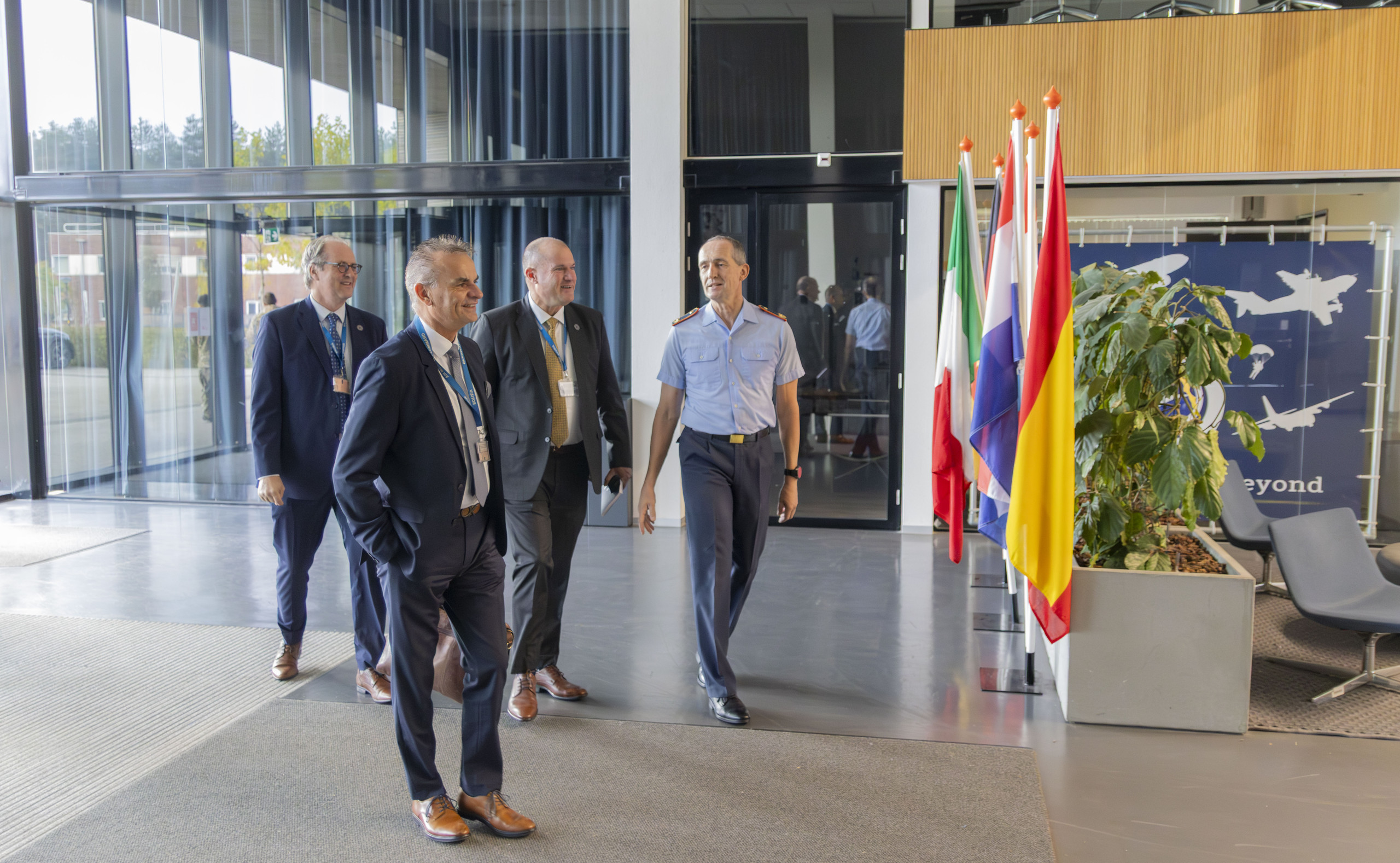
Europe is once again thinking big — quite literally. With a high-level RADIA delegation visiting the European Air Transport Command (EATC) on 16 October 2025, the debate on future oversized and outsized airlift capabilities has gained new momentum.
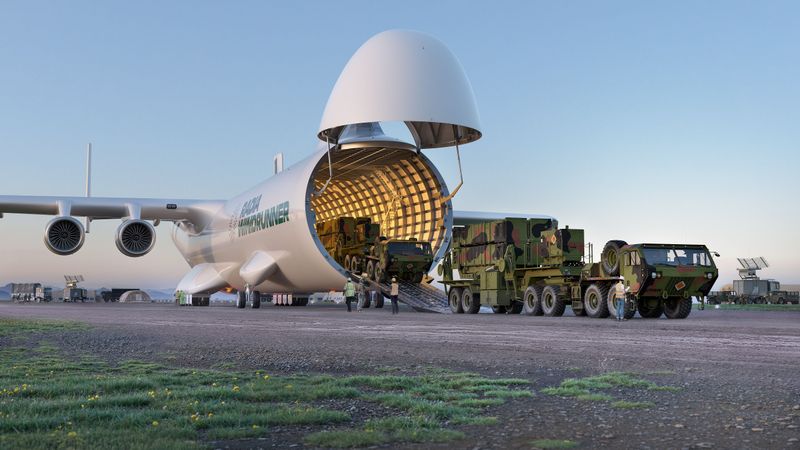
Radia is building the world's largest aircraft, the WindRunner, with 10x bigger volume than a 777, and the ability to land on dirt strips.
(Source: RADIA)
Europe and the United States are entering a new era of heavy-lift innovation. With a high-level RADIA delegation visiting the European Air Transport Command (EATC) on 16 October 2025, the discussion around future oversized and outsized airlift capabilities took on a distinctly strategic tone.
The meeting in Eindhoven reflected a growing convergence between industry and military mobility planners — on both sides of the Atlantic — who see the next decade as decisive for the future of air logistics.The talks in Eindhoven marked the beginning of a structured exchange between industry and European air mobility planners — a development that could have far-reaching implications for NATO’s strategic lift architecture.
“The Skies Are About to Get a Lot More Impressive”
Unveiled earlier this year at the Air, Space & Cyber Conference in Maryland, RADIA’s WindRunner made already headlines across the defence world. The American firm describes it as a revolutionary rethink of 21st-century military logistics — an aircraft designed not just to carry weight, but to move entire operational systems anywhere on the globe.
Unlike Cold War-era giants such as the C-5 Galaxy or An-124 Ruslan, the WindRunner prioritizes volume over mass. Its payload capacity of roughly 72 tonnes is about half that of a C-5, but its cargo volume of 6,800 m³ is seven times greater than the Galaxy’s and twelve times that of a C-17.That space could theoretically accommodate twelve AH-64 Apaches, six CH-47 Chinooks, or four F-35Cs — fully assembled — in a single flight.
Engineering for Modern Warfare
The WindRunner is tailored for the new age of Agile Combat Employment (ACE) — the doctrine emphasizing dispersed, flexible operations from austere or damaged airfields. It can reportedly take off from runways as short as 1,800 m, a remarkable improvement over the C-5’s required 2,400 m at full load. This makes the aircraft a potential lifeline for rapid deployments across the Indo-Pacific, where extended Chinese anti-access networks threaten conventional logistics routes. A 2023 RAND report on logistics in contested environments underscored the urgency: “The ability to deliver oversized cargo rapidly and intact is a critical bottleneck in any future scenario involving peer competitors.”
Why Oversized and Outsized Airlift Matters Now
In military and logistics terminology, precision matters:– Oversized cargo refers to loads exceeding standard pallet dimensions but still transportable by existing heavy-lift aircraft such as the C-17 or A400M.– Outsized cargo describes items so large or irregularly shaped that they cannot be loaded or handled through conventional means — entire rotor blades, missile launchers, modular reactors, or intact helicopter fuselages. Across NATO and the EU, awareness is growing that the current airlift fleet is aging, and there is no direct successor for the world’s few outsized cargo aircraft — notably the destroyed An-225 Mriya and the dwindling An-124 fleet. This is precisely the gap RADIA aims to fill with its WindRunner concept.
Strategic Dialogue in Eindhoven – EATC and RADIA in Conversation
RADIA Delegation visting EATC: Ken Bibb (Vice President Defence Business Development) Melvin Johnson (Vice President Regulatory Affairs) General (ret.) Christian Badia (European Advisor; former EATC Commander, 2014–2017)
(Source: EATC)
According EATC the October meeting covered several key themes: - Operational Requirement Mapping: EATC experts presented future load profiles and route projections, highlighting where outsized transport demand is likely to rise — particularly in system relocation and infrastructure deployment across the European theatre. - Capability Gaps and Timelines: As current fleets approach obsolescence by the mid-2030s, participants discussed how next-generation aircraft could be phased in to prevent a strategic lift shortfall. - Role Definition: According to RADIA’s Ken Bibb, Vice President Defence Business Development, the WindRunner is conceived as a strategic, long-range platform, complementing tactical airlifters rather than replacing them — a “global mover” for entire system modules. - EATC’s Potential Role: The Command could act as an advisory and coordination hub, aligning national requirements, defining standards, and pooling technical expertise for a collective capability roadmap. - Technical Challenges: Runway compatibility, modular loading systems, certification pathways, and interoperability standards remain key hurdles. EATC emphasized host-nation infrastructure constraints, alliance interoperability, and cost structures as critical factors.
The meeting was officially described as “exploratory in nature”, but its undertone was unmistakable: Europe must plan now to avoid a future deficit in outsized airlift capacity.
The dialogue between EATC and RADIA signals that the discussion around outsized airlift is moving from vision to strategic planning. Whether the WindRunner — or a future European counterpart — eventually takes the skies remains to be seen. What is certain is that the conversation is happening at the right time. The strategic question is no longer if such aircraft will be needed — but who will build them first, and under which flag they will fly.
Date: 08.12.2025
Naturally, we always handle your personal data responsibly. Any personal data we receive from you is processed in accordance with applicable data protection legislation. For detailed information please see our privacy policy.
Consent to the use of data for promotional purposes
I hereby consent to Vogel Communications Group GmbH & Co. KG, Max-Planck-Str. 7-9, 97082 Würzburg including any affiliated companies according to §§ 15 et seq. AktG (hereafter: Vogel Communications Group) using my e-mail address to send editorial newsletters. A list of all affiliated companies can be found here
Newsletter content may include all products and services of any companies mentioned above, including for example specialist journals and books, events and fairs as well as event-related products and services, print and digital media offers and services such as additional (editorial) newsletters, raffles, lead campaigns, market research both online and offline, specialist webportals and e-learning offers. In case my personal telephone number has also been collected, it may be used for offers of aforementioned products, for services of the companies mentioned above, and market research purposes.
Additionally, my consent also includes the processing of my email address and telephone number for data matching for marketing purposes with select advertising partners such as LinkedIn, Google, and Meta. For this, Vogel Communications Group may transmit said data in hashed form to the advertising partners who then use said data to determine whether I am also a member of the mentioned advertising partner portals. Vogel Communications Group uses this feature for the purposes of re-targeting (up-selling, cross-selling, and customer loyalty), generating so-called look-alike audiences for acquisition of new customers, and as basis for exclusion for on-going advertising campaigns. Further information can be found in section “data matching for marketing purposes”.
In case I access protected data on Internet portals of Vogel Communications Group including any affiliated companies according to §§ 15 et seq. AktG, I need to provide further data in order to register for the access to such content. In return for this free access to editorial content, my data may be used in accordance with this consent for the purposes stated here. This does not apply to data matching for marketing purposes.
Right of revocation
I understand that I can revoke my consent at will. My revocation does not change the lawfulness of data processing that was conducted based on my consent leading up to my revocation. One option to declare my revocation is to use the contact form found at https://contact.vogel.de. In case I no longer wish to receive certain newsletters, I have subscribed to, I can also click on the unsubscribe link included at the end of a newsletter. Further information regarding my right of revocation and the implementation of it as well as the consequences of my revocation can be found in the data protection declaration, section editorial newsletter.
Sources: EATC Press Release, 16 Oct 2025 · Radia Aerospace




:quality(80)/p7i.vogel.de/wcms/5c/f4/5cf4b36095a94ba2f68758937ba1de05/1337325-header-schaeffler-annual-press-conference-2026-rwd-1200-907x510v1.jpeg "(Source: Schaeffler)")
:quality(80)/p7i.vogel.de/wcms/f5/7e/f57ef535ee35e7b3b7ff15a8a63cef10/eds-keyvisual-8000x4496v1.jpeg "(Source: European Defence Supply)")
:quality(80)/p7i.vogel.de/wcms/74/3b/743bf14a025936a58baa40e6cfd84925/3b11269da149--ddk8065-kopie-1439x810v1.jpeg "(Source: Diehl)")
:quality(80)/p7i.vogel.de/wcms/4f/c2/4fc2f43de819a9ad7c397e9f10a2b1f8/r-c3-b6hl-2c-20klaus-20heiner-3046x1715v1.jpeg "Klaus-Heiner Röhl: Procurement must be more pragmatic. (Source: IW)")
:quality(80)/p7i.vogel.de/wcms/22/0f/220f18c2bd4c568655f4b73b2f4caa30/hohe-20sp-c3-bclqualit-c3-a4t-20bei-20high-20purity-20reinigung-kompr--6000x3373v1.jpeg "High flushing quality for high-purity cleaning: Test cleaning at the BvL Technology Center with the Atlantic cleaning system and a ultrapure water treatment system (EnviroFalk) (Source: BvL Oberflächentechnik GmbH )")
:quality(80)/p7i.vogel.de/wcms/2e/26/2e266230c10214384454c78a60c6f555/0129209328v1.jpeg "Agent BigEarth is based on a novel combination of several AI modules working together as specialized subagents. (Image:BIFOLD)")
:quality(80)/p7i.vogel.de/wcms/6d/08/6d088b8a36bcbc339121496f57f47b56/5-26-20peltier-20-28mil-29-druck-2100x1181v1.jpeg "(Source: Peltier)")
:quality(80)/p7i.vogel.de/wcms/c2/22/c222ab56cb3ec811c11a7c6595c53ac3/4u001-111-7680x4322v1.jpeg "(Source: Peli Products)")
:quality(80)/p7i.vogel.de/wcms/9a/a0/9aa09568db7b06b1a5d1d196bd7d0bc5/0129568242v1.jpeg "Air bp and Airbus have signed a multi-year fuel supply contract. (Image:Airbus)")
:quality(80)/p7i.vogel.de/wcms/1e/52/1e52027cb1285c559cc28d89cee5954c/airbus-1251x703v1.png "(Image: Airbus)")
:quality(80)/p7i.vogel.de/wcms/21/e3/21e3203ba1d373548efb6fcfcdb26a6c/esa-20artemis-1920x1079v1.jpeg "(Source: NASA)")
:quality(80)/p7i.vogel.de/wcms/d6/2e/d62e273fe38b3d8e065f1a18fc0139ae/flugzeug-20am-20himmel-1792x1009v1.png "(Source: AI-generated)")
:quality(80)/p7i.vogel.de/wcms/08/e1/08e18119c40b9ccb8a253d8bafebf99b/signing-hensoldt-schwarz-digits-1280x720v1.png "At the signing (left to right): Christian Müller (Co-CEO Schwarz Digits), Oliver Dörre (CEO HENSOLDT), Rolf Schumann (Co-CEO Schwarz Digits). (Source: Schwarz Digits)")
:quality(80)/p7i.vogel.de/wcms/d8/84/d884e6d5d1f613f96f3b81caf770f4a1/volzi-hands-8062985-1280-1280x720v1.jpeg "Sphera’s Hazardous Material Management System (HMMS) supports current and future NASA missions, advances world-class research, innovation and exploration, and protects the people behind them. (Image:Andreas Volz on Pixabay)")
:quality(80)/p7i.vogel.de/wcms/a2/83/a2834934b7b64c86a2071c7d40deab79/evolution-wifi-3840x2158v1.png "The evolution of WiFi according to Qualcomm. (Copyright: Qualcomm)")
:quality(80)/p7i.vogel.de/wcms/3b/30/3b306e8e4a378f13cdb12b3107c5c642/curtiss-wright-2026-425x239v1.jpeg "(Image:Curtiss-Wright, Green Hills Software)")
:quality(80)/p7i.vogel.de/wcms/43/7b/437b848e817e7e6018612389b9e65046/0129580414v1.jpeg "Until now, Rheinmetall has primarily equipped warships with laser systems and cannons, such as the Oerlikon Millennium Gun for fast surface targets. Now, however, the Düsseldorf (Germany) -based defence company wants to build entire ships, as it is allowed to take over NVL ... (Image:Rheinmetall Air Defence AG)")
:quality(80)/p7i.vogel.de/wcms/42/53/425386d9947a2808f3ca893cb8e9a6b0/img-20251008-150724-4640x2608v1.webp "(Source: EDA)")
:quality(80)/p7i.vogel.de/wcms/56/05/5605b839b834ac95bf6080eb8d45da8d/0129486952v1.jpeg "(Image:Helsing)")
:quality(80)/p7i.vogel.de/wcms/71/0a/710acaf63161980c2f36191d24dfcbac/hyperschallflugkoerper-bild-mod-uk-852x479v1.jpeg "(Source: Amentum)")
:quality(80)/p7i.vogel.de/wcms/f9/2f/f92f1ef8c739c34c70d99f7b0997621b/stra007-20--20cover-20image-5472x3076v1.jpeg "(Source: Stratasys)")
:quality(80)/p7i.vogel.de/wcms/5e/18/5e184e4961f190c86a1ea3227104cab5/26pm03-20kompakte-20l-c3-b6sungen-20f-c3-bcr-20luft--20und-20raumfahrt-202-2362x1329v1.jpeg "(Picture: Keysight)")
:quality(80)/p7i.vogel.de/wcms/67/4c/674c54baa745be497cecb716826af339/stahlwille-hero-1807x1016v1.jpeg "A new modular tool solution designed for safety, precision, and mobility in aviation maintenance. (Source: STAHLWILLE)")
:quality(80)/p7i.vogel.de/wcms/0d/01/0d01a051ba894332a8091e3a3f9394e1/hytorc-defense-solutions-boxersatz-1899x1068v1.jpeg "HYTORC’s Defence Solutions toolkit, proven on the GTK Boxer, enables safe, traceable fastening of critical components across multiple Bundeswehr platforms. (Source: Image: HYTORC)")
:quality(80)/p7i.vogel.de/wcms/f9/e3/f9e366fdc9d581e281004366f5e17380/1c902666-8165-428e-ae5c-33da09d8ba56-1536x864v1.png "What does the future of cargo aircraft look like? (Source: Created with AI assistance / GK)")
:quality(80)/p7i.vogel.de/wcms/9b/d1/9bd12697a1c0e7163d1dfbc6d54fd3c9/airbus-770x433v1.jpeg "NH90 helicopters in service across all branches of the Spanish Armed Forces. The platform has proven its versatility in national disaster relief operations and international deployments. (Source: Airbus Helicopters)")