



:quality(80)/p7i.vogel.de/wcms/95/d9/95d9c3cc05b5c405760b69d13b536fc9/euspa-20hq-20prague-1984x1116v1.jpeg "(Source: EUSPA)")
:quality(80)/p7i.vogel.de/wcms/85/49/85490f8158575e4adcf1d7ac909b8fb2/ck-image-1920w-1920x1080v1.webp "Christoph Ketterle,Principle at Horváth AG. (Source: Horváth AG)")
:quality(80)/p7i.vogel.de/wcms/3c/dc/3cdc7e8f8b267ebb9a2242c5823932b2/leopard-2-a5-der-bundeswehr-2646x1489v1.jpeg "Will successors be ready quickly? Plans are also under way for a future replacement for the Leopard tank. (Photo: Bundeswehr)")
:quality(80)/p7i.vogel.de/wcms/ce/ab/ceabc9d507f819c1da8c5a7d77673a72/freisteller-flugabwehrraketensystem-patriot-1244x700v1.png "(Source: Bundeswehr)")
:quality(80)/p7i.vogel.de/wcms/94/de/94dea9b2591234e537115051516e5f7e/ea-deepx-som-2100x1182v1.jpeg "(Source: Virtium)")
:quality(80)/p7i.vogel.de/wcms/9e/5c/9e5cc6535fddf2f34dc58a238627face/493-403-32-2920x1643v1v1.jpeg "During the development of the N40 MC machining centre, NILES-SIMMONS collaborated with a jet engine manufacturer. However, the machines are also used outside the aerospace industry. (Source: NILES-SIMMONS)")
:quality(80)/p7i.vogel.de/wcms/a5/66/a56647bb7027b0e55a907fb2abf5f0cc/bba300-broadband-amplifier-hero-view-rohde-schwarz-200-56753-2880-1620-9-2880x1619v1.jpeg "Rohde & Schwarz amplifiers optimise high-field immunity testing at IBL Lab. (Source: Rohde & Schwarz GmbH & Co. KG)")
:quality(80)/p7i.vogel.de/wcms/08/2e/082e7ee4fff00331de609913c1c062f9/afc-0326-1-2480x1395v1.jpeg "Smalley wave springs offered by AFC Europe are also used in the design of defence and security systems. Here, they often replace springs made from stamped sheet metal. (Source: AFC/ Smalley)")
:quality(80)/p7i.vogel.de/wcms/fb/39/fb39078c72b79ac9210eb6bfd91391d6/isar-aerospace-launch-pad-at-andoya-space-c-isar-aerospace-2026-03-16-103348-wdvt-5322x2996v1.jpeg "(Source: Isar Aerospace)")
:quality(80)/p7i.vogel.de/wcms/0e/ed/0eed09669b79e3f05af297b580e18844/launch-vehicle-spectrum-at-andoya-space-c-isar-aerospace-2026-01-30-083741-ruml-4007x2254v1.jpeg "(Source: Isar Aerospace)")
:quality(80)/p7i.vogel.de/wcms/96/18/961852680c343ab9f3fe29780e33a503/rad-hard-ic-artemis-ii-en-20-281-29-1920x1079v1.jpeg "(Source: Renesas)")
:quality(80)/p7i.vogel.de/wcms/17/ff/17ff08baf9178b2e912fe8d60a2340e9/sls-maf-20260401-artemisiilaunch-03-medium-1280x720v1.jpeg "Artemis II launch. (Source: NASA)")
:quality(80)/p7i.vogel.de/wcms/fa/8f/fa8f745e2f507b61102cfc0589305b80/0130522052v1.jpeg "What you see here is the successful combination of the Lars UPS system from Kraken Robotics and the RD-22 from Sefine. Added to this is the Katfish towed sonar system from Kraken. All in all, this robotic mix is intended to strengthen mine defence. Initial demonstrations have been successful. (Source: Octopus Robotics)")
:quality(80)/p7i.vogel.de/wcms/a7/63/a763e019287f1099bc7b94c26a93b942/1544532155-winmate-remote-20control-20drone-s101tg-gcs-8000x4496v1.jpeg "The effectiveness of military drone operations depends crucially on ground control stations. NATO defines standards for technology and architecture. (Source: TL Electronic GmbH)")
:quality(80)/p7i.vogel.de/wcms/7c/26/7c26c3ee1cffa5264a644a4da4767e40/ew-2026-gateworks-nxp-400x225v1.jpeg "Gateworks joins forces with NXP to unveil new USA-made M.2 AI acceleration card, featuring decoupled AI architecture. (Source: Gateworks)")
:quality(80)/p7i.vogel.de/wcms/02/d9/02d94d8620db048306aa73030b138865/arian-20van-20huelsen-203-1600x900v1.jpeg "Arian van Hülsen, Director Solutions Consulting & Global AI Champion at PTC (Source: PTC)")
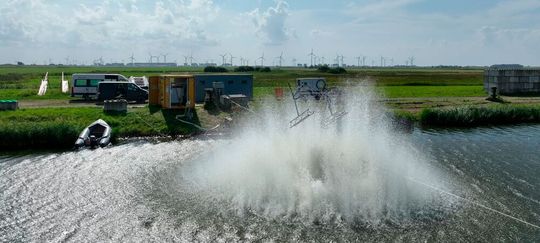
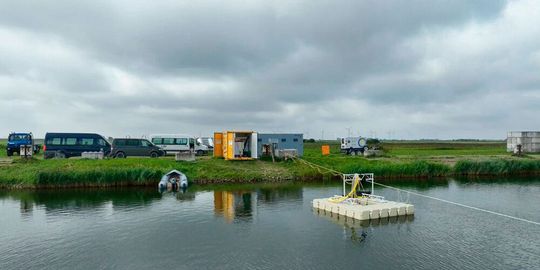
:quality(80)/p7i.vogel.de/wcms/7e/5e/7e5ecad745e0aa3c3c92dea383682ac5/0130570251v1.jpeg "This is what happens when old ammunition is disarmed in bodies of water in the usual way: Pressure, sound and environmental pollution, as you can see from the fountain. Then it is also expensive. But know-how from the LZH can prevent this as far as possible ... (Image:LZH)")
:quality(80)/p7i.vogel.de/wcms/bb/5b/bb5bdac9050e0187246e75f938aa685d/0130412089v1.jpeg "A new decision by the EU Commission will also please the soldiers in Ukraine. A large sum is now being allocated to further support Ukraine with armaments while also upgrading the EU itself in terms of defence technology ... (Image:D. Boschkowitsch)")
:quality(80)/p7i.vogel.de/wcms/4b/44/4b447d9e30b31f8b164ad52deb283d92/uxv-concept-u5-kestrel-1000px-980x551v1.jpeg "(Source: Kymeta)")
:quality(80)/p7i.vogel.de/wcms/16/92/1692aa170ee108e81daa3408fc6c7562/foto-50-1-scaled-2560x1441v1.jpeg "(Source: Quantum-Systems GmbH)")
:quality(80)/p7i.vogel.de/wcms/f9/2f/f92f1ef8c739c34c70d99f7b0997621b/stra007-20--20cover-20image-5472x3076v1.jpeg "(Source: Stratasys)")
:quality(80)/p7i.vogel.de/wcms/5e/18/5e184e4961f190c86a1ea3227104cab5/26pm03-20kompakte-20l-c3-b6sungen-20f-c3-bcr-20luft--20und-20raumfahrt-202-2362x1329v1.jpeg "(Picture: Keysight)")
:quality(80)/p7i.vogel.de/wcms/67/4c/674c54baa745be497cecb716826af339/stahlwille-hero-1807x1016v1.jpeg "A new modular tool solution designed for safety, precision, and mobility in aviation maintenance. (Source: STAHLWILLE)")
:quality(80)/p7i.vogel.de/wcms/0d/01/0d01a051ba894332a8091e3a3f9394e1/hytorc-defense-solutions-boxersatz-1899x1068v1.jpeg "HYTORC’s Defence Solutions toolkit, proven on the GTK Boxer, enables safe, traceable fastening of critical components across multiple Bundeswehr platforms. (Source: Image: HYTORC)")
:quality(80)/p7i.vogel.de/wcms/f3/4e/f34ed744bb30817d3432c7ad522e6f30/engine-1v1.jpeg "Engineering with aluminium profiles really can be this easy – the item Engineeringtool and its smart functions help you save valuable time. (Source: item)")
:quality(80)/p7i.vogel.de/wcms/fb/8e/fb8e5ae2aa27bcf3e466815505ca4ff2/alumin-1v1.jpeg "The aluminium profile technology of the item Building Kit System has been used to build a huge variety of structures for decades. (Source: item)")
:quality(80)/p7i.vogel.de/wcms/be/84/be84bbede3e40b1101cd3efa35a6ffa0/overview-of-20work-bench-design-in-productionv1.jpeg "With modular work bench design, you can convert or extend a work bench with ease by changing or adding accessories. This means changes can be implemented quickly and cost-effectively, thus boosting quality and productivity. (Source: item)")
:fill(fff,0)/p7i.vogel.de/companies/69/6d/696de2483d115/logo--fastems-rgb-horizontal.jpeg "logo--fastems-rgb-horizontal (Fastems)")
:fill(fff,0)/images.vogel.de/vogelonline/companyimg/84700/84735/65.jpg "logo_item_rgb_neu.jpg ()")
Date: 08.12.2025
Naturally, we always handle your personal data responsibly. Any personal data we receive from you is processed in accordance with applicable data protection legislation. For detailed information please see our privacy policy.
Consent to the use of data for promotional purposes
I hereby consent to Vogel Communications Group GmbH & Co. KG, Max-Planck-Str. 7-9, 97082 Würzburg including any affiliated companies according to §§ 15 et seq. AktG (hereafter: Vogel Communications Group) using my e-mail address to send editorial newsletters. A list of all affiliated companies can be found here
Newsletter content may include all products and services of any companies mentioned above, including for example specialist journals and books, events and fairs as well as event-related products and services, print and digital media offers and services such as additional (editorial) newsletters, raffles, lead campaigns, market research both online and offline, specialist webportals and e-learning offers. In case my personal telephone number has also been collected, it may be used for offers of aforementioned products, for services of the companies mentioned above, and market research purposes.
Additionally, my consent also includes the processing of my email address and telephone number for data matching for marketing purposes with select advertising partners such as LinkedIn, Google, and Meta. For this, Vogel Communications Group may transmit said data in hashed form to the advertising partners who then use said data to determine whether I am also a member of the mentioned advertising partner portals. Vogel Communications Group uses this feature for the purposes of re-targeting (up-selling, cross-selling, and customer loyalty), generating so-called look-alike audiences for acquisition of new customers, and as basis for exclusion for on-going advertising campaigns. Further information can be found in section “data matching for marketing purposes”.
In case I access protected data on Internet portals of Vogel Communications Group including any affiliated companies according to §§ 15 et seq. AktG, I need to provide further data in order to register for the access to such content. In return for this free access to editorial content, my data may be used in accordance with this consent for the purposes stated here. This does not apply to data matching for marketing purposes.
Right of revocation
I understand that I can revoke my consent at will. My revocation does not change the lawfulness of data processing that was conducted based on my consent leading up to my revocation. One option to declare my revocation is to use the contact form found at https://contact.vogel.de. In case I no longer wish to receive certain newsletters, I have subscribed to, I can also click on the unsubscribe link included at the end of a newsletter. Further information regarding my right of revocation and the implementation of it as well as the consequences of my revocation can be found in the data protection declaration, section editorial newsletter.
:quality(80)/p7i.vogel.de/wcms/cc/85/cc85b2644d866337caea1cbf85c5ed42/0118327329v1.jpeg "The MFFD aircraft fuselage segment, completed through thermoplastic welding, at the Fraunhofer Society in Stade. (Image:Fraunhofer IFAM)")
:quality(80)/p7i.vogel.de/wcms/60/70/60700a139faf69c2e921022f7e9345f9/ammo-6845362-1280-1280x720v1.jpeg "Symbol image: Legacy ammunition like artillery shells and bombs remains a major environmental and safety challenge across Germany. Rheinmetall’s new facility in Bavaria aims to address this issue on an industrial scale. (Source: Bild von Mark Scanland auf Pixabay)")