



:quality(80)/p7i.vogel.de/wcms/fa/02/fa027b088c4c527f4043fe05fe118547/0129437264v1.jpeg "Not everyone can produce something like this precisely from safety steel. But this is the expertise of Thyrolf & Uhle. And because they know how to do this, the company has now been taken over by Salzgitter AG in order to strengthen the defence sector. (Source: Thyrolf & Uhle)")
:quality(80)/p7i.vogel.de/wcms/6b/5f/6b5fd23a263f879c4f236743ad6605b5/thales-1680x944v1.png "(Source: Thales)")
:quality(80)/p7i.vogel.de/wcms/87/00/8700034ac196ccc0355f1fd9cb000835/img-0028-2048x1152v1.jpeg "(Source: Veronika Maucher)")
:quality(80)/p7i.vogel.de/wcms/22/e3/22e30fed9ead73bce82f6f3032e72f34/0129461099v1.jpeg "Dieffenbacher is a specialist in presses that produce fiber-reinforced plastic parts and also has the necessary process technology in its portfolio. Lightweight construction is therefore Eppinger's expertise. This will be exhibited at JEC World to demonstrate its value for the aerospace and defence sectors. (Image:Dieffenbacher)")
:quality(80)/p7i.vogel.de/wcms/16/fb/16fbc4df18d896b8f010ac7c3db31baf/the-image-combines-a-model-derived-from-a-scanning-electron-microscopy-image--28left-29-with-a-snippet-of-the-underlying-crystal-structure-of-a-studied-mxene-featuring-precisely-controlled-surface-terminations-1280x719v1.png "The image combines a model derived from a scanning electron microscopy image (left) with a snippet of the underlying crystal structure of a studied MXene featuring precisely controlled surface terminations. (Source: B. Schröder/HZDR)")
:quality(80)/p7i.vogel.de/wcms/06/c4/06c4c1f7cb2db424a0b487fc3f838c25/aircraft-future-liebherr-w800-800x450v1.png "Liebherr-Aerospace Lindenberg GmbH is leading key LuFo VII research projects to advance digital manufacturing and next-generation flight control technologies for future aircraft. (Image:Liebherr-Aerospace Lindenberg GmbH)")
:quality(80)/p7i.vogel.de/wcms/4d/c2/4dc217733bc92949e46d16e6c5dddd12/csm-image-stephanik-1920x1080-75954d80cc-960x540v1.webp "The Stephanik project brings together the expertise of institutions, companies and research organisations from Slovakia, Spain and Germany. (Image:TÜV NORD GROUP)")
:quality(80)/p7i.vogel.de/wcms/1c/3c/1c3c68f404be8d9b19ee63770f65ef78/lichtbogenschweissen-sensorik-lessmueller-lasertechnik-300dpi-2480x1394v1.jpeg "(Copyright: Lessmüller Lasertechnik GmbH)")
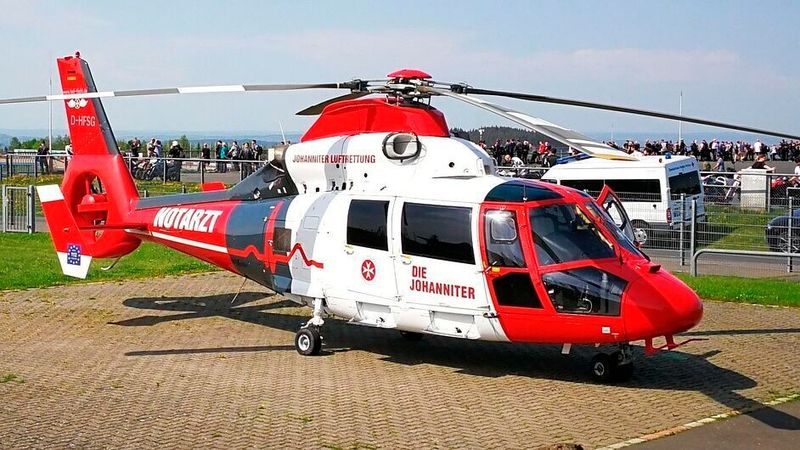
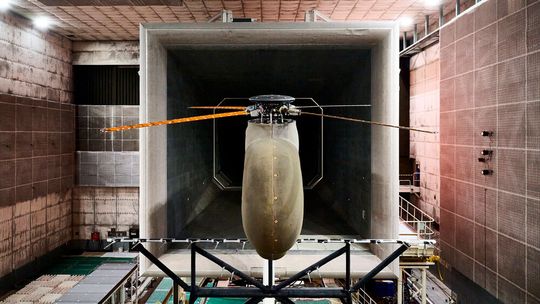
:quality(80)/p7i.vogel.de/wcms/38/71/3871c6b863111dfb4740ad85aaecbff5/0129205858v1.jpeg "Helicopters are indispensable for rescue operations. However, they generate a lot of noise, especially during landing approaches. This is where the Star project aims to provide a solution. (Image:freely licensed on Pixabay)")
:quality(80)/p7i.vogel.de/wcms/9f/fa/9ffaaa73caa4782977f1102551697212/7z9a9904576-kopie-1864x1048v1.jpeg "(Source: Gate Space)")
:quality(80)/p7i.vogel.de/wcms/92/df/92df0377e2e7ac7ffa731e90a32fdb43/0129137154v1.jpeg "Joby Aviation is preparing for the first wave of pilot training for eVTOLs with CAE flight simulators. (Image:Joby Aviation)")
:quality(80)/p7i.vogel.de/wcms/7a/fb/7afbee64e8b2ce2d15966c1db602a67e/ca-1-20europa-1642x924v1.jpeg "(Source: Helsing)")
:quality(80)/p7i.vogel.de/wcms/d8/84/d884e6d5d1f613f96f3b81caf770f4a1/volzi-hands-8062985-1280-1280x720v1.jpeg "Sphera’s Hazardous Material Management System (HMMS) supports current and future NASA missions, advances world-class research, innovation and exploration, and protects the people behind them. (Image:Andreas Volz on Pixabay)")
:quality(80)/p7i.vogel.de/wcms/a2/83/a2834934b7b64c86a2071c7d40deab79/evolution-wifi-3840x2158v1.png "The evolution of WiFi according to Qualcomm. (Copyright: Qualcomm)")
:quality(80)/p7i.vogel.de/wcms/3b/30/3b306e8e4a378f13cdb12b3107c5c642/curtiss-wright-2026-425x239v1.jpeg "(Image:Curtiss-Wright, Green Hills Software)")
:quality(80)/p7i.vogel.de/wcms/07/0f/070f2f6a28e954422c60a0e15cb73471/0128576617v1.jpeg "The aerospace industry is under great pressure to develop faster, plan more efficiently, and utilize resources better. Quantum computing can help with this. (Image:freely licensed on Pixabay)")
:quality(80)/p7i.vogel.de/wcms/26/ec/26ec35d6e763820a8abd9dcf907268b3/drohne-20flughafen-1536x864v1.png "(Source: AI-generated)")
:quality(80)/p7i.vogel.de/wcms/39/59/39597784268fb39ee87dac4d32a17e5f/marius-lammers-inleap-photonics-1200x674v1.jpeg "(Source: Inleap Photonics)")
:quality(80)/p7i.vogel.de/wcms/6a/4f/6a4fa50bd37388076fa7d04761ee4cea/inleap-c2-ae-fastlight-c2-ae-shield-lasertechnologie-1536x864v1.jpeg "INLEAP FASTLIGHT SHIELD effector unit (Image:INLEAP Photonics GmbH)")
:quality(80)/p7i.vogel.de/wcms/0b/81/0b81b379fc7810dfe22c94b0471e32d4/63bd918df621-luft-01-gbad-system-1778x1000v1.jpeg "IRIS-T SLM and IRIS-T SLS—Modular ground-based air-defence systems for protection of objects, areas and mobile troops (Image: Diehl Defence GmbH & Co. KG)")
:quality(80)/p7i.vogel.de/wcms/5e/18/5e184e4961f190c86a1ea3227104cab5/26pm03-20kompakte-20l-c3-b6sungen-20f-c3-bcr-20luft--20und-20raumfahrt-202-2362x1329v1.jpeg "(Picture: Keysight)")
:quality(80)/p7i.vogel.de/wcms/67/4c/674c54baa745be497cecb716826af339/stahlwille-hero-1807x1016v1.jpeg "A new modular tool solution designed for safety, precision, and mobility in aviation maintenance. (Source: STAHLWILLE)")
:quality(80)/p7i.vogel.de/wcms/0d/01/0d01a051ba894332a8091e3a3f9394e1/hytorc-defense-solutions-boxersatz-1899x1068v1.jpeg "HYTORC’s Defence Solutions toolkit, proven on the GTK Boxer, enables safe, traceable fastening of critical components across multiple Bundeswehr platforms. (Source: Image: HYTORC)")
:quality(80)/p7i.vogel.de/wcms/f1/ab/f1ab7543976a5ac7364579f3106a3774/-e2-80-8b-e2-80-8bground-20container-20system-20for-20the-20eurofighter-20weapon-20system-20phot-20hensoldt-20agclipboard-07-25-2025-01-1022x575v1.jpeg "The GSCS: A fully shielded, self-sufficient ground system for mission and maintenance data processing, developed by HENSOLDT and steep for the Eurofighter weapon system. (Bild: HENSOLDT AG)")
Date: 08.12.2025
Naturally, we always handle your personal data responsibly. Any personal data we receive from you is processed in accordance with applicable data protection legislation. For detailed information please see our privacy policy.
Consent to the use of data for promotional purposes
I hereby consent to Vogel Communications Group GmbH & Co. KG, Max-Planck-Str. 7-9, 97082 Würzburg including any affiliated companies according to §§ 15 et seq. AktG (hereafter: Vogel Communications Group) using my e-mail address to send editorial newsletters. A list of all affiliated companies can be found here
Newsletter content may include all products and services of any companies mentioned above, including for example specialist journals and books, events and fairs as well as event-related products and services, print and digital media offers and services such as additional (editorial) newsletters, raffles, lead campaigns, market research both online and offline, specialist webportals and e-learning offers. In case my personal telephone number has also been collected, it may be used for offers of aforementioned products, for services of the companies mentioned above, and market research purposes.
Additionally, my consent also includes the processing of my email address and telephone number for data matching for marketing purposes with select advertising partners such as LinkedIn, Google, and Meta. For this, Vogel Communications Group may transmit said data in hashed form to the advertising partners who then use said data to determine whether I am also a member of the mentioned advertising partner portals. Vogel Communications Group uses this feature for the purposes of re-targeting (up-selling, cross-selling, and customer loyalty), generating so-called look-alike audiences for acquisition of new customers, and as basis for exclusion for on-going advertising campaigns. Further information can be found in section “data matching for marketing purposes”.
In case I access protected data on Internet portals of Vogel Communications Group including any affiliated companies according to §§ 15 et seq. AktG, I need to provide further data in order to register for the access to such content. In return for this free access to editorial content, my data may be used in accordance with this consent for the purposes stated here. This does not apply to data matching for marketing purposes.
Right of revocation
I understand that I can revoke my consent at will. My revocation does not change the lawfulness of data processing that was conducted based on my consent leading up to my revocation. One option to declare my revocation is to use the contact form found at https://contact.vogel.de. In case I no longer wish to receive certain newsletters, I have subscribed to, I can also click on the unsubscribe link included at the end of a newsletter. Further information regarding my right of revocation and the implementation of it as well as the consequences of my revocation can be found in the data protection declaration, section editorial newsletter.
:quality(80)/p7i.vogel.de/wcms/2a/62/2a6208fde804d58c029647c535d4ee1b/0120259507v1.jpeg "The DLR Institute of Aeroelasticity conducted vibration tests on the VoloCity air taxi from Volocopter. (Image:DLR (CC BY-NC-ND 3.0))")
:quality(80)/p7i.vogel.de/wcms/36/7b/367ba7d7b99cceeddd7264645ed7ee07/0127041307v1.jpeg "Very versatile: In agriculture, drones, for example, support more efficient management of agricultural land. (Image:freely licensed)")