



:quality(80)/p7i.vogel.de/wcms/7a/8b/7a8bb2bd0b936077fab324ff13ff9322/just-20imagine-20--20thomas-20benz-3648x2053v1.jpeg "At the Bundeswehr University Munich, Prof. Dieter Gerling researches and teaches in the field of alternative electric powertrains. (Source: just imagine - Thomas Benz)")
:quality(80)/p7i.vogel.de/wcms/ac/1a/ac1a08ab5b6185a4f222383178f7fcc3/mcm-20sede-20vigolzone-20pc-20pm-3648x2052v1.jpeg "(Picture: MCM)")
:quality(80)/p7i.vogel.de/wcms/a9/a5/a9a51ed74a731b1676a4b931dde90885/rheinmetall-ermine-4x4-ermine-6x6-hq--r6ii6338-2-2000x1124v1.jpeg "Rheinmetall’s Hermelin: a lightweight hybrid vehicle that can also be operated remotely. (Source: Rheinmetall AG)")
:quality(80)/p7i.vogel.de/wcms/85/90/8590f13c4e931e9be66b3de845bf456d/0129102702v1.jpeg "After Rheinmetall embarked on the path to space armament at the end of last year, it is now taking the next step in this direction. It intends to cooperate with OHB. More about it here ... (Image:OHB)")
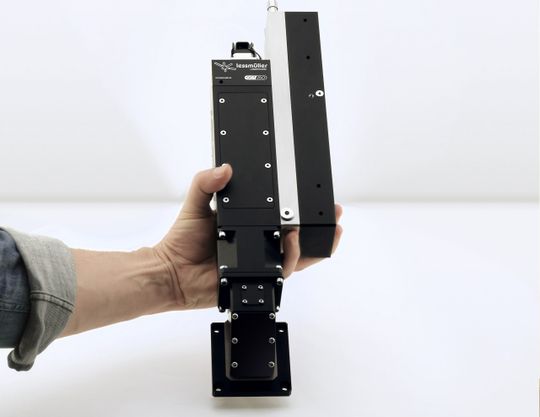
:quality(80)/p7i.vogel.de/wcms/1c/3c/1c3c68f404be8d9b19ee63770f65ef78/lichtbogenschweissen-sensorik-lessmueller-lasertechnik-300dpi-2480x1394v1.jpeg "(Copyright: Lessmüller Lasertechnik GmbH)")
:quality(80)/p7i.vogel.de/wcms/da/1e/da1e41c3f300922704eb81704996c154/0129293948v1.jpeg "The EPC2366 (Image:Efficient Power Conversion)")
:quality(80)/p7i.vogel.de/wcms/e7/13/e71348200f14948f01123a8a9e6d9e91/tews-20vita-2093-1200x675v1.webp "(Picture: TEWS Technologies)")
:quality(80)/p7i.vogel.de/wcms/65/9a/659aa78dd446d5a5aaebdbd650ef0461/pilotlinie-1536x864v1.png "(Source: AI-generated)")
:quality(80)/p7i.vogel.de/wcms/c1/a7/c1a74be59c941a407581efa54081e996/kymeta-1-29-press-releaserev-979x551v1.webp "(Copyright: Kymeta)")
:quality(80)/p7i.vogel.de/wcms/9c/1d/9c1d12a56bc7877c8242cc609e6e5d9d/hadis-drop-1280x719v1.png "(Picture: Hensoldt)")
:quality(80)/p7i.vogel.de/wcms/52/a1/52a1f7bf7713dd2baf07f8c2d1f7853c/airbus-1123x632v1.jpeg "The Aliaca VTOL in operation (Image:Airbus Helicopters )")
:quality(80)/p7i.vogel.de/wcms/2d/df/2ddf17e503509b74ac551b072f2e44d5/0129185842v1.jpeg "(Image:Bombardier)")
:quality(80)/p7i.vogel.de/wcms/d8/84/d884e6d5d1f613f96f3b81caf770f4a1/volzi-hands-8062985-1280-1280x720v1.jpeg "Sphera’s Hazardous Material Management System (HMMS) supports current and future NASA missions, advances world-class research, innovation and exploration, and protects the people behind them. (Image:Andreas Volz on Pixabay)")
:quality(80)/p7i.vogel.de/wcms/a2/83/a2834934b7b64c86a2071c7d40deab79/evolution-wifi-3840x2158v1.png "The evolution of WiFi according to Qualcomm. (Copyright: Qualcomm)")
:quality(80)/p7i.vogel.de/wcms/3b/30/3b306e8e4a378f13cdb12b3107c5c642/curtiss-wright-2026-425x239v1.jpeg "(Image:Curtiss-Wright, Green Hills Software)")
:quality(80)/p7i.vogel.de/wcms/07/0f/070f2f6a28e954422c60a0e15cb73471/0128576617v1.jpeg "The aerospace industry is under great pressure to develop faster, plan more efficiently, and utilize resources better. Quantum computing can help with this. (Image:freely licensed on Pixabay)")
:quality(80)/p7i.vogel.de/wcms/e6/ee/e6ee1edee0b7673850f071079d2c04df/argus-20interceptor-20phantom-20-288-20von-2029-29-2498x1406v1.png "(Picture: Argus Interception)")
:quality(80)/p7i.vogel.de/wcms/18/cf/18cfb20c555d26862b69eb488e709f3e/skizze-upscayl-4x-digital-art-4x-9ededefb-1920x1079v1.webp "(Image: Hensec)")
:quality(80)/p7i.vogel.de/wcms/a6/fb/a6fbbe0699ae19b87d8585bcdd74e0be/0128919858v1.jpeg "A stunning view of a sleek airplane positioned in a modern hangar, illuminated by bright artificial lights, showcasing intricate details and the grandeur of aviation technology (Bild: © Adobe, Narongsak, KI-generiert / KI-generiert)")
:quality(80)/p7i.vogel.de/wcms/24/be/24be8a3901cb87d32228f51ef73af239/fkie-radioaktives-material-schnell-und-praezise-lokalisieren-bild-1-1600x899v1.jpeg "(Copyright: Fraunhofer FKIE)")
:quality(80)/p7i.vogel.de/wcms/67/4c/674c54baa745be497cecb716826af339/stahlwille-hero-1807x1016v1.jpeg "A new modular tool solution designed for safety, precision, and mobility in aviation maintenance. (Source: STAHLWILLE)")
:quality(80)/p7i.vogel.de/wcms/0d/01/0d01a051ba894332a8091e3a3f9394e1/hytorc-defense-solutions-boxersatz-1899x1068v1.jpeg "HYTORC’s Defence Solutions toolkit, proven on the GTK Boxer, enables safe, traceable fastening of critical components across multiple Bundeswehr platforms. (Source: Image: HYTORC)")
:quality(80)/p7i.vogel.de/wcms/f1/ab/f1ab7543976a5ac7364579f3106a3774/-e2-80-8b-e2-80-8bground-20container-20system-20for-20the-20eurofighter-20weapon-20system-20phot-20hensoldt-20agclipboard-07-25-2025-01-1022x575v1.jpeg "The GSCS: A fully shielded, self-sufficient ground system for mission and maintenance data processing, developed by HENSOLDT and steep for the Eurofighter weapon system. (Bild: HENSOLDT AG)")
:quality(80)/p7i.vogel.de/wcms/df/51/df515af8bbf143620acdd03a32870e10/yukondtk-3142-img-6096-gh-bauteil--20retuschiert-komprimiert-5001x2814v1.jpeg "High-precision cleaning of gearbox housings using fully integrated systems: seamless interaction between external gantry crane loading and robotic unloading ensures optimal process efficiency. (Bild: BvL Oberflächentechnik GmbH)")
:fill(fff,0)/p7i.vogel.de/companies/64/fe/64fec73b1a2fb/logo-master-ggbbytimken-286blue.jpeg "logo-master-ggbbytimken-286blue (GGB)")


Date: 08.12.2025
Naturally, we always handle your personal data responsibly. Any personal data we receive from you is processed in accordance with applicable data protection legislation. For detailed information please see our privacy policy.
Consent to the use of data for promotional purposes
I hereby consent to Vogel Communications Group GmbH & Co. KG, Max-Planck-Str. 7-9, 97082 Würzburg including any affiliated companies according to §§ 15 et seq. AktG (hereafter: Vogel Communications Group) using my e-mail address to send editorial newsletters. A list of all affiliated companies can be found here
Newsletter content may include all products and services of any companies mentioned above, including for example specialist journals and books, events and fairs as well as event-related products and services, print and digital media offers and services such as additional (editorial) newsletters, raffles, lead campaigns, market research both online and offline, specialist webportals and e-learning offers. In case my personal telephone number has also been collected, it may be used for offers of aforementioned products, for services of the companies mentioned above, and market research purposes.
Additionally, my consent also includes the processing of my email address and telephone number for data matching for marketing purposes with select advertising partners such as LinkedIn, Google, and Meta. For this, Vogel Communications Group may transmit said data in hashed form to the advertising partners who then use said data to determine whether I am also a member of the mentioned advertising partner portals. Vogel Communications Group uses this feature for the purposes of re-targeting (up-selling, cross-selling, and customer loyalty), generating so-called look-alike audiences for acquisition of new customers, and as basis for exclusion for on-going advertising campaigns. Further information can be found in section “data matching for marketing purposes”.
In case I access protected data on Internet portals of Vogel Communications Group including any affiliated companies according to §§ 15 et seq. AktG, I need to provide further data in order to register for the access to such content. In return for this free access to editorial content, my data may be used in accordance with this consent for the purposes stated here. This does not apply to data matching for marketing purposes.
Right of revocation
I understand that I can revoke my consent at will. My revocation does not change the lawfulness of data processing that was conducted based on my consent leading up to my revocation. One option to declare my revocation is to use the contact form found at https://contact.vogel.de. In case I no longer wish to receive certain newsletters, I have subscribed to, I can also click on the unsubscribe link included at the end of a newsletter. Further information regarding my right of revocation and the implementation of it as well as the consequences of my revocation can be found in the data protection declaration, section editorial newsletter.
:quality(80)/p7i.vogel.de/wcms/cc/85/cc85b2644d866337caea1cbf85c5ed42/0118327329v1.jpeg "The MFFD aircraft fuselage segment, completed through thermoplastic welding, at the Fraunhofer Society in Stade. (Image:Fraunhofer IFAM)")
:quality(80)/p7i.vogel.de/wcms/24/be/24be8a3901cb87d32228f51ef73af239/fkie-radioaktives-material-schnell-und-praezise-lokalisieren-bild-1-1600x899v1.jpeg "fkie-radioaktives-material-schnell-und-praezise-lokalisieren-bild-1-1600x899v1 (Copyright: Fraunhofer FKIE)")