Germany and its NATO partners are rearming — and are expected to do so — in line with recent NATO directives and under growing pressure from the United States. European nations, in particular, are being called upon. For years, the two-percent target — which remained non-binding until the NATO Summit in Wales in 2014 — dominated the debate. Even after Russia’s annexation of Crimea that same year, many European NATO members, including Germany, continued to fall short of the goal. Only a few, such as Poland and the Baltic states, significantly exceeded it — for understandable reasons.
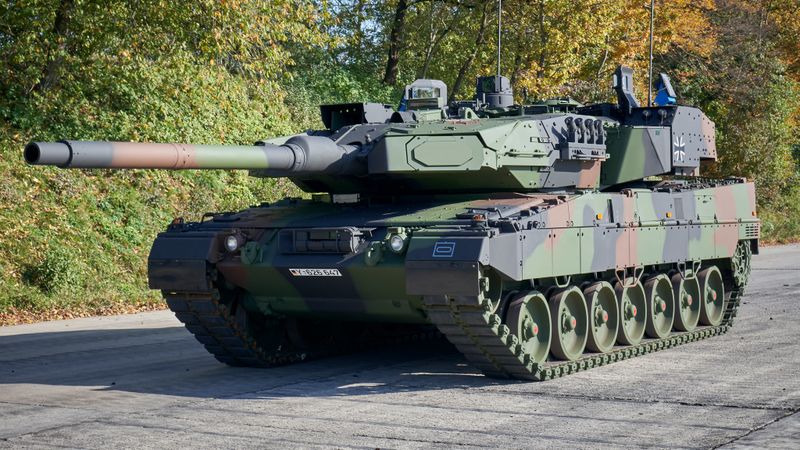
Battle Tank Leopard A2: Develop further or replace? Expensive Major projects could be reassessed.
(Source: Bundeswehr)
Now, the bar has been raised even higher: U.S. President Trump has recently called for defense spending of up to five percent of GDP — though this would include both military expenditures and infrastructure that can be used for defense purposes. It represents a quantum leap in financial terms. Yet, when it comes to procurement, the influx of money does not necessarily translate into faster delivery of new systems to the troops. Germany’s defense spending is set to rise to €108 billion next year (2026) amid growing concerns over Russia — reaching another record high since the end of the Cold War. The regular defense budget for 2025 foresees expenditures of €62.3 billion, with an additional €25.5 billion financed through the €100 billion special fund established by the current coalition government. This will allow Germany to meet NATO’s two-percent target, with spending expected to climb toward 3.5 percent in the coming years.
Money does not guarantee Combat Readiness
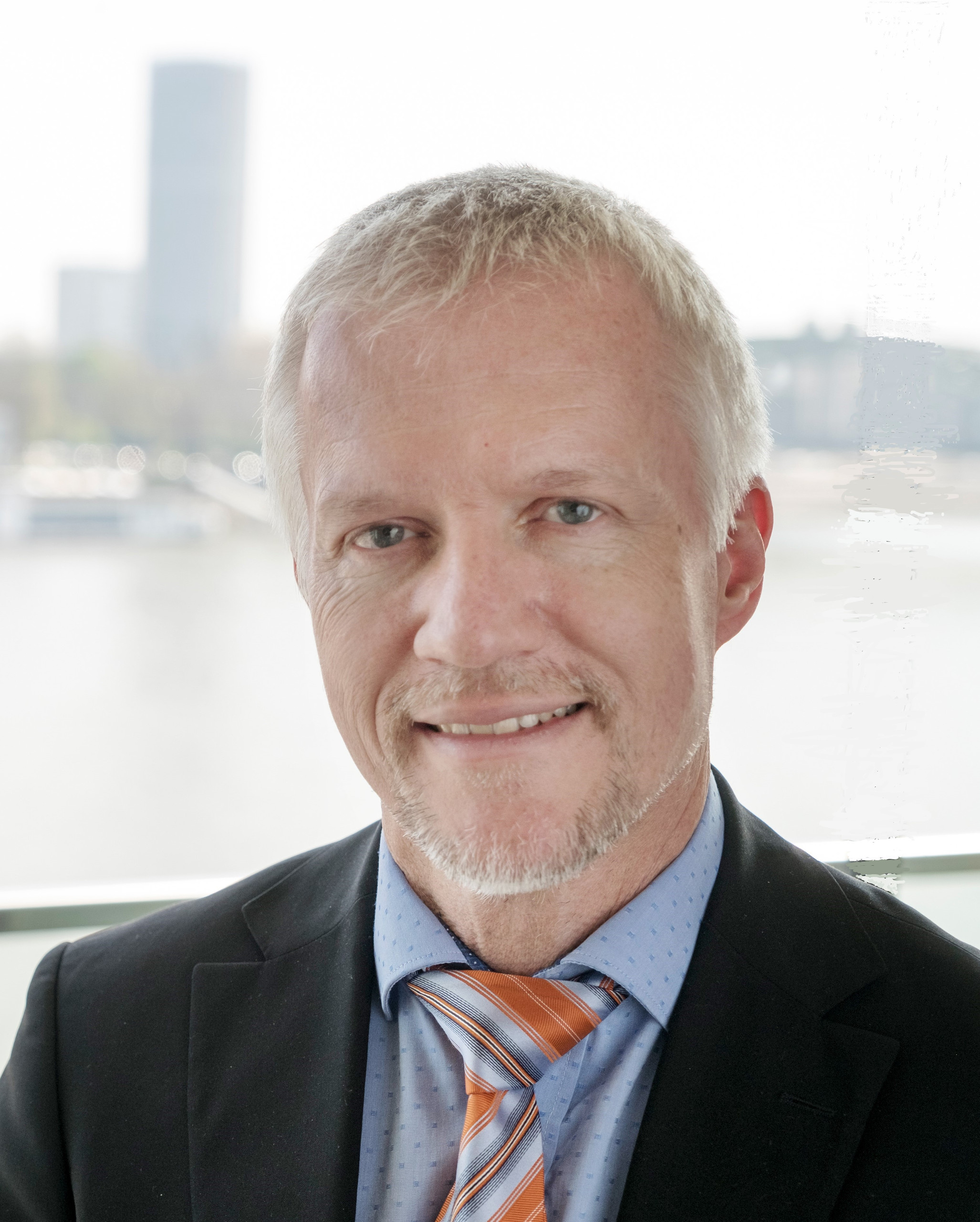
“Billions alone do not guarantee the Bundeswehr’s operational capability. That’s been our goal for several years now,” cautions Klaus-Heiner Röhl of the German Economic Institute (IW) in Cologne. “It’s also about logistics — the Bundeswehr is of little use sitting in its barracks; what matters are potential deployments in the Baltic states and Poland.” Röhl points to delays in major programs such as the FCAS fighter jet — stalled by national disputes with France — and the F126 frigate, whose delivery was postponed due to software issues at the Dutch Damen shipyard. “It doesn’t look as though any of the branches are meeting their objectives. For now, the Bundeswehr is mainly replacing what it has handed over to Ukraine. One has to assume we are still as under-equipped as the Inspector General of the Bundeswehr warned back in 2022”, he concludes. Even so, Röhl sees signs of progress: “For too long, there was a cat-and-mouse game between the government and industry regarding orders and planning certainty. Now, at least, we have clear numerical targets.”
Planning certainty for some companies increases
Companies such as radar specialist Hensoldt are already benefiting. “We’re prepared for the new production volumes,” CEO Oliver Dörre said recently. The new Procurement and Acceleration Act has eased financing, and the company expects advance payments. In the past, payments were made only upon delivery. Now, Hensoldt plans to invest roughly one billion Euros between 2025 and 2027. Unlike major projects, smaller contracts are now being placed and completed almost weekly — such as the order for 150 Schakal wheeled infantry fighting vehicles and the development and delivery of the new Luchs 2 reconnaissance vehicle.
Still Not Enough Straight Talk on Procurement?
Huge sums are being mobilized, and headlines suggest rapid progress. Critics, however, remain skeptical. “Even today, progress is only moderate. While the sums being invested in defense systems are staggering, the concepts that are supposed to make us stronger remain unclear”, said defense expert and retired Colonel Ralph Thiele recently on Deutschlandfunk. “The political parties wanted a peace dividend — and what we’re experiencing now is the price of that dividend”, Thiele argued. According to him, the Bundeswehr still lacks transparency and direct communication with the government when it comes to procurement. “We’re essentially trying to close the gaps of the past, but warfare is highly dynamic — as we see with drones. We should actually be leaping ahead with forward-looking concepts, but those remain vague. And there are still not enough orders coming from the minister, who otherwise describes the situation quite accurately.” Thiele also calls for broader strategic reflection: “What should security look like? How can civil society be involved? Civil society will have to take the driver’s seat, because many threats now occur outside the military sphere. We are in an awakening phase — I just hope we actually wake up and don’t sleep through it.”
IW Expert Röhl: "We still think too much in terms of systems and not in terms of quantities."
(Source: Institut der Deutschen Wirtschaft)
Rethinking Defense in the Face of New Threats
A strategic rethink is also needed, says IW expert Röhl: “Do we really need the expensive MGCS project for a new battle tank, or would we be better off continuing with the proven Leopard 2 AX or Rheinmetall’s new Panther, complemented by drone defense?” Röhl believes other countries offer valuable lessons. “Yes — Italy, for instance, has acquired ten new high-performance frigates without major problems or cost overruns. In Germany, we still think too much in terms of individual systems rather than in terms of quantities that ensure endurance”, he notes. Countries such as Poland are moving faster, he adds, because defense readiness enjoys bipartisan consensus there.
Date: 08.12.2025
Naturally, we always handle your personal data responsibly. Any personal data we receive from you is processed in accordance with applicable data protection legislation. For detailed information please see our privacy policy.
Consent to the use of data for promotional purposes
I hereby consent to Vogel Communications Group GmbH & Co. KG, Max-Planck-Str. 7-9, 97082 Würzburg including any affiliated companies according to §§ 15 et seq. AktG (hereafter: Vogel Communications Group) using my e-mail address to send editorial newsletters. A list of all affiliated companies can be found here
Newsletter content may include all products and services of any companies mentioned above, including for example specialist journals and books, events and fairs as well as event-related products and services, print and digital media offers and services such as additional (editorial) newsletters, raffles, lead campaigns, market research both online and offline, specialist webportals and e-learning offers. In case my personal telephone number has also been collected, it may be used for offers of aforementioned products, for services of the companies mentioned above, and market research purposes.
Additionally, my consent also includes the processing of my email address and telephone number for data matching for marketing purposes with select advertising partners such as LinkedIn, Google, and Meta. For this, Vogel Communications Group may transmit said data in hashed form to the advertising partners who then use said data to determine whether I am also a member of the mentioned advertising partner portals. Vogel Communications Group uses this feature for the purposes of re-targeting (up-selling, cross-selling, and customer loyalty), generating so-called look-alike audiences for acquisition of new customers, and as basis for exclusion for on-going advertising campaigns. Further information can be found in section “data matching for marketing purposes”.
In case I access protected data on Internet portals of Vogel Communications Group including any affiliated companies according to §§ 15 et seq. AktG, I need to provide further data in order to register for the access to such content. In return for this free access to editorial content, my data may be used in accordance with this consent for the purposes stated here. This does not apply to data matching for marketing purposes.
Right of revocation
I understand that I can revoke my consent at will. My revocation does not change the lawfulness of data processing that was conducted based on my consent leading up to my revocation. One option to declare my revocation is to use the contact form found at https://contact.vogel.de. In case I no longer wish to receive certain newsletters, I have subscribed to, I can also click on the unsubscribe link included at the end of a newsletter. Further information regarding my right of revocation and the implementation of it as well as the consequences of my revocation can be found in the data protection declaration, section editorial newsletter.
A Two-Speed NATO and the prospects
According to the Stockholm International Peace Research Institute (SIPRI), readiness cannot be achieved through budgetary increases alone. “The five-percent target is primarily a political signal”, SIPRI researchers write in their analysis NATO’s New Spending Target: Challenges and Risks Associated with a Political Signal, noting that several member states already face serious fiscal constraints.Germany’s debt currently stands at just over 60 percent of GDP, compared with 112 percent in France and 135 percent in Italy. NATO remains deeply divided in terms of spending levels: in 2024, several members had yet to meet even the two-percent goal — including Canada (1.3%), Italy (1.6%), Belgium (1.3%), and Spain (1.4%). Germany stood at 1.9%, while Denmark spent 2.4%, Hungary 2.2%, and France and Bulgaria 2.1%. Poland (4.2%) and Estonia (3.4%) were the clear standouts.But what will the projected multibillion-euro increases through 2035 mean in practice? SIPRI warns: “In the past, rapid increases in military spending have been associated with significant risks — inefficient procurement, inflated costs, corruption, and the circumvention of oversight mechanisms. Moreover, it remains uncertain whether the defense industry can handle such sudden and extensive budget expansions. This imbalance between rising demand and limited supply could push European states to buy from major U.S. defense contractors — undermining the political goal of greater European strategic and defense autonomy.”




:quality(80)/p7i.vogel.de/wcms/36/7a/367adfa7fa6186160e10fafd2b403eb3/0134084456v1.jpeg "After Elon Musk has so far been rather reserved about a merger of Tesla and SpaceX that has been discussed for some time, it is now likely becoming more concrete—at least it seems so... (Source: Tesla)")
:quality(80)/p7i.vogel.de/wcms/d5/08/d508987ea0ae62aefdaa155f9bbd71af/military-material-soldier-2533669-1920x1079v1.jpeg "LinkedIn’s Top Startups 2026 ranking highlights Germany’s emerging companies, with AI, defence technology and energy innovation featuring prominently. (Source: Military_Material on Pixabay)")
:quality(80)/p7i.vogel.de/wcms/c9/8d/c98daffbad4087fc5338d2ddc0909e40/japan-pr-9-1680x944v1.png "(Source: Thales)")
:quality(80)/p7i.vogel.de/wcms/df/26/df26de98f6069219d5e044b50fae40a8/s960-ddc-official-20261015-286-068-960x540v1.jpeg "Minister for Defence Readiness and Industry, Luke Pollard and German State Secretary for Armament, Innovation and Cyber, Jens Plötner (from left to right). (Source: GOV.UK)")
:quality(80)/p7i.vogel.de/wcms/1e/05/1e05d4b35c5b6fae825d9ad2f852df33/rotor-clip-advanced-vision-inspection-1920x1079v1.jpeg "(Source: Rotor Clip)")
:quality(80)/p7i.vogel.de/wcms/17/05/1705108734040844028c8f0f054c06e2/202079-1350x759v1.jpeg "(Source: Rheinmetall AG)")
:quality(80)/p7i.vogel.de/wcms/d3/1c/d31caf0a2300bf7762f9dfbd272f0a4e/lockheed-martin-hadrian-1920x1079v1.jpeg "Hadrian will bring innovative, highly automated machining cells to the Grand Prairie facility, operated by the world-class Lockheed Martin production workforce. (Source: Lockheed Martin Corporation)")
:quality(80)/p7i.vogel.de/wcms/74/bb/74bbce6f561e163a760f8e6acb2412b5/art-0001-titelbild-1672x940v1.png "RF output and heat rejection share the same module. Conceptual illustration of a radar array and its thermal path; not a product photograph. (Source: KI-generiert / Imagen)")
:quality(80)/p7i.vogel.de/wcms/05/5f/055fac187d33e8e5fb93c4a75b7a806a/art-0008-titelbild-1672x940v1.png "A conceptual VLEO satellite collects atmospheric particles for electric propulsion. Illustration, not an image of a flown spacecraft. (Source: KI-generiert / Imagen)")
:quality(80)/p7i.vogel.de/wcms/74/34/7434bf25f22bb5ff84146fccb984bc28/0134080905v1.jpeg "GKN Aerospace and Saab have signed a long-term cooperation agreement covering the Gripen E/F propulsion system. (Source: Saab)")
:quality(80)/p7i.vogel.de/wcms/53/63/5363287e81bcc7fd8e0ce9ec17ec6b93/enbata-over-archipelagos-auraaero-1536x864v1.png "(Source: AURA AERO)")
:quality(80)/p7i.vogel.de/wcms/03/52/0352ed6450d99eefb77378b17e99bd72/art-0007-titelbild-1672x940v1.png "Reusable research vehicles make the flight-to-redesign loop possible. Conceptual illustration; no actual X-15 or Talon-A vehicle is depicted. (Source: KI-generiert / Imagen)")
:quality(80)/p7i.vogel.de/wcms/50/85/50856774ce46ad8f94f37e328ba3b6d3/ptc-frau-arbeitet-mit-model-am-pc-neben-turbine-1911x1076v1.jpeg "(Source: PTC)")
:quality(80)/p7i.vogel.de/wcms/9c/60/9c60e13e660fe6b444ec71c59b5598ce/publicdomainarchive-on-pixabay-1920x1079v1.jpeg "(Source: PublicDomainArchive on Pixabay)")
:quality(80)/p7i.vogel.de/wcms/ed/e6/ede67e479952b7bad62244697e3cd3db/aa383c9a-015c-424b-95da-d8d56156c227-1536x864v1.png "Intelic's AI-supported command-and-control system Nexus can integrate sensors and interceptor drones to counter aerial threats (Illustration). (Picture: AI generated)")
:quality(80)/p7i.vogel.de/wcms/cb/a2/cba2ecda891b2874327a30f69f773bdb/hexaforce-15-1920x1079v1.jpeg "(Source: Thales/Gauthier Chauffrut)")
:quality(80)/p7i.vogel.de/wcms/a5/ce/a5ce58d51cba9063688079379feb732d/desko-id-analyze-passkontrolle-1-1920x1079v1.jpeg "(Bild: Desko)")
:quality(80)/p7i.vogel.de/wcms/df/5c/df5cb22ae3c8e224730e3543453abf54/argus-interceptor-phantom-8-von-29-1920x1079v1.png "Argus Interceptor Phantom (Source: Argus Interception)")
:quality(80)/p7i.vogel.de/wcms/44/f8/44f8dfc31e436cc3a2d5a4c98c2ff46f/drohnenabwehr-am-kraftwerk-bei-d-mmerung-1672x940v1.png "Across Europe, governments are increasingly considering allowing operators of critical civilian infrastructure to take responsibility for actively defending their facilities against hostile drones using military-grade counter-UAV technology. (Graphic: AI generated)")
:quality(80)/p7i.vogel.de/wcms/25/1f/251f3ec674139d548928e3a2f0a0a040/airbus-1920x1079v1.jpeg "IRIS-T SLM Live Firing. (Source: Bundeswehr/ Hildemann)")
:quality(80)/p7i.vogel.de/wcms/90/a8/90a849f0023f11d1eb642eb4751a0321/bild2-h-c3-a4nel-ict-20truck-20and-20trailer-20parts-4320x2429v1.jpeg "Product information is visible at all times and retrieval of items
is confirmed by employees directly on the display of the Hänel MP 14 N
controller. (Source: René Marks)")
:quality(80)/p7i.vogel.de/wcms/4e/ca/4ecaa39f247490eded591b652c33aee3/thilmann-hcp-web-20kleiner-20ausschnitt-1442x811v1.jpeg "Entering the defence market can be challenging for start-ups, says HCP Sense CEO Ansgar Thilmann. (Picture: HCP Sense)")
:quality(80)/p7i.vogel.de/wcms/7a/51/7a511b80041d3f1335f3a5aa56fe75da/delivery-7022432-1280-1280x720v1.png "(Source: Mohamed_hassan)")
:quality(80)/p7i.vogel.de/wcms/f9/2f/f92f1ef8c739c34c70d99f7b0997621b/stra007-20--20cover-20image-5472x3076v1.jpeg "(Source: Stratasys)")
:quality(80)/p7i.vogel.de/wcms/ec/a9/eca9062ccbe4b042f8515846340410d8/aerospace-and-defence-stairways-platforms-and-much-morev1.jpeg "Modular constructions enable flexible modification. That applies to larger structures such as stairways and platforms, too. And that means aerospace and defence companies can reconfigure their maintenance platforms fast (itemitem)")
:quality(80)/p7i.vogel.de/wcms/30/2a/302a7b5723ad38fbde812fd3a468ad04/safety-on-stairways-in-industry-key-considerationsv1.jpeg "Stairways and platforms are used widely in maintenance and assembly areas in the aerospace and defence sectors. (Source: item)")
:quality(80)/p7i.vogel.de/wcms/f3/4e/f34ed744bb30817d3432c7ad522e6f30/engine-1v1.jpeg "Engineering with aluminium profiles really can be this easy – the item Engineeringtool and its smart functions help you save valuable time. (Source: item)")
:fill(fff,0)/p7i.vogel.de/companies/69/6d/696de2483d115/logo--fastems-rgb-horizontal.jpeg "logo--fastems-rgb-horizontal (Fastems)")
:fill(fff,0)/images.vogel.de/vogelonline/companyimg/84700/84735/65.jpg "logo_item_rgb_neu.jpg ()")
:quality(80)/p7i.vogel.de/wcms/4f/c2/4fc2f43de819a9ad7c397e9f10a2b1f8/r-c3-b6hl-2c-20klaus-20heiner-3046x1715v1.jpeg "Klaus-Heiner Röhl: Procurement must be more pragmatic. (Source: IW)")
:quality(80)/p7i.vogel.de/wcms/e2/13/e2132f7707f46c8af1b08393cc8c9b9f/teasers-geld2-6v1.jpeg "teasers-geld2-6v1 (Source: )")