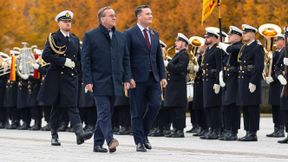
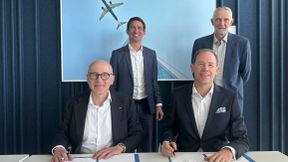
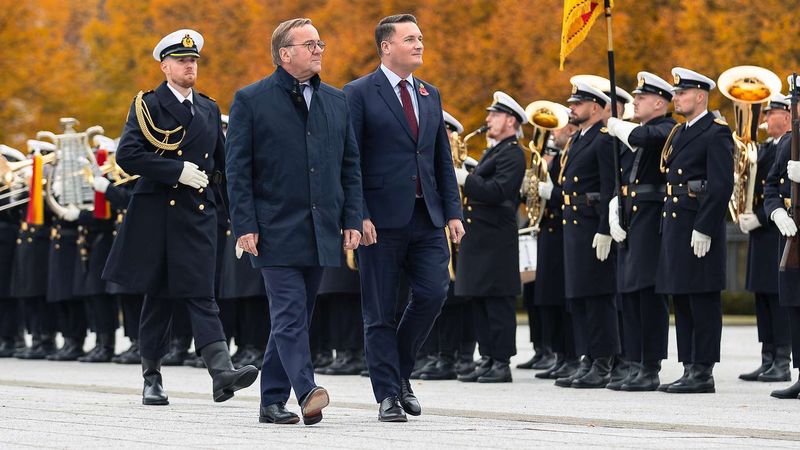
Defence Minister Boris Pistorius and his British counterpart Wes Streeting met in Berlin on 2 November 2026 for the German-British Defence Ministerial Council. Discussions focused on the development of bilateral projects, Europe within NATO and support for Ukraine. The format represents the highest level of exchange under the Trinity House Agreement.
German and British defence ministers Boris Pistorius and Wes Streeting met in Berlin for the Defence Ministerial Council.
(Source: Federal Ministry of Defence (Germany))
At the beginning of the meeting in Berlin, Defence Minister Pistorius reaffirmed the importance of the United Kingdom as a strategic partner for Germany: the two countries coordinated closely on all key issues relating to European security and defence. Together, they assumed responsibility and were working vigorously towards a stronger Europe within a stronger NATO, Pistorius said. At a time when Europe's security environment was becoming increasingly challenging, cooperation, mutual trust, shared commitment and common values were more important than ever.
German-British relations are better than ever before. We have grown even closer over the past few years. We stand side by side as leading nations within the Alliance.
Defence Minister Boris Pistorius
“The relationship we have with Germany is one of the strongest, closest and most reliable friendships we have,” also emphasised British Defence Minister Wes Streeting. On the occasion of his first visit to the Bendlerblock, Streeting was welcomed with full military honours. He has headed the British Ministry of Defence since 20 July 2026.
Strategic partners: working together for a secure Europe
The central framework for bilateral cooperation between Germany and the United Kingdom is the Trinity House Agreement of October 2024. The defence agreement encompasses pioneering projects in the domains of land, air, sea, space, cyber and information, as well as specific initiatives involving long-range precision weapons, unmanned systems and the protection of critical underwater infrastructure. It is intended to bring the armed forces closer together and strengthen the European pillar within NATO. To this end, the agreement also provides for regular meetings at ministerial level, primarily serving coordination purposes. The focus is on progress with the key projects covered by the agreement, but the format is also intended to provide a platform for setting the course of future cooperation and identifying new areas for collaboration.
Two years after the Trinity House Agreement entered into force, the results of German-British cooperation were tangible, Pistorius emphasised following the meeting: “This agreement has once again significantly and substantially strengthened our bilateral cooperation. We are not just coordinating and making plans; we are actually putting those plans into practice.”
The current picture: status of the Trinity House key projects
The regular meetings at ministerial level provided for in the Trinity House Agreement focus primarily on progress with the agreement's key projects. At the same time, they are intended to drive forward the implementation and further development of these projects and promote new initiatives.
Deep Precision Strike—long-range precision weapons: Coordination with industry was close, Pistorius said, referring to the German-British project to develop a long-range precision weapon with a range of more than 2,000 kilometres (approximately 1,243 miles). The involvement of additional European partners was already under consideration.
Air force cooperation: The German and British air forces have jointly developed a detailed “flight plan” defining the parameters of cooperation across the full spectrum of their different capabilities. The next step is the practical implementation of the individual elements. For example, joint procurement of missiles for the Eurofighter is planned. There are also synergies in the use of A400M transport aircraft, CH-47F Chinook transport helicopters and F-35A fighter aircraft, which the two countries intend to exploit over the coming years.
Strategic partnership between the land forces: At the end of 2025, the two nations signed a contract for the RCH 155 wheeled howitzer. The first systems are already expected in 2028. The armed forces of both countries are also working closely together on crossing bodies of water. Germany and the United Kingdom want to procure a standardised floating bridge system jointly—an important contribution to interoperability and to strengthening NATO's eastern flank. The joint procurement of the M3 EVO amphibious bridge and ferry system is to be carried out through the European defence procurement agency OCCAR. In addition, plans to procure the “Support Bridge” system through an existing British contract are already well advanced. The partners also see a further requirement for the “Rad” bridge-laying system based on the GTK Boxer.
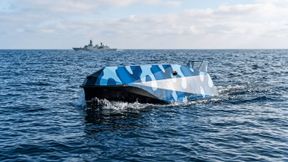
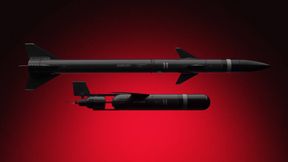
Underwater cooperation in the North Sea and North Atlantic: Things were also progressing exceptionally well at sea, Minister Pistorius said. Cooperation involving the P-8A Poseidon maritime patrol aircraft remained a success story. After just one year, the minister was able to welcome the first German aircraft at Lossiemouth in Scotland. Germany has received three aircraft to date, with two more expected later this year. On the sidelines of the ministerial meeting, the armaments directors of the two countries also signed an agreement on the procurement of British Stingray lightweight torpedoes.
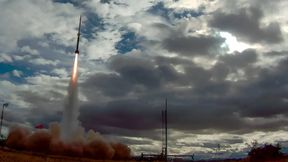
Expanding space cooperation: Another key German-British project was recently agreed, involving enhanced cooperation in the space domain. Specifically, it will cover space surveillance, Earth observation and satellite communications.
This was the second meeting of the Defence Ministerial Council; the first meeting took place on 15 May 2025. In the intervening period, various working-level formats have met: the Ministerial Group on Equipment and Capability Co-operation, the Military Steering Committee and the Defence Policy Dialogue. Staff-level talks between the individual services have also taken place.
Taking responsibility: For Ukraine—and for Europe
In addition to their bilateral cooperation and close collaboration within the Group of Five, Germany and the United Kingdom also assume joint responsibility within NATO. Both countries make a substantial contribution to securing NATO's eastern flank in the Baltic region—Germany, among other things, with Armoured Brigade 45 in Lithuania. Furthermore, Germany and the United Kingdom jointly lead the Ukraine Defence Contact Group (UDCG) and provide extensive financial and military assistance to support Ukraine's defence capabilities. On 17 November 2026, Wes Streeting and Boris Pistorius will jointly chair the Ukraine support coordination format for the first time. “We stand together when it comes to continuing to support Ukraine,” Minister Pistorius said.
Date: 08.12.2025
Naturally, we always handle your personal data responsibly. Any personal data we receive from you is processed in accordance with applicable data protection legislation. For detailed information please see our privacy policy.
Consent to the use of data for promotional purposes
I hereby consent to Vogel Communications Group GmbH & Co. KG, Max-Planck-Str. 7-9, 97082 Würzburg including any affiliated companies according to §§ 15 et seq. AktG (hereafter: Vogel Communications Group) using my e-mail address to send editorial newsletters. A list of all affiliated companies can be found here
Newsletter content may include all products and services of any companies mentioned above, including for example specialist journals and books, events and fairs as well as event-related products and services, print and digital media offers and services such as additional (editorial) newsletters, raffles, lead campaigns, market research both online and offline, specialist webportals and e-learning offers. In case my personal telephone number has also been collected, it may be used for offers of aforementioned products, for services of the companies mentioned above, and market research purposes.
Additionally, my consent also includes the processing of my email address and telephone number for data matching for marketing purposes with select advertising partners such as LinkedIn, Google, and Meta. For this, Vogel Communications Group may transmit said data in hashed form to the advertising partners who then use said data to determine whether I am also a member of the mentioned advertising partner portals. Vogel Communications Group uses this feature for the purposes of re-targeting (up-selling, cross-selling, and customer loyalty), generating so-called look-alike audiences for acquisition of new customers, and as basis for exclusion for on-going advertising campaigns. Further information can be found in section “data matching for marketing purposes”.
In case I access protected data on Internet portals of Vogel Communications Group including any affiliated companies according to §§ 15 et seq. AktG, I need to provide further data in order to register for the access to such content. In return for this free access to editorial content, my data may be used in accordance with this consent for the purposes stated here. This does not apply to data matching for marketing purposes.
Right of revocation
I understand that I can revoke my consent at will. My revocation does not change the lawfulness of data processing that was conducted based on my consent leading up to my revocation. One option to declare my revocation is to use the contact form found at https://contact.vogel.de. In case I no longer wish to receive certain newsletters, I have subscribed to, I can also click on the unsubscribe link included at the end of a newsletter. Further information regarding my right of revocation and the implementation of it as well as the consequences of my revocation can be found in the data protection declaration, section editorial newsletter.