Estonia demonstrates at electronica 2026 how prototyping, specialist engineering and quality assurance work together.
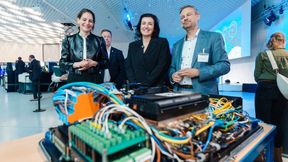
(Source: Enterprise Estonia/Renee Altrov)
A machine controller needs another PCB revision, a radio module must operate reliably in the presence of interference, or an assembly needs to be tested reliably even in small production runs. Requirements like these help determine how quickly electronics can move from design to production. Manufacturers therefore need more than just production capacity: they need partners who can help address technical challenges at an early stage. Eight Estonian companies and organisations will demonstrate different approaches to meeting these needs at electronica, taking place in Munich from 10 to 13 November.
“Estonia has brought engineering expertise and industrial manufacturing closely together, and this is particularly evident in the electronics industry. For manufacturers, it is becoming increasingly important not to treat development, testing and production as separate consecutive stages, but to involve specialist partners at an early stage,” says Leana Kammertöns, Business Development Manager at Enterprise Estonia. “Germany is one of our most important trading partners, and we want to further strengthen these ties at electronica.”
Contract manufacturing is expanding into engineering services
Incap illustrates how the division of labour is changing. The electronics manufacturer operates a facility in Kuressaare, which has produced, among other things, electronics for Bolt e-scooters and camera electronics for a robotic arm associated with NASA's Artemis programme. In February 2026, Incap acquired German electronics specialist Lacon. This added three sites in Germany and further engineering capabilities to the company. The acquisition enables Incap to support customers from the development stage onwards and subsequently provide access to manufacturing capacity across its European network.
Test faster instead of waiting for the next PCB
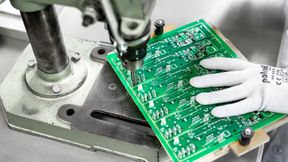
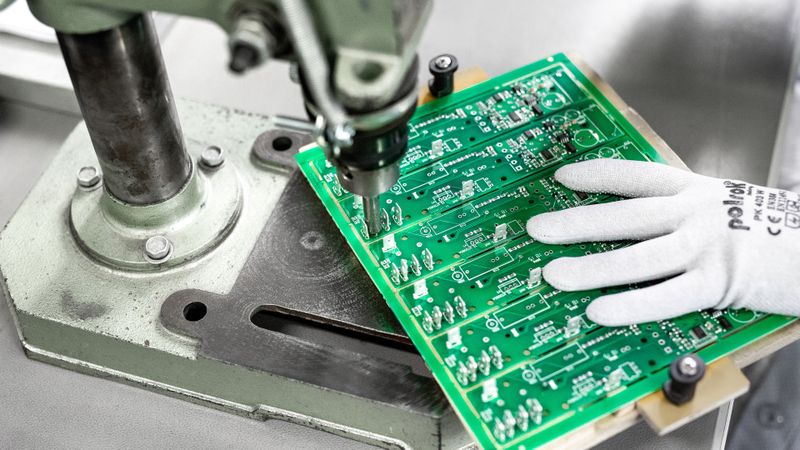
Every layout change can trigger another manufacturing cycle. Brandner Electronics manufactures printed circuit boards with up to 24 layers at its facility in Paide. Depending on the design and order situation, express production times of 24 to 72 hours are possible, excluding shipping. For developers of industrial controllers, sensors and medical devices, this is particularly attractive for prototypes and small production runs, as new designs can be tested in hardware at short notice.
(Source: Enterprise Estonia/Renee Altrov)
For wireless systems, however, a fast prototype alone is not enough. Antenna technology, electronics, software and mechanical design all influence one another. Rantelon brings together radio-frequency engineering, embedded software, mechanical engineering, testing and manufacturing at its Tallinn site. Since September 2026, the company has been working with partners on an interference-resistant communications system for drones. Ensuring signal quality despite limited space and power consumption is also a challenge in industrial wireless communications.
Artec Design, based in Tallinn, pursues a similarly broad approach. The company covers electronics, mechanical, FPGA and software development through to manufacturing. It is increasingly focusing on edge AI to reduce the power consumption of devices—an issue that is also becoming more important in mechanical engineering.
Testability starts before series production
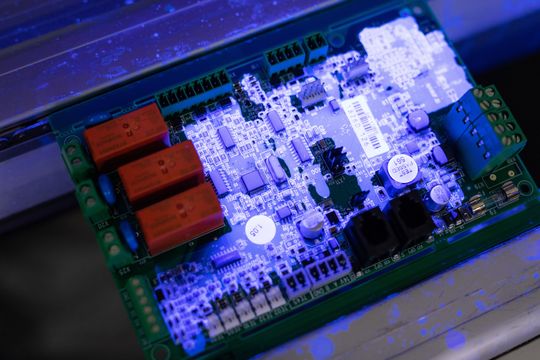
Whether a design can be manufactured economically also depends on its testing and documentation capabilities. NOTE Pärnu produces electronics for applications including endoscopes and medical gas supply systems. Flying-probe testing enables electrical testing of different PCB designs without requiring a dedicated test fixture for each one. Laser marking supports the traceability of assemblies. Such processes are particularly relevant when dealing with a wide variety of product variants and small production volumes.
Reliability often starts at the component level. Audes, based in Jõhvi, manufactures customised transformers, chokes and coils for power electronics and industrial electronics, offering services ranging from development consulting to series production.
Date: 08.12.2025
Naturally, we always handle your personal data responsibly. Any personal data we receive from you is processed in accordance with applicable data protection legislation. For detailed information please see our privacy policy.
Consent to the use of data for promotional purposes
I hereby consent to Vogel Communications Group GmbH & Co. KG, Max-Planck-Str. 7-9, 97082 Würzburg including any affiliated companies according to §§ 15 et seq. AktG (hereafter: Vogel Communications Group) using my e-mail address to send editorial newsletters. A list of all affiliated companies can be found here
Newsletter content may include all products and services of any companies mentioned above, including for example specialist journals and books, events and fairs as well as event-related products and services, print and digital media offers and services such as additional (editorial) newsletters, raffles, lead campaigns, market research both online and offline, specialist webportals and e-learning offers. In case my personal telephone number has also been collected, it may be used for offers of aforementioned products, for services of the companies mentioned above, and market research purposes.
Additionally, my consent also includes the processing of my email address and telephone number for data matching for marketing purposes with select advertising partners such as LinkedIn, Google, and Meta. For this, Vogel Communications Group may transmit said data in hashed form to the advertising partners who then use said data to determine whether I am also a member of the mentioned advertising partner portals. Vogel Communications Group uses this feature for the purposes of re-targeting (up-selling, cross-selling, and customer loyalty), generating so-called look-alike audiences for acquisition of new customers, and as basis for exclusion for on-going advertising campaigns. Further information can be found in section “data matching for marketing purposes”.
In case I access protected data on Internet portals of Vogel Communications Group including any affiliated companies according to §§ 15 et seq. AktG, I need to provide further data in order to register for the access to such content. In return for this free access to editorial content, my data may be used in accordance with this consent for the purposes stated here. This does not apply to data matching for marketing purposes.
Right of revocation
I understand that I can revoke my consent at will. My revocation does not change the lawfulness of data processing that was conducted based on my consent leading up to my revocation. One option to declare my revocation is to use the contact form found at https://contact.vogel.de. In case I no longer wish to receive certain newsletters, I have subscribed to, I can also click on the unsubscribe link included at the end of a newsletter. Further information regarding my right of revocation and the implementation of it as well as the consequences of my revocation can be found in the data protection declaration, section editorial newsletter.
At its Tallinn site, Aurightec combines PCB assembly, testing and complete device integration, for example for industrial controllers, automotive electronics and critical communications. With additional production sites in Asia, the company can organise manufacturing operations across several regions. For European customers, the deciding factors are not just unit prices, but also coordination processes, quality assurance and delivery times.
These examples illustrate several ways of improving the development and manufacturing process: integrated engineering and manufacturing capabilities, short prototyping cycles, cross-disciplinary development and design for testability. For German manufacturers in mechanical engineering, automation and medical technology, this raises an important question: which tasks should they handle themselves, and where would it be beneficial to involve specialist electronics partners earlier?
Exhibitors are supported by a broader network. The Estonian Electronics Industries Association represents more than 70 Estonian companies across the entire value chain, from development and manufacturing to training and recycling. It also connects international manufacturers with additional suppliers.
The eight exhibitors will present their capabilities together under the Enterprise Estonia umbrella at the Trade Estonia stand at electronica 2026, Hall A2, Stand 313.