Sept. 30, 2026 marks the official end of the OSIRIS-REx mission with the end of the sample analysis phase.
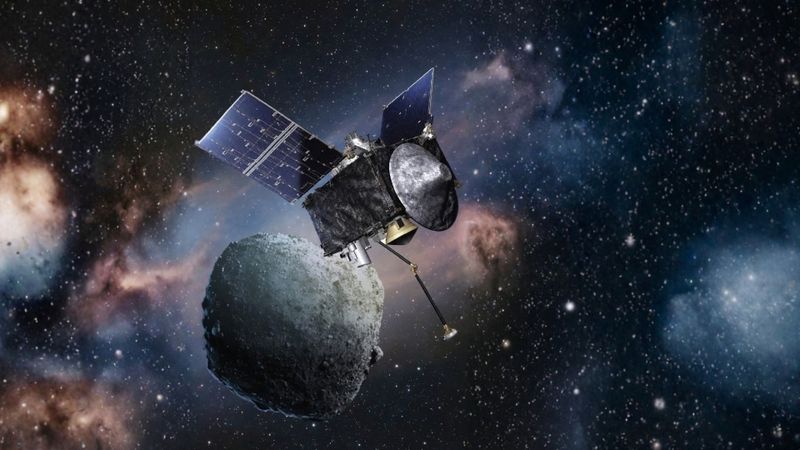
(Source: Lockheed Martin)
A decade after launch, NASA’s OSIRIS-REx mission has transformed our understanding of asteroid Bennu, returned a piece of the early solar system to Earth and opened a new chapter of exploration.
OSIRIS-REx began with a fundamental question: What can an asteroid tell us about where we came from?
A decade later, the answer is revealing a remarkably complex story. For Lockheed Martin, OSIRIS-REx represents another milestone as we continue exploring the solar system. The spacecraft was built to reach the unknown.
Ten years later, the mission is coming to an official close, but the findings it has uncovered are only just beginning. And with the follow-on mission, OSIRIS-APEX, the spacecraft will continue to explore and have new scientific discoveries of the asteroid Apophis in 2029.
Let’s rewind to the beginning
On Sept. 8, 2016, NASA’s OSIRIS-REx spacecraft launched on a journey unlike any U.S. mission before it.
Its destination was Bennu, a small, carbon-rich asteroid that formed billions of years ago. Its mission: travel to Bennu, study its surface, collect a sample and deliver it to Earth for scientists to examine. OSIRIS-REx accomplished all of it.
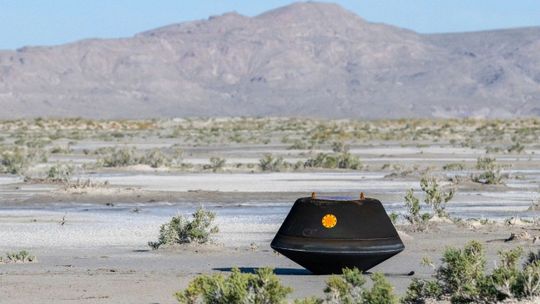
Designed, built and operated by Lockheed Martin, the spacecraft became the first U.S. mission to collect and return a sample from an asteroid. On Sept. 24, 2023, its sample return capsule landed in the Utah desert carrying 121.6 grams of material from Bennu, more than twice the mission’s minimum requirement. The achievement capped seven years of exploration. But the discoveries were just beginning.
Built for the unknown
OSIRIS-REx drew on decades of our experience building spacecraft for planetary exploration, incorporating technologies and design approaches from missions including Mars Reconnaissance Orbiter,MAVEN and Stardust. Lockheed Martin also operated the spacecraft from its Mission Operations Center. And this expertise was needed, as Bennu presented plenty of challenges.
When OSIRIS-REx arrived in December 2018, the asteroid looked dramatically different than scientists expected. Instead of a relatively smooth surface, Bennu was covered in boulders, rocks and treacherous terrain. Finding a safe place to collect a sample became one of the mission’s biggest hurdles.
Lockheed Martin engineers and mission operators worked with NASA and other mission partners to operate the spacecraft around Bennu and identify a suitable sampling location. The spacecraft’s Natural Feature Tracking system allowed it to autonomously compare images of the asteroid’s surface with onboard maps as it descended. The solution was a small crater called Hokioi.
On Oct. 20, 2020, OSIRIS-REx made history. The spacecraft briefly touched Bennu’s surface with its robotic arm, firing nitrogen gas into the regolith. The burst stirred up rocks and dust, capturing them inside the Touch-And-Go Sample Acquisition Mechanism, or TAGSAM.
The maneuver worked remarkably well. So well, in fact, that material began escaping from the collection head immediately after the spacecraft backed away. OSIRIS-REx had exceeded mission expectations.
A time capsule from the early solar system
Today, scientists are unlocking a history book covering the early formation of the solar system, over 4.5 billion years ago. We now know Bennu contains abundant carbon, nitrogen and organic compounds, along with molecules important to biology. Scientists have identified most of the protein amino acids found in life, all five nucleobases used by DNA and RNA, and sugars including ribose and glucose. The samples also contain phosphate minerals, providing evidence that Bennu’s parent body once experienced significant interaction with liquid water.
Together, these discoveries are helping scientists better understand how the chemical ingredients associated with life were formed and distributed throughout the solar system. But Bennu also challenged scientists’ understanding of how asteroids behave.
Date: 08.12.2025
Naturally, we always handle your personal data responsibly. Any personal data we receive from you is processed in accordance with applicable data protection legislation. For detailed information please see our privacy policy.
Consent to the use of data for promotional purposes
I hereby consent to Vogel Communications Group GmbH & Co. KG, Max-Planck-Str. 7-9, 97082 Würzburg including any affiliated companies according to §§ 15 et seq. AktG (hereafter: Vogel Communications Group) using my e-mail address to send editorial newsletters. A list of all affiliated companies can be found here
Newsletter content may include all products and services of any companies mentioned above, including for example specialist journals and books, events and fairs as well as event-related products and services, print and digital media offers and services such as additional (editorial) newsletters, raffles, lead campaigns, market research both online and offline, specialist webportals and e-learning offers. In case my personal telephone number has also been collected, it may be used for offers of aforementioned products, for services of the companies mentioned above, and market research purposes.
Additionally, my consent also includes the processing of my email address and telephone number for data matching for marketing purposes with select advertising partners such as LinkedIn, Google, and Meta. For this, Vogel Communications Group may transmit said data in hashed form to the advertising partners who then use said data to determine whether I am also a member of the mentioned advertising partner portals. Vogel Communications Group uses this feature for the purposes of re-targeting (up-selling, cross-selling, and customer loyalty), generating so-called look-alike audiences for acquisition of new customers, and as basis for exclusion for on-going advertising campaigns. Further information can be found in section “data matching for marketing purposes”.
In case I access protected data on Internet portals of Vogel Communications Group including any affiliated companies according to §§ 15 et seq. AktG, I need to provide further data in order to register for the access to such content. In return for this free access to editorial content, my data may be used in accordance with this consent for the purposes stated here. This does not apply to data matching for marketing purposes.
Right of revocation
I understand that I can revoke my consent at will. My revocation does not change the lawfulness of data processing that was conducted based on my consent leading up to my revocation. One option to declare my revocation is to use the contact form found at https://contact.vogel.de. In case I no longer wish to receive certain newsletters, I have subscribed to, I can also click on the unsubscribe link included at the end of a newsletter. Further information regarding my right of revocation and the implementation of it as well as the consequences of my revocation can be found in the data protection declaration, section editorial newsletter.
(Source: NASA)
During sample collection, TAGSAM sank much farther into Bennu’s surface than expected, revealing that the asteroid’s exterior is remarkably weak and porous. Rather than being a solid rock, Bennu is essentially a loosely bound collection of material. The spacecraft’s observations and the returned samples are giving researchers an unprecedented look at how these small worlds formed, evolved and changed over billions of years.
An end date does not mean an end of discovery
OSIRIS-REx’s flight came to an end when the sample capsule returned to Earth. But the spacecraft itself never came home.
After releasing the capsule, it is now continuing into deep space under a new name: OSIRIS-APEX. Its next destination is another asteroid, Apophis, which it will study following the asteroid’s close approach to Earth in 2029. OSIRIS-APEX aims to provide first-of-its-kind high-resolution observation of a stony asteroid class, differing from the carbonaceous composition of Bennu.
While Sept. 30 closes the formal chapter of this extraordinary mission, the journey isn’t over. The samples themselves will still be available for future scientists to request and study. And the observations OSIRIS-APEX will take of Apophis will help unlock the next chapter of exploration.




:quality(80)/p7i.vogel.de/wcms/d4/28/d428b0ac9373f8febcf18ffec14e93af/osiris-rex-feature-1920x1079v1.jpeg "(Source: Lockheed Martin)")
:quality(80)/p7i.vogel.de/wcms/97/29/97293bc01fcd40ac9f5d5b4f4b1c1227/995ffab6-abca-4366-b067-078aee746368-1536x864v1.png "Symbolic image of a Leopard 2 main battle tank: Production and maintenance starts in Lithuania. (Picture: AI generated)")
:quality(80)/p7i.vogel.de/wcms/a6/5a/a65a0979453bbbd1812271415d3c5496/aws-constellation-pink-201220-1800x200-1024x683-1-1024x576v1.png "(Source: OHB Sweden)")
:quality(80)/p7i.vogel.de/wcms/b1/29/b12963beb937c53200edb41ab98f0ad7/battleverse-v1-990x557v1.png "(Source: European Commission)")
:quality(80)/p7i.vogel.de/wcms/33/a7/33a7f8ac37b143e73964dad10c8aafbc/0133560493v1.jpeg "Benedikt Gundling and Tobias Hannen in front of a tank component of the Ariane 6. (Source: Grob Works)")
:quality(80)/p7i.vogel.de/wcms/4f/3a/4f3a22eb23991207008533412c8dc817/screenshot-2026-09-25-125155-1405x790v1.png "(Source: BINDER GmbH)")
:quality(80)/p7i.vogel.de/wcms/4a/9f/4a9f831c424718e98ef3cf6b10b4dc3e/hot-fire-jarvisv1-900x506v1.jpeg "Developed in record time: A “JARVIS-class” jet engine capable of up to 100 pounds of thrust. It was designed in a four-week sprint using generative AI and established CAD/CAE tools. (Source: MIT)")
:quality(80)/p7i.vogel.de/wcms/13/12/1312059ec82b1ed9e3df080350b29dc4/f46335bf-a581-4786-959f-4a0e9a74aed1-1671x940v1.png "Military radar architecture using distributed RF sensor nodes connected through optical fibre to central processing. (Source: KI-generiert / Gemini)")
:quality(80)/p7i.vogel.de/wcms/f0/33/f033d97ea29988a0defb0531fb51cfc8/arek-socha-on-pixabay-1707x960v1.jpeg "(Source: Arek Socha on Pixabay)")
:quality(80)/p7i.vogel.de/wcms/73/32/73325c11b708c7c53230359e46b9c63c/0133625653v1.jpeg "The Bundeswehr does have more than 50 transport aircraft, but it lacks any that also bring tactical capabilities. With the Airbus A400M, this shortcoming could be remedied, which is why there are plans to buy 16 aircraft of this type ... (Source: Airbus)")
:quality(80)/p7i.vogel.de/wcms/00/dc/00dcad81b11488711a69893092df7124/thedigitalartist-ai-generated-8314615-1920x1080v1.jpeg "(Source: Pete Linforth on Pixabay)")
:quality(80)/p7i.vogel.de/wcms/f9/37/f93735747249cd50daf2c2fdc4535965/9c7d8875-fc66-4fdd-aa43-5676f10bba45-624x351v1.jpeg "Team of the DLR Mobile Rocket Base (MORABA). (Source: DLR (CC BY-NC-ND 3.0))")
:quality(80)/p7i.vogel.de/wcms/cb/a2/cba2ecda891b2874327a30f69f773bdb/hexaforce-15-1920x1079v1.jpeg "(Source: Thales/Gauthier Chauffrut)")
:quality(80)/p7i.vogel.de/wcms/9d/8a/9d8addea8cc4e6f7a4793563ca397f2a/ai-im-milit-r-1672x940v1.png "(Source: KI-generiert / Gemini)")
:quality(80)/p7i.vogel.de/wcms/7f/5f/7f5fba2c729ec3aa256bf1a18d74529b/ai-chip-1672x940v1.png "(Source: KI-generiert / Gemini)")
:quality(80)/p7i.vogel.de/wcms/64/1b/641b6474b2a614cde7730c89ef2a3015/2026-09-09-rheinmetall-veroeffentlicht-battlesuite-schnittstellen-e8c18194-1225x690v1.jpeg "Rheinmetall’s Battlesuite provides a modular digital platform for connecting and integrating sensors, hardware and software components. (Source: Rheinmetall AG)")
:quality(80)/p7i.vogel.de/wcms/fe/11/fe1187f54b38f08ec4e244b50edf3201/toulouse-si-ge-airbus-853x480v1.jpeg "Airbus is expanding its European cybersecurity activities through a series of acquisitions (Picture: Nemausensis Asinus / Public Domain)")
:quality(80)/p7i.vogel.de/wcms/b4/0f/b40f9a9262229f0ad6f652dcff9012d8/ministry-of-defence-uk-1672x940v1.png "(Source: Ministry of Defence UK)")
:quality(80)/p7i.vogel.de/wcms/f1/c8/f1c88c768ba87dd2d71c708945c7df78/s960-applied-intuition04-960x640-960x540v1.jpeg "(Source: UK Government)")
:quality(80)/p7i.vogel.de/wcms/ef/1e/ef1eaddf8243b9c30cbfef17a4151def/aufmacherv1.jpeg "What works against drones—and what should be kept in mind when it comes to chain-based defence strategies? (Source: Mattheck)")
:quality(80)/p7i.vogel.de/wcms/90/a8/90a849f0023f11d1eb642eb4751a0321/bild2-h-c3-a4nel-ict-20truck-20and-20trailer-20parts-4320x2429v1.jpeg "Product information is visible at all times and retrieval of items
is confirmed by employees directly on the display of the Hänel MP 14 N
controller. (Source: René Marks)")
:quality(80)/p7i.vogel.de/wcms/4e/ca/4ecaa39f247490eded591b652c33aee3/thilmann-hcp-web-20kleiner-20ausschnitt-1442x811v1.jpeg "Entering the defence market can be challenging for start-ups, says HCP Sense CEO Ansgar Thilmann. (Picture: HCP Sense)")
:quality(80)/p7i.vogel.de/wcms/7a/51/7a511b80041d3f1335f3a5aa56fe75da/delivery-7022432-1280-1280x720v1.png "(Source: Mohamed_hassan)")
:quality(80)/p7i.vogel.de/wcms/f9/2f/f92f1ef8c739c34c70d99f7b0997621b/stra007-20--20cover-20image-5472x3076v1.jpeg "(Source: Stratasys)")
:quality(80)/p7i.vogel.de/wcms/ec/a9/eca9062ccbe4b042f8515846340410d8/aerospace-and-defence-stairways-platforms-and-much-morev1.jpeg "Modular constructions enable flexible modification. That applies to larger structures such as stairways and platforms, too. And that means aerospace and defence companies can reconfigure their maintenance platforms fast (itemitem)")
:quality(80)/p7i.vogel.de/wcms/30/2a/302a7b5723ad38fbde812fd3a468ad04/safety-on-stairways-in-industry-key-considerationsv1.jpeg "Stairways and platforms are used widely in maintenance and assembly areas in the aerospace and defence sectors. (Source: item)")
:quality(80)/p7i.vogel.de/wcms/f3/4e/f34ed744bb30817d3432c7ad522e6f30/engine-1v1.jpeg "Engineering with aluminium profiles really can be this easy – the item Engineeringtool and its smart functions help you save valuable time. (Source: item)")
:fill(fff,0)/p7i.vogel.de/companies/69/6d/696de2483d115/logo--fastems-rgb-horizontal.jpeg "logo--fastems-rgb-horizontal (Fastems)")
:fill(fff,0)/images.vogel.de/vogelonline/companyimg/84700/84735/65.jpg "logo_item_rgb_neu.jpg ()")
:quality(80)/p7i.vogel.de/wcms/9f/07/9f070dc919a95a6f19bcc1848e9f3089/image-2000-c966ec423c4d86c3769c5a9f1fff7655-1920x1079v1.jpeg "The Idefix rover is firmly mounted between the landing legs of the MMX spacecraft. Despite its compact size, Idefix essentially contains all the elements of a fully fledged scientific rover, yet thanks to its highly integrated design, it has a mass of only 25 kilograms (approx. 55 pounds). (Source: DLR (CC BY-NC-ND 3.0))")
:quality(80)/p7i.vogel.de/wcms/45/a5/45a5c7c3585e7aba2c4d164a487c195b/amd-20versal-20adaptive-20soc-20-28source-20amd-29-1069x601v1.png "AMD Versal adaptive SoC (Source: AMD)")