



:quality(80)/p7i.vogel.de/wcms/d9/a3/d9a3c241961e6c2aa668d0147292bc49/screenshot-2026-09-17-113517-931x524v1.png "Dr. Elisabeth Hauschild will take over as Chief Executive of the BDSV in November 2026. (Source: BDSV)")
:quality(80)/p7i.vogel.de/wcms/da/35/da35a98002ba254047f09248e6bbca56/si-wafer-1920x1080v1.jpeg "Fridge, Car, Tank? Semiconductors are a key dual-use technology. Chips developed for civilian markets are increasingly critical to drones, sensors, communications and other defence systems. (Photo: )")
:quality(80)/p7i.vogel.de/wcms/f9/b2/f9b2efe6f896ab3431ddf07882ea4cfd/chatgpt-image-17--sept--2026-10-47-05-1536x864v1.png "Rare Earth supply will remain a bottleneck for European Defence companies as China controls most mining and production capacities. (Picture: AI generated)")
:quality(80)/p7i.vogel.de/wcms/54/cb/54cbfdb9d826c9efc90ac358dcf62c6c/ktyvus-624x351v1.jpeg "(Source: Aktyvus Photonics)")
:quality(80)/p7i.vogel.de/wcms/0a/14/0a1495d9b570ae32a5a7cc748b9a3c60/st-hannover-035-1920x1079v1-999x562v1.jpeg "Fastening technology you can experience first-hand—visitors to Schraubtec in Bochum (Germany) can see it for themselves at the Ruhr Congress on September 30, 2026. (Source: PHOTOVISION-DH GmbH)")
:quality(80)/p7i.vogel.de/wcms/cd/a9/cda92b173afa9d0b455d4f11b281c9ea/0094-to-image--capstone-cdr-1440x810v1.png "(Source: Terran Orbital)")
:quality(80)/p7i.vogel.de/wcms/e0/45/e045bc5414d7263fb308bdd501b5fcc1/0133113962v1.jpeg "The HSWL 354 is the transmission used, for example, in the Leopard 2 main battle tank. Renk manufactures this system and is now preparing to significantly increase its cycle time. As a result, Renk is placing greater emphasis on the military sector as a customer ... (Source: Renk)")
:quality(80)/p7i.vogel.de/wcms/a1/5c/a15c2aeba563d5bc3e11fb879b21eb2c/0132989650v1.jpeg "FSS, the flexible clamping system for varying free-form surfaces, is designed for the aerospace industry and other sectors. (Source: Römheld GmbH Friedrichshütte)")
:quality(80)/p7i.vogel.de/wcms/93/5b/935bf130ead9c4dc6aac0f47e386a56a/0133268906v1.jpeg "Here, two experts from Lufthansa Technik are applying the film called “AeroSHARK” to an aircraft. Until now, Boeing has been using this coating, which mimics the skin structure of sharks. Now Airbus also wants to use it to make its aircraft more fuel-efficient. (Source: Lufthansa Technik)")
:quality(80)/p7i.vogel.de/wcms/fc/14/fc144df6171fd26da8fe1a0a30c28505/bild-1-tom-bild-der-herausgeschleuderten-aschewolke-anak-krakatau-9-2026-tom-zentrum-f-r-telematik-w-rzburg-802x451v1.png "The TOM satellites happened to be flying over the volcanic island of Anak Krakatau during the eruption and observed the rising volcanic ash cloud from an optimal position as it was ejected to an altitude of up to 15 km (approx. 9.3 miles). (Source: TOM, Center for Telematics Würzburg)")
:quality(80)/p7i.vogel.de/wcms/46/8e/468effa87546a2b036dc88ca40e2843e/129fbcac92ce7da872b13af0281b0799-l-png-1920x1079v1.webp "(Source: Arianespace)")
:quality(80)/p7i.vogel.de/wcms/8f/10/8f10697d4bfbd70edf615cca76eaedfd/pete-linforth-on-pixabay-1920x1080v1.jpeg "(Source: Pete Linforth on Pixabay / AI-generated)")
:quality(80)/p7i.vogel.de/wcms/9d/8a/9d8addea8cc4e6f7a4793563ca397f2a/ai-im-milit-r-1672x940v1.png "(Source: KI-generiert / Gemini)")
:quality(80)/p7i.vogel.de/wcms/7f/5f/7f5fba2c729ec3aa256bf1a18d74529b/ai-chip-1672x940v1.png "(Source: KI-generiert / Gemini)")
:quality(80)/p7i.vogel.de/wcms/64/1b/641b6474b2a614cde7730c89ef2a3015/2026-09-09-rheinmetall-veroeffentlicht-battlesuite-schnittstellen-e8c18194-1225x690v1.jpeg "Rheinmetall’s Battlesuite provides a modular digital platform for connecting and integrating sensors, hardware and software components. (Source: Rheinmetall AG)")
:quality(80)/p7i.vogel.de/wcms/6f/fe/6ffef325e7f233cc3521943158eb1ebd/0132763535v1.jpeg "Two companies are planning to establish, for the first time in 2027, an optical laser communication link directly between a satellite in low Earth orbit (LEO) and a re-entering spacecraft. (Source: ATMOS Space Cargo)")
:quality(80)/p7i.vogel.de/wcms/8f/f9/8ff91b78b26cb5a2b8a29e39835005b1/2026-09-10-repmus-teaser-images-retouched-dsc01292-1024x683-1024x576v1.jpeg "(Source: Quantum Systems GmbH)")
:quality(80)/p7i.vogel.de/wcms/bf/4a/bf4a237e60d3d4bd1bbdbad918f3c697/airbus-defence-and-space-3-1280x720v1.jpeg "(Source: Airbus Defence and Space)")
:quality(80)/p7i.vogel.de/wcms/e0/d1/e0d112a0d54a4fa9603ec855f7d25b47/t-rex-content-photo-jpg-pc-adaptive-990-medium-988x556v1.jpeg "Swarm of UAVs conducting a fully autonomous collaborative swarm mission. (Source: Lockheed Martin)")
:quality(80)/p7i.vogel.de/wcms/79/fc/79fcaa7ca33e393b11a4740d7d8f3dbe/vilkasss-handshake-9459740-1911x1076v1.jpeg "(Source: Vilius Kukanauskas on Pixabay)")
:quality(80)/p7i.vogel.de/wcms/90/a8/90a849f0023f11d1eb642eb4751a0321/bild2-h-c3-a4nel-ict-20truck-20and-20trailer-20parts-4320x2429v1.jpeg "Product information is visible at all times and retrieval of items
is confirmed by employees directly on the display of the Hänel MP 14 N
controller. (Source: René Marks)")
:quality(80)/p7i.vogel.de/wcms/4e/ca/4ecaa39f247490eded591b652c33aee3/thilmann-hcp-web-20kleiner-20ausschnitt-1442x811v1.jpeg "Entering the defence market can be challenging for start-ups, says HCP Sense CEO Ansgar Thilmann. (Picture: HCP Sense)")
:quality(80)/p7i.vogel.de/wcms/7a/51/7a511b80041d3f1335f3a5aa56fe75da/delivery-7022432-1280-1280x720v1.png "(Source: Mohamed_hassan)")
:quality(80)/p7i.vogel.de/wcms/f9/2f/f92f1ef8c739c34c70d99f7b0997621b/stra007-20--20cover-20image-5472x3076v1.jpeg "(Source: Stratasys)")
:quality(80)/p7i.vogel.de/wcms/ec/a9/eca9062ccbe4b042f8515846340410d8/aerospace-and-defence-stairways-platforms-and-much-morev1.jpeg "Modular constructions enable flexible modification. That applies to larger structures such as stairways and platforms, too. And that means aerospace and defence companies can reconfigure their maintenance platforms fast (itemitem)")
:quality(80)/p7i.vogel.de/wcms/30/2a/302a7b5723ad38fbde812fd3a468ad04/safety-on-stairways-in-industry-key-considerationsv1.jpeg "Stairways and platforms are used widely in maintenance and assembly areas in the aerospace and defence sectors. (Source: item)")
:quality(80)/p7i.vogel.de/wcms/f3/4e/f34ed744bb30817d3432c7ad522e6f30/engine-1v1.jpeg "Engineering with aluminium profiles really can be this easy – the item Engineeringtool and its smart functions help you save valuable time. (Source: item)")
Production in the civilian sector is growing Dual Use: Europe’s Defence Accelerator Comes with Risks
Related Vendors
:fill(fff,0)/p7i.vogel.de/companies/69/6d/696de2483d115/logo--fastems-rgb-horizontal.jpeg "logo--fastems-rgb-horizontal (Fastems)")
:fill(fff,0)/images.vogel.de/vogelonline/companyimg/84700/84735/65.jpg "logo_item_rgb_neu.jpg ()")
Europe’s defence industry is being asked to achieve within a few years what it was hardly designed to do after decades of limited demand: produce far more weapons and ammunition, bring new technologies into service faster and reduce dependencies at the same time.
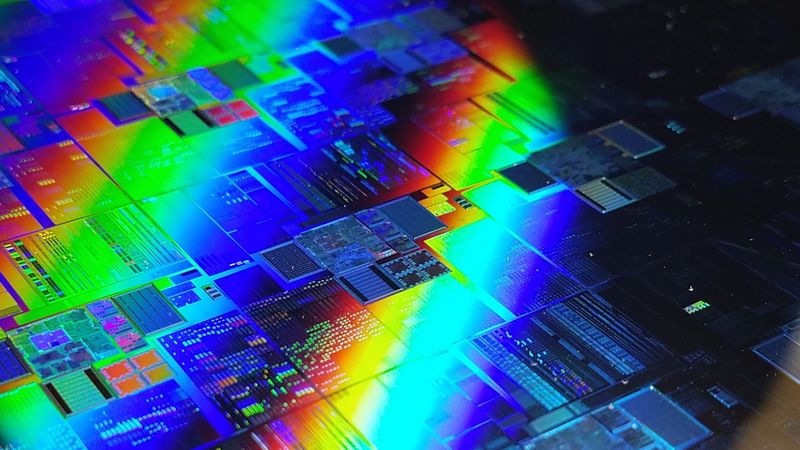
Expanding the factories of traditional defence groups alone will not be enough. Increasingly, the industry is turning to technologies, suppliers and production capacity originally developed for civilian markets. Semiconductors and sensors, artificial intelligence, cloud services, satellite communications, batteries and autonomous navigation have all become militarily relevant. Yet many are developed not by companies like Rheinmetall, KNDS, MBDA or Airbus Defence, but by companies serving automotive, telecommunications, space, IT and industrial markets. Dual use can shorten development times, reduce costs and expand the pool of suppliers. But defence companies also inherit the dependencies of global civilian supply chains. Europe’s armed forces can therefore become technologically more advanced without necessarily becoming more sovereign.
Sign in or register and read on
Please log in or register and read this article. To be able to read this article in full, you must be registered. Free registration gives you access to exclusive specialist information.
Already registered? Log in here
:quality(80)/p7i.vogel.de/wcms/58/03/5803ece4df5dd063023aeb2ec5829383/926678a5-dc82-4b02-b0e9-bee54139e850-1672x940v1.png "Europe on the move: How will its Defence industy be organised? (Picture: AI Generated)")
:quality(80)/p7i.vogel.de/wcms/76/09/7609bf9e5f14cd727b3146f41c4c7ecd/69622dc9-64ca-4341-904c-7b1f7a3668dd-6261x3523v1.jpeg "69622dc9-64ca-4341-904c-7b1f7a3668dd-6261x3523v1 (Source: Eurosatory)")