Additive manufacturing can speed up spare parts supply and maintenance, enable lightweight components, and open up new design freedom for engineers. But for use in the defence sector, it is not enough to successfully print a component: the process, material, testing, and approval must all fit together.
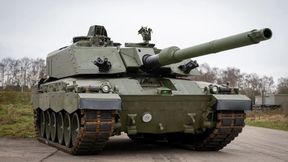
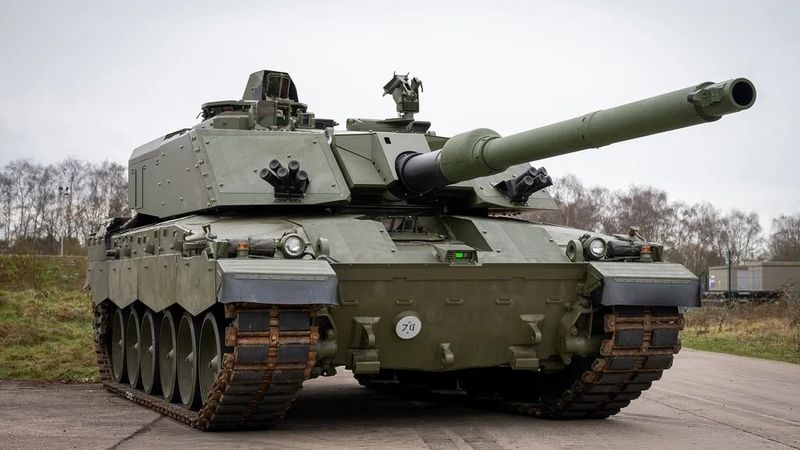
In the current Challenger 3 from Rheinmetall BAE Systems Land (RBSL), 3D-printed components are being used.
(Source: RBSL)
The defence industry is currently, alongside aerospace, one of the most important drivers of additive manufacturing. Since 2022 and the new geopolitical situation, a great deal has changed in the industry in technological, financial, and volume terms.
In the defence sector, a missing component can have far-reaching consequences: a vehicle, aircraft, or ship may remain out of service longer than planned. Additive manufacturing (AM) offers an additional way to produce individual components and small series—especially when spare parts are difficult to obtain or conventional tooling and suppliers are lacking. It does not simply replace established production across the board. Rather, its value lies in manufacturing selected parts more flexibly and closer to actual demand.
Spare parts, maintenance and functional integration
A key area of application is the maintenance of older systems. A digital component model can provide the basis for manufacturing a rarely needed spare part again without first producing new tools. The prerequisites, however, are reliable design data, a suitable manufacturing chain, and approval of the component for its intended use.
Further applications range from fixtures and assembly aids to housings, air ducts, and structural components. Prototypes and small pre-series runs are also of interest for development: changes to the geometry can be implemented digitally before a company invests in expensive tooling or conventional series production.
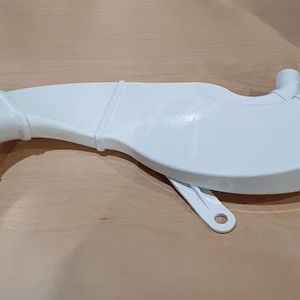
Additive processes also make it possible to redesign components and integrate functions. This can reduce weight or the number of parts—but it must always be evaluated on the basis of the actual loads and the entire life cycle. At Rheinmetall UK, additive manufacturing has been on the agenda for many years, and by now the 3D-printed parts are also finding their way into the company’s military technology. In addition to a growing number of metal parts, for example, the air ducts for the air-conditioned ventilation system for the crew of the current Challenger 3 tank are additively manufactured using the filament process with the high-performance polymer Ultem 9085. This shows that additive manufacturing is also used for functional parts, not just for demonstration models.
AM as an industrial key technology
A broader perspective on additive manufacturing for the defence industry is offered by the Formnext AM Defence Summit, which will take place on 17/11/2026 and is organised by Formnext in cooperation with Additive Manufacturing Defence Network e.V. This summit focuses on the key question of how additive manufacturing, as a key industrial technology, can contribute to strengthening defence and security structures—from production and maintenance through to resilient, sovereign supply chains.
Four processes have become established for applications in the defence sector: In Laser Powder Bed Fusion (LPBF), metal powder is applied layer by layer and locally melted with a laser. The process is suitable for complex metal parts, internal channels, and weight-saving geometries. It is particularly interesting when conventional manufacturing would require multiple individual parts or elaborate machining steps. However, process control, post-processing, and inspection are demanding.
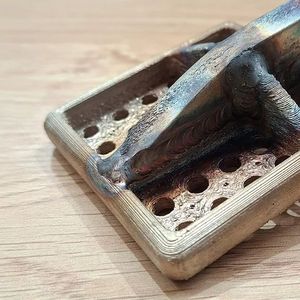
Directed Energy Deposition (DED) applies material locally: metal powder or wire is fed to an energy source and melted. DED can therefore be considered for repairs, coatings, or building up material on existing components. For designers, key aspects include the bond between the base material and the deposited material, the heat input, and the required post-processing. The additive manufacturing service provider Toolcraft used the DED process on behalf of Rheinmetall AG to produce components for the launcher unit of the TSWA. The TSWA (turret-independent secondary weapon system) is an unmanned weapon station mounted at the rear of the German Armed Forces’ Puma infantry fighting vehicle. Thanks to thin-walled and dense structures, welded individual components could be produced with low weight.
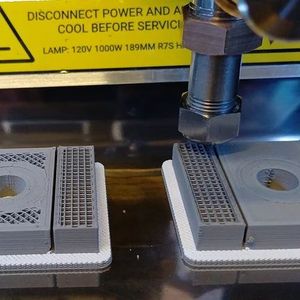
In FFF, a plastic filament is heated and deposited layer by layer. The process is suitable for prototypes, aids/tools, and selected functional plastic parts. However, strength is direction-dependent: components can behave differently along the layers than across them.
Date: 08.12.2025
Naturally, we always handle your personal data responsibly. Any personal data we receive from you is processed in accordance with applicable data protection legislation. For detailed information please see our privacy policy.
Consent to the use of data for promotional purposes
I hereby consent to Vogel Communications Group GmbH & Co. KG, Max-Planck-Str. 7-9, 97082 Würzburg including any affiliated companies according to §§ 15 et seq. AktG (hereafter: Vogel Communications Group) using my e-mail address to send editorial newsletters. A list of all affiliated companies can be found here
Newsletter content may include all products and services of any companies mentioned above, including for example specialist journals and books, events and fairs as well as event-related products and services, print and digital media offers and services such as additional (editorial) newsletters, raffles, lead campaigns, market research both online and offline, specialist webportals and e-learning offers. In case my personal telephone number has also been collected, it may be used for offers of aforementioned products, for services of the companies mentioned above, and market research purposes.
Additionally, my consent also includes the processing of my email address and telephone number for data matching for marketing purposes with select advertising partners such as LinkedIn, Google, and Meta. For this, Vogel Communications Group may transmit said data in hashed form to the advertising partners who then use said data to determine whether I am also a member of the mentioned advertising partner portals. Vogel Communications Group uses this feature for the purposes of re-targeting (up-selling, cross-selling, and customer loyalty), generating so-called look-alike audiences for acquisition of new customers, and as basis for exclusion for on-going advertising campaigns. Further information can be found in section “data matching for marketing purposes”.
In case I access protected data on Internet portals of Vogel Communications Group including any affiliated companies according to §§ 15 et seq. AktG, I need to provide further data in order to register for the access to such content. In return for this free access to editorial content, my data may be used in accordance with this consent for the purposes stated here. This does not apply to data matching for marketing purposes.
Right of revocation
I understand that I can revoke my consent at will. My revocation does not change the lawfulness of data processing that was conducted based on my consent leading up to my revocation. One option to declare my revocation is to use the contact form found at https://contact.vogel.de. In case I no longer wish to receive certain newsletters, I have subscribed to, I can also click on the unsubscribe link included at the end of a newsletter. Further information regarding my right of revocation and the implementation of it as well as the consequences of my revocation can be found in the data protection declaration, section editorial newsletter.
Selective Laser Sintering (SLS) fuses plastic powder layer by layer. It enables complex geometries, including parts with integrated functions. The processes are not interchangeable at will: component size, material, quantity, accuracy, and required properties determine the selection.
The challenge: qualifying components
For designers, one of the biggest tasks is to link the component function early on with manufacturing and later verification. In LPBF, component orientation and support structures influence surface quality, distortion, and material usage. In FFF, the load direction must match the layer orientation. In SLS, aspects such as powder removal and the inspectability of internal channels must be taken into account. In DED, heat input, distortion, and the quality of the transition zone between the base material and the deposited material must be assessed. In addition, there is qualification:
ISO/ASTM 52920:2023 describes requirements for industrial AM processes and manufacturing sites.
ISO/ASTM 52904:2024 addresses process control in metal powder bed fusion for critical applications.
ISO/ASTM 52901 supports the specification of requirements when procuring additively manufactured parts.
These standards create a common framework, but they do not replace application-specific approval by the client or the responsible technical authority. Traceability, test procedures, and the protection of digital manufacturing data are also part of the overall concept.
What designers should decide early on
As early as the draft stage, function, loads, consequences of failure, and test requirements should be defined. This also includes the appropriate build orientation, minimum wall thicknesses, a support and post-processing concept, the material condition, as well as traceability of material and process parameters. Changes to the machine, parameters, or post-treatment may require a reassessment.
The decisive step is therefore coordination with the manufacturer, quality assurance, and the responsible approval authority before the design is finalised. Additive manufacturing can improve supply and design freedom—but in the defence sector it becomes reliable only through controlled processes, documented testing, and clear part approval.