Germany and Finland are deepening their defence cooperation by combining technological innovation, dual use expertise and industrial capabilities to strengthen NATO's readiness and Europe's security.
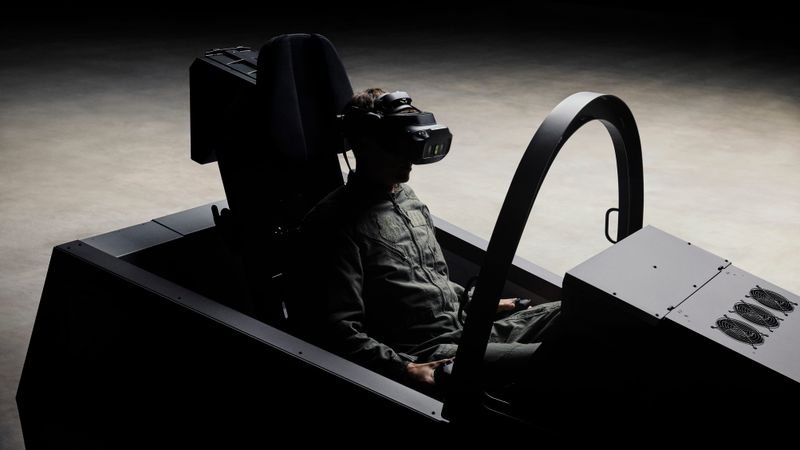
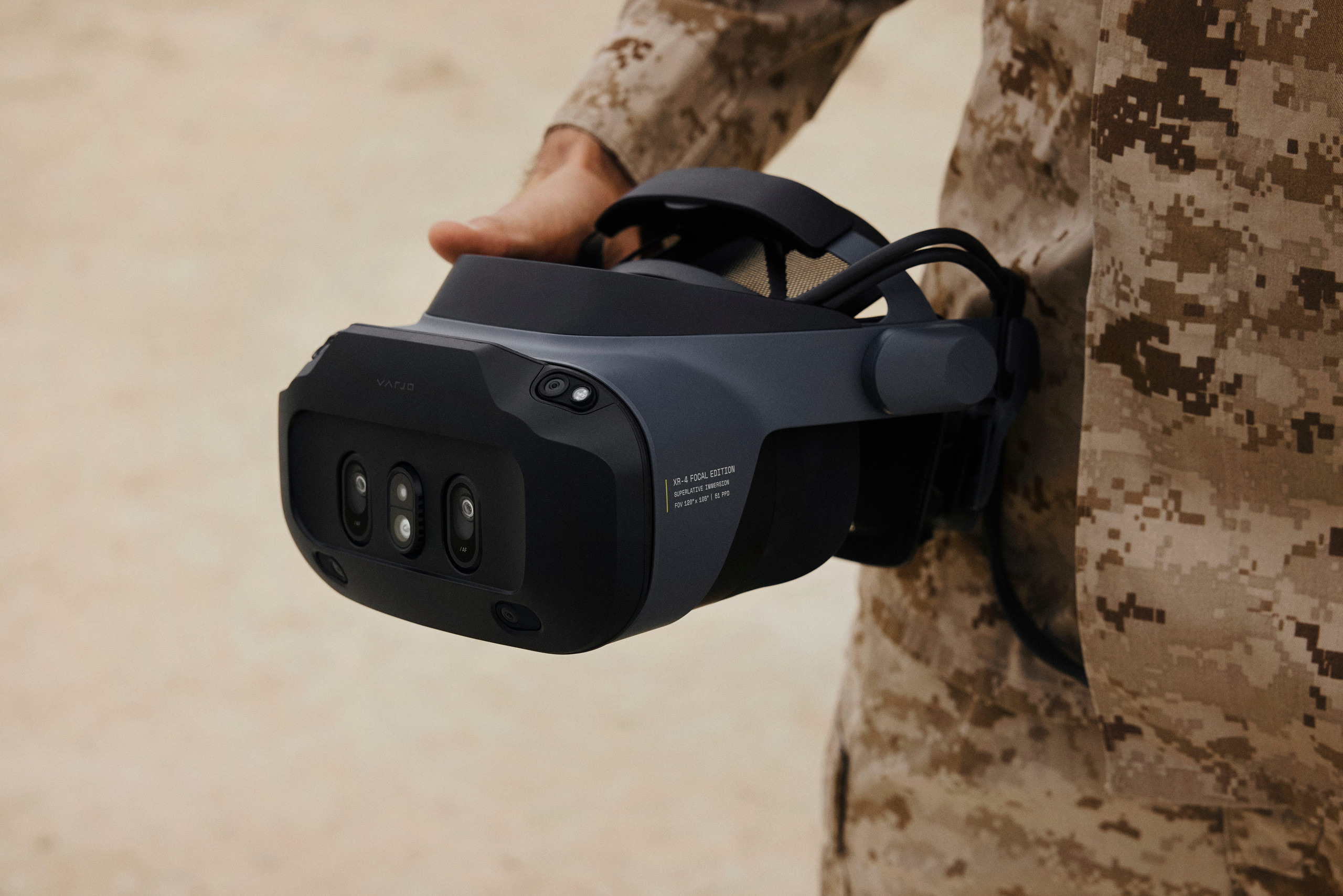
The latest generation of Varjo's mixed reality headsets combines advanced immersive technology with state of the art graphics performance to deliver realistic training and simulation experiences on land, at sea and in the air.
(Source: Varjo Technologies Oy)
Germany and Finland are intensifying their cooperation in the security and defence sector. The aim is to combine technological expertise in order to rapidly develop innovative defence solutions that will also benefit NATO. Finland contributes, among other things, its expertise in the field of dual use technologies. The country has several rapidly growing ecosystems that combine a wide range of capabilities and offer all the advantages required to bring first class European products to market in a customer focused manner.
Varjo will equip Rheinmetall’s modular driving and weapons simulation systems with headsets and software from the Varjo XR-4 series. On 24 June 2026, both companies will participate in an event in Berg-Mörlbach (near Munich), where live XR demonstrations and direct exchanges with users and decision makers from the defence and aviation sectors will take centre stage. The event will provide an opportunity to interview representatives from Varjo and Rheinmetall to learn more about the partnership and the modernisation of training technologies.
(Source: Varjo Technologies Oy)
They are as realistic as the real world and are modernising training in aviation and defence: with the virtual and mixed reality solutions developed by Varjo Technologies Oy in Helsinki (Finland), customers can train their personnel in highly realistic simulation scenarios. According to the company, the technology is already being used in more than 120 defence programmes worldwide. The Finnish company is now also working with the German defence group Rheinmetall. The aim is to integrate Varjo technology into Rheinmetall's simulators for land forces in order to expand training opportunities throughout Europe and within NATO.
As part of the partnership, Varjo will equip Rheinmetall's modular driving and weapons simulation systems with headsets and software from the Varjo XR-4 series. “By combining Rheinmetall's high fidelity simulators with our XR technology, armed forces can train with a speed, mobility and realism that meet today's operational requirements,” explains Valentin Storz, Chief Revenue Officer at Varjo. Bartek Panasewicz, VP Training Systems Land at Rheinmetall Electronics, adds: “Mixed reality gives us the flexibility to train large numbers of soldiers wherever they are needed without compromising quality or realism. We look forward to working with Varjo to accelerate NATO's defence readiness.”
Finnish German cooperation aims to strengthen NATO
Following Finland's accession to NATO in 2023 in response to Russia's war of aggression and the associated abandonment of its military non alignment policy, the Nordic country and Germany are intensifying their security cooperation. Both countries support closer networking within NATO, particularly in Northern Europe. Key topics include the protection of critical infrastructure, security in the Baltic Sea region and the exchange of information on comprehensive defence strategies.
For Germany and Europe, Finland serves as a strategic role model in defence policy through its model of comprehensive security and crisis prevention. “Finland's comprehensive security approach is based on the understanding that resilience is a responsibility shared by society as a whole,” says Kai Sauer, Finland's Ambassador to Germany. This means that ministries, the military, the private sector and civil society work hand in hand to maintain vital societal functions such as security, functioning infrastructure and the economy, even in times of war. “As close partners within NATO and the European Union, Finland and Germany have an excellent opportunity to combine this experience with technological innovation and industrial expertise in order to strengthen Europe's security and crisis preparedness,” explains Sauer.
Kirsi Kokko, Head of Defense and Digital Resilience at Business Finland, adds: “Together with partners such as Germany, we want to develop strong European defence solutions and expand bilateral cooperation. The war in Ukraine and the current geopolitical situation have shown that we must increase efficiency and sovereignty within the European Union's defence sector and develop innovative defence solutions more quickly.”
Dual use: How civilian innovations benefit the defence industry
One element of Finland's strategic defence concept is the use of so called dual use technologies. An alternative term is new defence. These are products primarily developed for civilian use that can also be used for military purposes. Alongside Varjo, many other Finnish companies are pioneers in this field. One example is the aerospace company ICEYE, which owns and operates the world's largest commercial constellation of radar satellites based on synthetic aperture radar technology. These satellites produce high resolution images of the Earth's surface. In the civilian sector, the data is primarily used for Earth observation and disaster management, while in the military sector it is used for reconnaissance purposes. Together with Rheinmetall, ICEYE has established the joint venture Rheinmetall ICEYE Space Solutions to expand satellite based reconnaissance capabilities for Germany. “Innovation cycles in the civilian sector are significantly faster. Evidence of this is that many traditional companies have established stronger cooperation with SMEs and start ups,” explains Kokko.
Date: 08.12.2025
Naturally, we always handle your personal data responsibly. Any personal data we receive from you is processed in accordance with applicable data protection legislation. For detailed information please see our privacy policy.
Consent to the use of data for promotional purposes
I hereby consent to Vogel Communications Group GmbH & Co. KG, Max-Planck-Str. 7-9, 97082 Würzburg including any affiliated companies according to §§ 15 et seq. AktG (hereafter: Vogel Communications Group) using my e-mail address to send editorial newsletters. A list of all affiliated companies can be found here
Newsletter content may include all products and services of any companies mentioned above, including for example specialist journals and books, events and fairs as well as event-related products and services, print and digital media offers and services such as additional (editorial) newsletters, raffles, lead campaigns, market research both online and offline, specialist webportals and e-learning offers. In case my personal telephone number has also been collected, it may be used for offers of aforementioned products, for services of the companies mentioned above, and market research purposes.
Additionally, my consent also includes the processing of my email address and telephone number for data matching for marketing purposes with select advertising partners such as LinkedIn, Google, and Meta. For this, Vogel Communications Group may transmit said data in hashed form to the advertising partners who then use said data to determine whether I am also a member of the mentioned advertising partner portals. Vogel Communications Group uses this feature for the purposes of re-targeting (up-selling, cross-selling, and customer loyalty), generating so-called look-alike audiences for acquisition of new customers, and as basis for exclusion for on-going advertising campaigns. Further information can be found in section “data matching for marketing purposes”.
In case I access protected data on Internet portals of Vogel Communications Group including any affiliated companies according to §§ 15 et seq. AktG, I need to provide further data in order to register for the access to such content. In return for this free access to editorial content, my data may be used in accordance with this consent for the purposes stated here. This does not apply to data matching for marketing purposes.
Right of revocation
I understand that I can revoke my consent at will. My revocation does not change the lawfulness of data processing that was conducted based on my consent leading up to my revocation. One option to declare my revocation is to use the contact form found at https://contact.vogel.de. In case I no longer wish to receive certain newsletters, I have subscribed to, I can also click on the unsubscribe link included at the end of a newsletter. Further information regarding my right of revocation and the implementation of it as well as the consequences of my revocation can be found in the data protection declaration, section editorial newsletter.
A well known start up is NestAI Oy. The Finnish technology company integrates artificial intelligence into unmanned vehicles, autonomous systems and command and control platforms. NestAI works closely with Nokia and the Finnish Defence Forces to develop AI enabled defence technologies. In November 2025, NestAI also secured more than €100 million (approx. 115 million USD)in investment capital to expand Europe's leading physical AI laboratory.
Deep tech regions offer numerous advantages for investors
Across Finland, companies and experts are using their existing expertise to develop a wide range of defence technologies. Organised regionally in clusters, these stakeholders are increasingly intensifying their cooperation both in research and in transferring civilian technological innovations into operational use by the Finnish Defence Forces. A common characteristic of these regional centres is that they conduct cutting edge research through technology and innovation hubs and host renowned universities as well as robust start up ecosystems. Highly skilled labour, excellent logistics connections and outstanding digital infrastructure provide additional advantages that attract investors from Germany.
Examples of such clusters include the DEFINE Accelerator (Defence Innovation Network Finland), located in the Finnish garrison town of Riihimäki (Finland). This three month accelerator programme focuses on scaling start ups in the defence and security sector as well as dual use innovations in fields such as artificial intelligence and autonomous systems.
Another important programme that stands out in this context is the NATO DIANA Accelerator (Defence Innovation Accelerator for the North Atlantic) in Espoo (Finland), operated by organisations such as the VTT Technical Research Centre of Finland, Aalto University and the University of Helsinki as part of the NATO DIANA network. It supports deep tech start ups, particularly those working on future communications systems and quantum technologies. Also noteworthy is the Oulu 6G Test Centre. This official NATO DIANA test centre, operated by the University of Oulu and VTT, provides state of the art laboratory and field networks in Northern Finland. It enables companies to validate communications and dual use technologies for international defence markets.
Other important clusters include Central Finland, with a focus on the city of Jyväskylä (Finland), which serves as a key centre of expertise for the convergence of cyber security and health technology. Another example is the Pirkanmaa cluster in Southern Finland, a highly specialised ecosystem where companies such as Saab benefit from local expertise in digital technologies and mechanical manufacturing.
Public programmes support the growth of Finnish defence companies
The Finnish defence sector is also supported through public programmes. Within the framework of the European Defence Fund (EDF), which finances defence research and development projects through international cooperation, Business Finland provides national co financing for defence projects that receive funding from the European Regional Development Fund (ERDF). Countries such as Germany can also benefit from Finnish initiatives such as the Defence and Digital Resilience programme (€120 million, approx. 137 million USD, running from 2024 to 2028), which promotes and expands international partnerships.
According to a recent study by PIA, the umbrella organisation representing Finnish companies from the defence, aerospace and security sectors and helping them make effective use of European programmes, investments in research, development and innovation remained at a high level, accounting for 15 per cent of member companies' turnover. PIA member companies made substantial investments in innovation, new technologies, expertise and production capacity, supporting the industry's long term growth and competitiveness. “This creates strong business opportunities for German companies. If Germany wants to be among the frontrunners, it will benefit from cooperation with Finnish companies and research institutions,” says Kokko.



:quality(80)/p7i.vogel.de/wcms/a5/e5/a5e5eecaf9443bd94c6833c158d7cced/20260924-en-5431005-1-640x360v1.jpeg "(Source: Saab AB)")
:quality(80)/p7i.vogel.de/wcms/e0/e7/e0e7bcd804912a34cd152be69b05a70f/rfa-esaboost-uk-1024x682-1024x576v1.jpeg "(Source: RFA)")
:quality(80)/p7i.vogel.de/wcms/32/42/3242e8a344e00905a0d8c7fc465178a9/defence-industry-sruvey-990x557v1.jpeg "(Source: European Commission)")
:quality(80)/p7i.vogel.de/wcms/b2/db/b2db599d38480ee76cb0632c3c5ac968/sentinel3c-sadeploymentthalesaleniaspace-alban-pichon-3-1680x944v1.jpeg "(Source: Thales Alenia Space, A. Pichon)")
:quality(80)/p7i.vogel.de/wcms/13/12/1312059ec82b1ed9e3df080350b29dc4/f46335bf-a581-4786-959f-4a0e9a74aed1-1671x940v1.png "Military radar architecture using distributed RF sensor nodes connected through optical fibre to central processing. (Source: KI-generiert / Gemini)")
:quality(80)/p7i.vogel.de/wcms/0a/14/0a1495d9b570ae32a5a7cc748b9a3c60/st-hannover-035-1920x1079v1-999x562v1.jpeg "Fastening technology you can experience first-hand—visitors to Schraubtec in Bochum (Germany) can see it for themselves at the Ruhr Congress on September 30, 2026. (Source: PHOTOVISION-DH GmbH)")
:quality(80)/p7i.vogel.de/wcms/cd/a9/cda92b173afa9d0b455d4f11b281c9ea/0094-to-image--capstone-cdr-1440x810v1.png "(Source: Terran Orbital)")
:quality(80)/p7i.vogel.de/wcms/e0/45/e045bc5414d7263fb308bdd501b5fcc1/0133113962v1.jpeg "The HSWL 354 is the transmission used, for example, in the Leopard 2 main battle tank. Renk manufactures this system and is now preparing to significantly increase its cycle time. As a result, Renk is placing greater emphasis on the military sector as a customer ... (Source: Renk)")
:quality(80)/p7i.vogel.de/wcms/5a/5a/5a5a0a2b51dbe1dd52c884b951db8cc7/aefa03eb-8efe-4b02-b8dd-824db7ae426f-1672x940v1.png "(Source: KI-generiert / Gemini)")
:quality(80)/p7i.vogel.de/wcms/1f/c2/1fc25ec2bd47a47b4617766e40033de2/image-2000-74f03b8e935a22580e24d2b05fe5ca3c-1920x1079v1.jpeg "The Airbus A310 ZERO-G stands ready for the 47th DLR parabolic flight campaign. It took place in Bordeaux from 7 to 18 September 2026. A total of twelve experiments from the fields of biology, physics, technology and materials science were on board. (Source: DLR (CC BY-NC-ND 3.0))")
:quality(80)/p7i.vogel.de/wcms/22/81/22812f686fd6ec1235f02392a3df56b9/34370ad9-163a-5941-9825-9c87a0e50000-1920x1079v1.png "Ariane 6 A64 flight VA267 with 32 satellites for Amazon LEO constellation, ready for launch at Europe's Spaceport in Kourou, French Guiana on 12 February 2026. (Source: ESA—M. Pédoussaut)")
:quality(80)/p7i.vogel.de/wcms/04/6b/046bda5de33193b13ebda873c3372868/iris2-1ceuropean-commission-1-1680x944v1.jpeg "(Source: European Commission)")
:quality(80)/p7i.vogel.de/wcms/cb/a2/cba2ecda891b2874327a30f69f773bdb/hexaforce-15-1920x1079v1.jpeg "(Source: Thales/Gauthier Chauffrut)")
:quality(80)/p7i.vogel.de/wcms/9d/8a/9d8addea8cc4e6f7a4793563ca397f2a/ai-im-milit-r-1672x940v1.png "(Source: KI-generiert / Gemini)")
:quality(80)/p7i.vogel.de/wcms/7f/5f/7f5fba2c729ec3aa256bf1a18d74529b/ai-chip-1672x940v1.png "(Source: KI-generiert / Gemini)")
:quality(80)/p7i.vogel.de/wcms/64/1b/641b6474b2a614cde7730c89ef2a3015/2026-09-09-rheinmetall-veroeffentlicht-battlesuite-schnittstellen-e8c18194-1225x690v1.jpeg "Rheinmetall’s Battlesuite provides a modular digital platform for connecting and integrating sensors, hardware and software components. (Source: Rheinmetall AG)")
:quality(80)/p7i.vogel.de/wcms/f1/c8/f1c88c768ba87dd2d71c708945c7df78/s960-applied-intuition04-960x640-960x540v1.jpeg "(Source: UK Government)")
:quality(80)/p7i.vogel.de/wcms/ef/1e/ef1eaddf8243b9c30cbfef17a4151def/aufmacherv1.jpeg "What works against drones—and what should be kept in mind when it comes to chain-based defence strategies? (Source: Mattheck)")
:quality(80)/p7i.vogel.de/wcms/b1/f0/b1f00d146f272acbef15ea82996259de/s960-halo-shield-2-960x540v1.png "Quell’s SkySpyke system in action (Source: UK Government)")
:quality(80)/p7i.vogel.de/wcms/2b/3d/2b3d42b7dc255aaaf5cadf57dab47d3b/43907b28dda9-sky-striker-demo-2-1600x899v1.webp "Diehl Defence and Elbit Systems demonstrate the capabilities of the SkyStriker loitering munition during a live demonstration. (Source: Diehl Defence)")
:quality(80)/p7i.vogel.de/wcms/90/a8/90a849f0023f11d1eb642eb4751a0321/bild2-h-c3-a4nel-ict-20truck-20and-20trailer-20parts-4320x2429v1.jpeg "Product information is visible at all times and retrieval of items
is confirmed by employees directly on the display of the Hänel MP 14 N
controller. (Source: René Marks)")
:quality(80)/p7i.vogel.de/wcms/4e/ca/4ecaa39f247490eded591b652c33aee3/thilmann-hcp-web-20kleiner-20ausschnitt-1442x811v1.jpeg "Entering the defence market can be challenging for start-ups, says HCP Sense CEO Ansgar Thilmann. (Picture: HCP Sense)")
:quality(80)/p7i.vogel.de/wcms/7a/51/7a511b80041d3f1335f3a5aa56fe75da/delivery-7022432-1280-1280x720v1.png "(Source: Mohamed_hassan)")
:quality(80)/p7i.vogel.de/wcms/f9/2f/f92f1ef8c739c34c70d99f7b0997621b/stra007-20--20cover-20image-5472x3076v1.jpeg "(Source: Stratasys)")
:quality(80)/p7i.vogel.de/wcms/ec/a9/eca9062ccbe4b042f8515846340410d8/aerospace-and-defence-stairways-platforms-and-much-morev1.jpeg "Modular constructions enable flexible modification. That applies to larger structures such as stairways and platforms, too. And that means aerospace and defence companies can reconfigure their maintenance platforms fast (itemitem)")
:quality(80)/p7i.vogel.de/wcms/30/2a/302a7b5723ad38fbde812fd3a468ad04/safety-on-stairways-in-industry-key-considerationsv1.jpeg "Stairways and platforms are used widely in maintenance and assembly areas in the aerospace and defence sectors. (Source: item)")
:quality(80)/p7i.vogel.de/wcms/f3/4e/f34ed744bb30817d3432c7ad522e6f30/engine-1v1.jpeg "Engineering with aluminium profiles really can be this easy – the item Engineeringtool and its smart functions help you save valuable time. (Source: item)")
:fill(fff,0)/p7i.vogel.de/companies/69/6d/696de2483d115/logo--fastems-rgb-horizontal.jpeg "logo--fastems-rgb-horizontal (Fastems)")
:fill(fff,0)/images.vogel.de/vogelonline/companyimg/84700/84735/65.jpg "logo_item_rgb_neu.jpg ()")
:quality(80)/p7i.vogel.de/wcms/03/95/0395e59275f1a9c12973dfe84b185be2/funding-20symbolbild-1920x1080v1.png "funding-20symbolbild-1920x1080v1 (Picture:Mohamed_hassan)")
:quality(80)/p7i.vogel.de/wcms/58/03/5803ece4df5dd063023aeb2ec5829383/926678a5-dc82-4b02-b0e9-bee54139e850-1672x940v1.png "Europe on the move: How will its Defence industy be organised? (Picture: AI Generated)")