New threat scenarios have led to a global rethinking of armament strategies. The demand for tanks, traditional weapon systems, ammunition, and new systems is increasing, but presents significant challenges for the defence industry. In light of this, the SHS group highlights its three companies.
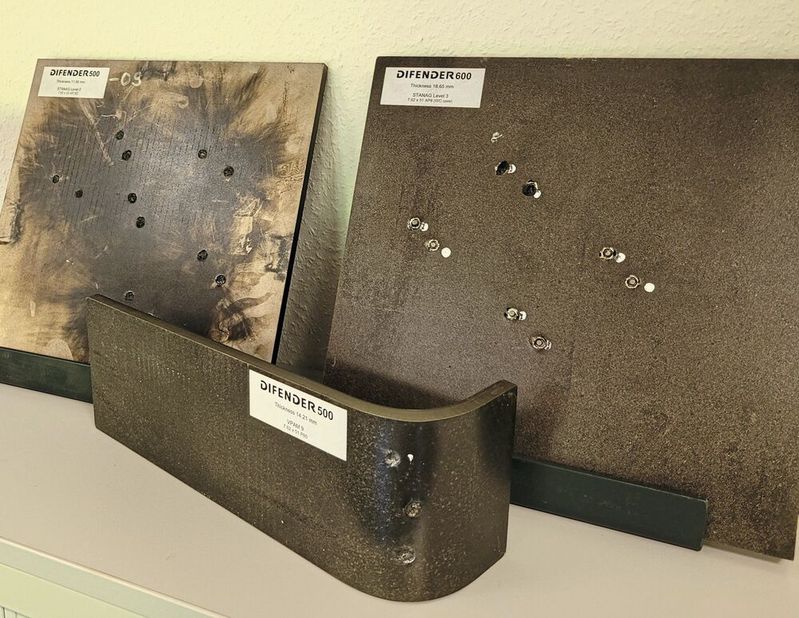
Image 1: Difender tank steels from Dillinger are characterised by top values in ballistic testing and cold edges. Defence companies therefore like to use them. They can be found, for example, in the armored vehicles Fuchs and GTK Boxer of the German Armed Forces.
(Source: Dillinger)
For the steel and forging tasks required to tackle them, leading German and international defence manufacturers rely on pre-materials and components from the three companies of the SHS Group (SHS—Stahl-Holding-Saar): Aktiengesellschaft der Dillinger Hüttenwerke, Saarstahl Aktiengesellschaft, and Saarschmiede GmbH Freiformschmiede. The unique combination of steel production, heavy plate rolling mill, bar rolling mill, and forge under one roof has made the trio sought-after suppliers of many products for the defence sector for years.
Dillinger is a partner of the German Armed Forces
For many years, Dillinger has been supplying Difender armored steels, approved by the German Armed Forces according to TL 2350-000, to leading manufacturers of wheeled and tracked vehicles. In addition to the German Armed Forces standard for German manufacturers, these highly alloyed quenched and tempered steels also meet the relevant national and international standards of alliance and NATO partners. Furthermore, Dillinger has obtained numerous customer, project, and government approvals for these armored steels. Today, the company, headquartered in Dillingen, Saarland, sells over ten different Difender grades according to data sheets in thicknesses ranging from six to 150 millimeters (approx. 6 inches) and in finely graded hardness levels from 270 to 600 HBW. Nine of these grades are approved by the German Armed Forces according to TL 2350-0000, enabling entire vehicles to be built with these grades and almost fully meeting demand. This full range makes Dillinger the only comprehensively approved supplier in Germany. The armored steels are used equally in both military and civilian applications. The production of Difender steels, approved at the two manufacturing sites in Dillingen and Dunkirk, France, ensures high production capacities. Difender security steels are among the safest on the market when it comes to ballistic and explosive protection, as they offer maximum protection. Exemplifying this is Difender 500, the most frequently used and tested security steel, featuring a market-unique thickness of up to 150 millimeters.
Gallery
The most weldable tank steel
With the same hardness and ballistic requirements, it can usually be processed thinner as proven. This reduced minimum thickness enables weight-optimised designs for fully armored vehicles in both military and civilian applications. Dillinger can produce Difender armored steels not only in military standard dimensions but also in significantly larger widths (over three meters, approx. 9.8 ft) and lengths (more than 20 meters, approx. 65 ft)—for waste-minimising and cost-optimised production, even in custom dimensions. These armored steel formats, tailored in thickness, width, and length, make a crucial contribution to safety as floor and roof plates for military wheeled and tracked vehicles or building armor at projectile height. At the same time, the largest possible plate dimensions, while meeting the strictest flatness requirements, provide designers with valuable optimisation potential for system components. This is supported by the outstanding processing characteristics of Difender armored steels. Test series conducted by renowned independent companies show excellent results for cutting, bending, joining, and mechanical machining. When it comes to cold bending, Dillinger's armored steels offer minimum bend radii that rank among the best on the market. In terms of weldability, Difender is the best in its class.
Very complex parts are possible
Dillinger is also a leader in expert support for questions regarding material selection, processing, and design implementation. The experts in technical customer consulting, who have been familiar with the specific requirements of the defence industry for many years, competently support designers. Together, the maximum is extracted from the material for the respective application.
In close collaboration with the development departments of all vehicle manufacturers for military applications, Dillinger conducts targeted development work to meet increasing demands with new material grades that were previously unavailable on the market. An example of this partnership with the defence industry is the customer-specific development of Difender 270 for military vehicles of foreign clients. The alloyed ultra-high-strength quenched and tempered steel Difender 600PH is particularly suited for hot forming processes to produce highly complex components. As Europe's leading heavy plate manufacturer, Dillinger offers this material in thicknesses of up to 25 millimeters (approx. 1 inch).
At the customer's request, even greater thicknesses are feasible—some defence manufacturers have already expressed interest. Manufacturers of civilian applications, such as cash transport vehicles, limousines, shooting ranges, or building protections for embassies, banks, or government buildings (doors, window frames, etc.), also highly value the in-depth technical consultation provided by Dillinger's experts and collaborative development. Difender security steels are also extensively used in both areas. Research and development based on a deep understanding of metallurgical models, as well as advanced manufacturing processes, have made Dillinger the preferred partner for manufacturers of maritime vessels, frigates, corvettes, and submarines for many years. For over 30 years, Dillinger has held approvals for the submarine steels HY-80 and HY-100. These pressure-resistant grades were specifically developed for pressure hulls and outer shells of submarines and are approved by renowned customers.
Date: 08.12.2025
Naturally, we always handle your personal data responsibly. Any personal data we receive from you is processed in accordance with applicable data protection legislation. For detailed information please see our privacy policy.
Consent to the use of data for promotional purposes
I hereby consent to Vogel Communications Group GmbH & Co. KG, Max-Planck-Str. 7-9, 97082 Würzburg including any affiliated companies according to §§ 15 et seq. AktG (hereafter: Vogel Communications Group) using my e-mail address to send editorial newsletters. A list of all affiliated companies can be found here
Newsletter content may include all products and services of any companies mentioned above, including for example specialist journals and books, events and fairs as well as event-related products and services, print and digital media offers and services such as additional (editorial) newsletters, raffles, lead campaigns, market research both online and offline, specialist webportals and e-learning offers. In case my personal telephone number has also been collected, it may be used for offers of aforementioned products, for services of the companies mentioned above, and market research purposes.
Additionally, my consent also includes the processing of my email address and telephone number for data matching for marketing purposes with select advertising partners such as LinkedIn, Google, and Meta. For this, Vogel Communications Group may transmit said data in hashed form to the advertising partners who then use said data to determine whether I am also a member of the mentioned advertising partner portals. Vogel Communications Group uses this feature for the purposes of re-targeting (up-selling, cross-selling, and customer loyalty), generating so-called look-alike audiences for acquisition of new customers, and as basis for exclusion for on-going advertising campaigns. Further information can be found in section “data matching for marketing purposes”.
In case I access protected data on Internet portals of Vogel Communications Group including any affiliated companies according to §§ 15 et seq. AktG, I need to provide further data in order to register for the access to such content. In return for this free access to editorial content, my data may be used in accordance with this consent for the purposes stated here. This does not apply to data matching for marketing purposes.
Right of revocation
I understand that I can revoke my consent at will. My revocation does not change the lawfulness of data processing that was conducted based on my consent leading up to my revocation. One option to declare my revocation is to use the contact form found at https://contact.vogel.de. In case I no longer wish to receive certain newsletters, I have subscribed to, I can also click on the unsubscribe link included at the end of a newsletter. Further information regarding my right of revocation and the implementation of it as well as the consequences of my revocation can be found in the data protection declaration, section editorial newsletter.
Components for the NATO naval sector
With Saarschmiede, another company of the SHS Group, there is also a long-standing and proven supplier for submarine and defence manufacturers. As a world-leading provider of special materials, superalloys, and large plant components, as well as a globally renowned open-die forge, Saarschmiede sets unparalleled standards in many areas. The basis of this success is its wide range of facilities and holistic manufacturing processes, from melting and forging to heat treatment, ultrasonic testing, and further processing. Technical consulting, as well as further developments or modifications in collaboration with designers in the defence industry, complement the portfolio. One example of this is the very challenging-to-produce stainless steel grade 1.3964. Saarschmiede also holds a globally leading position in the production and further processing of nickel-chromium superalloys Inconel 600 and Inconel 625 from a single source. As an approved supplier, it delivers large components made from these alloys to non-German NATO companies. From Inconel 600, Saarschmiede manufactures large-scale pressure vessels that encase the nuclear drives of warships. Due to the required component sizes, the forge in Völklingen (Germany) enjoys an almost unique position. The foundation of this prominent role is its correspondingly large and globally unique forging equipment. While, in the past, the casings for nuclear drives were rolled from nickel sheets and closed with weld seams, Saarschmiede now forges the massive pressure vessels as seamless components. Even for the somewhat smaller casings of pressure vessels for nuclear submarine drives, the seamless forged components from Saarschmiede are virtually unrivaled.
Decarbonised steel is in demand
The parent company of Saarschmiede, Saarstahl, with its locations in Völklingen, Burbach, and Neunkirchen (all located in Germany), is among the world's leading manufacturers of long steel products for a variety of key industries. Renowned defence manufacturers rely on this expertise in providing pre-materials for large-caliber, medium-caliber, mortar, and infantry ammunition. For NATO projectiles, Saarstahl produces blanks from the materials 42CrMo4 and 30CrNiMo8 with diameters of 135, 158, or 160 millimeters (approx. 5, 6 or 6.3 inches) and lengths of 600 or 700 millimeters (approx. 24 or 27 inches). Other grades are also possible upon request. The pre-material is produced by the French subsidiary Saarstahl Ascoval, based in Saint-Saulve, using 100% recycled steel in the electric arc furnace process (EAF). Compared to traditional steel manufacturing, which uses raw materials like iron ore and coal in a blast furnace process with an oxygen converter, this production method reduces CO₂ emissions by up to 70%.
The demand from the defence industry for this decarbonised steel for ammunition is high. In Saarstahl's plants in Völklingen and Nauweiler, the "green" steel cast into billets is rolled and further processed. The production of pre-materials for defence manufacturers is customised – either through the forging process, mechanical pressing, or milling from the long product. For example, pre-material for the casing of the NATO 155-millimeter (approx. 6 inches) large-caliber projectile is mechanically pressed from bar steel of grade 42CrMo4. Renowned major manufacturers have approved this product from Saarstahl and ordered it as part of serial production contracts. Further applications of Saarstahl's specially developed bar steel grades for the defence industry include pre-materials for rifle barrels as well as bolts for track systems of tanks and armored vehicles. (pk)




:quality(80)/p7i.vogel.de/wcms/9a/34/9a3492b2b9cab1e4004875782216c4b2/rheinmetall-iceye-space-solutions-berlin-header-7ec06bca-1225x690v1.png "(Source: Rheinmetall AG)")
:quality(80)/p7i.vogel.de/wcms/d4/28/d428b0ac9373f8febcf18ffec14e93af/osiris-rex-feature-1920x1079v1.jpeg "(Source: Lockheed Martin)")
:quality(80)/p7i.vogel.de/wcms/97/29/97293bc01fcd40ac9f5d5b4f4b1c1227/995ffab6-abca-4366-b067-078aee746368-1536x864v1.png "Symbolic image of a Leopard 2 main battle tank: Production and maintenance starts in Lithuania. (Picture: AI generated)")
:quality(80)/p7i.vogel.de/wcms/a6/5a/a65a0979453bbbd1812271415d3c5496/aws-constellation-pink-201220-1800x200-1024x683-1-1024x576v1.png "(Source: OHB Sweden)")
:quality(80)/p7i.vogel.de/wcms/76/1d/761de63f32752dc5a9722559c527fc1f/design-ohne-titel-5-1920x1079v1.png "(Source: Analog Devices)")
:quality(80)/p7i.vogel.de/wcms/33/a7/33a7f8ac37b143e73964dad10c8aafbc/0133560493v1.jpeg "Benedikt Gundling and Tobias Hannen in front of a tank component of the Ariane 6. (Source: Grob Works)")
:quality(80)/p7i.vogel.de/wcms/4f/3a/4f3a22eb23991207008533412c8dc817/screenshot-2026-09-25-125155-1405x790v1.png "(Source: BINDER GmbH)")
:quality(80)/p7i.vogel.de/wcms/4a/9f/4a9f831c424718e98ef3cf6b10b4dc3e/hot-fire-jarvisv1-900x506v1.jpeg "Developed in record time: A “JARVIS-class” jet engine capable of up to 100 pounds of thrust. It was designed in a four-week sprint using generative AI and established CAD/CAE tools. (Source: MIT)")
:quality(80)/p7i.vogel.de/wcms/45/d0/45d0707281dcef7a1a2c2a6e255d18fc/0133602931v1.jpeg "This is how the SpaceX specialists were working just a few years ago on the world’s largest rocket—the Starship. Now, Elon Musk’s company has reached a milestone as part of a test flight: orbit around the Earth! But there was also a bitter aftertaste... (Source: Spacex)")
:quality(80)/p7i.vogel.de/wcms/f0/33/f033d97ea29988a0defb0531fb51cfc8/arek-socha-on-pixabay-1707x960v1.jpeg "(Source: Arek Socha on Pixabay)")
:quality(80)/p7i.vogel.de/wcms/73/32/73325c11b708c7c53230359e46b9c63c/0133625653v1.jpeg "The Bundeswehr does have more than 50 transport aircraft, but it lacks any that also bring tactical capabilities. With the Airbus A400M, this shortcoming could be remedied, which is why there are plans to buy 16 aircraft of this type ... (Source: Airbus)")
:quality(80)/p7i.vogel.de/wcms/00/dc/00dcad81b11488711a69893092df7124/thedigitalartist-ai-generated-8314615-1920x1080v1.jpeg "(Source: Pete Linforth on Pixabay)")
:quality(80)/p7i.vogel.de/wcms/cb/a2/cba2ecda891b2874327a30f69f773bdb/hexaforce-15-1920x1079v1.jpeg "(Source: Thales/Gauthier Chauffrut)")
:quality(80)/p7i.vogel.de/wcms/9d/8a/9d8addea8cc4e6f7a4793563ca397f2a/ai-im-milit-r-1672x940v1.png "(Source: KI-generiert / Gemini)")
:quality(80)/p7i.vogel.de/wcms/7f/5f/7f5fba2c729ec3aa256bf1a18d74529b/ai-chip-1672x940v1.png "(Source: KI-generiert / Gemini)")
:quality(80)/p7i.vogel.de/wcms/64/1b/641b6474b2a614cde7730c89ef2a3015/2026-09-09-rheinmetall-veroeffentlicht-battlesuite-schnittstellen-e8c18194-1225x690v1.jpeg "Rheinmetall’s Battlesuite provides a modular digital platform for connecting and integrating sensors, hardware and software components. (Source: Rheinmetall AG)")
:quality(80)/p7i.vogel.de/wcms/c3/88/c3883045ed165f260b062bf0480b7db1/rti-connext-tss-4-2-0-1920x1081v1.png "Connext TSS 4.2.0 offers development teams a clear path to production-ready solutions. (Source: RTI)")
:quality(80)/p7i.vogel.de/wcms/e4/12/e412db949bc60f18e285917ed9d18a03/4h0cmyvufqhmaeu0kg6rwxaif9-q9m1tuvcg5sccfbzpiwm6yqizkewpiwxs8peywacypxcbbyczoowlekiqeqd-h-9hxv921myouexibytkuf5co6brk7qln-n6v2ibemnpxdpnirquv6wecfqptyrias0ri1fxveqgfkbwkt4vwinfpczenerdta42lwkq-1652x930v1.jpeg "Quantum Systems is scaling up the production of interceptor drones in Ukraine as demand for counter-UAS capabilities continues to grow. (Photo: Quantum Systems)")
:quality(80)/p7i.vogel.de/wcms/fe/11/fe1187f54b38f08ec4e244b50edf3201/toulouse-si-ge-airbus-853x480v1.jpeg "Airbus is expanding its European cybersecurity activities through a series of acquisitions (Picture: Nemausensis Asinus / Public Domain)")
:quality(80)/p7i.vogel.de/wcms/b4/0f/b40f9a9262229f0ad6f652dcff9012d8/ministry-of-defence-uk-1672x940v1.png "(Source: Ministry of Defence UK)")
:quality(80)/p7i.vogel.de/wcms/90/a8/90a849f0023f11d1eb642eb4751a0321/bild2-h-c3-a4nel-ict-20truck-20and-20trailer-20parts-4320x2429v1.jpeg "Product information is visible at all times and retrieval of items
is confirmed by employees directly on the display of the Hänel MP 14 N
controller. (Source: René Marks)")
:quality(80)/p7i.vogel.de/wcms/4e/ca/4ecaa39f247490eded591b652c33aee3/thilmann-hcp-web-20kleiner-20ausschnitt-1442x811v1.jpeg "Entering the defence market can be challenging for start-ups, says HCP Sense CEO Ansgar Thilmann. (Picture: HCP Sense)")
:quality(80)/p7i.vogel.de/wcms/7a/51/7a511b80041d3f1335f3a5aa56fe75da/delivery-7022432-1280-1280x720v1.png "(Source: Mohamed_hassan)")
:quality(80)/p7i.vogel.de/wcms/f9/2f/f92f1ef8c739c34c70d99f7b0997621b/stra007-20--20cover-20image-5472x3076v1.jpeg "(Source: Stratasys)")
:quality(80)/p7i.vogel.de/wcms/ec/a9/eca9062ccbe4b042f8515846340410d8/aerospace-and-defence-stairways-platforms-and-much-morev1.jpeg "Modular constructions enable flexible modification. That applies to larger structures such as stairways and platforms, too. And that means aerospace and defence companies can reconfigure their maintenance platforms fast (itemitem)")
:quality(80)/p7i.vogel.de/wcms/30/2a/302a7b5723ad38fbde812fd3a468ad04/safety-on-stairways-in-industry-key-considerationsv1.jpeg "Stairways and platforms are used widely in maintenance and assembly areas in the aerospace and defence sectors. (Source: item)")
:quality(80)/p7i.vogel.de/wcms/f3/4e/f34ed744bb30817d3432c7ad522e6f30/engine-1v1.jpeg "Engineering with aluminium profiles really can be this easy – the item Engineeringtool and its smart functions help you save valuable time. (Source: item)")
:fill(fff,0)/p7i.vogel.de/companies/69/6d/696de2483d115/logo--fastems-rgb-horizontal.jpeg "logo--fastems-rgb-horizontal (Fastems)")
:fill(fff,0)/images.vogel.de/vogelonline/companyimg/84700/84735/65.jpg "logo_item_rgb_neu.jpg ()")
:quality(80)/p7i.vogel.de/wcms/4f/cd/4fcdd7a728fbd87600c2f2ae72e76fad/0132826770v1.jpeg "Image 3: Research, development, and highly advanced manufacturing processes have long made Dillinger and Saarschmiede the partners of choice for manufacturers of naval systems, such as submarines.(Source: AI-generated by Dillinger)")
:quality(80)/p7i.vogel.de/wcms/d1/80/d180adfaeb5f1f428578b081955b61a0/0132826774v1.jpeg "Image 4: The well-known 155-millimeter (approx. 6.1 inches) NATO artillery shell from Rheinmetall is made of bar steel of grade 42CrMo4. Saarstahl produces the preliminary product for the shell's casing.(Source: Rheinmetall)")
:quality(80)/p7i.vogel.de/wcms/e1/79/e1795da584bb4fe0c0f14965a36e6dac/0132836198v1.jpeg "Image 2: The Difender Type 500 is the most demanded in terms of security steels. It is available in the uniquely thick maximum of 150 millimeters, allowing it to be used in the Leopard 2 A8 tank.(Source: KNDS)")
:quality(80)/p7i.vogel.de/wcms/4e/30/4e30dfffc4a19c22f1131538778658f8/04-aus-einer-hand--f-c3-bchrende-20stahl--und-schmiedel-c3-b6sungen-f-c3-bcr-die-r-c3-bcstungsindustriev1.jpeg "Dillinger is the only supplier in Germany to be comprehensively approved in accordance with TL 2350-0000, and its Difender armor steels cover almost all of the Bundeswehr's requirements. The picture shows the Fuchs armored transport vehicle. (Source: Rheinmetall)")
:quality(80)/p7i.vogel.de/wcms/d2/bc/d2bc582469c6cc40185afadbdcfc1de1/kloeckner-20metals-20germany-20er-c3-b6ffnung-20h-c3-bcrth-20ambo-20stahl-20h-c3-bcrth-pressefoto005-4000x2249v1.jpeg "kloeckner-20metals-20germany-20er-c3-b6ffnung-20h-c3-bcrth-20ambo-20stahl-20h-c3-bcrth-pressefoto005-4000x2249v1 (Source: Kloeckner Metals Germany GmbH)")