Lockheed Martin, Verizon, Keysight, ODC and Astris AI Demonstrate Technology for Public Airspace Protection with NVIDIA Technology.
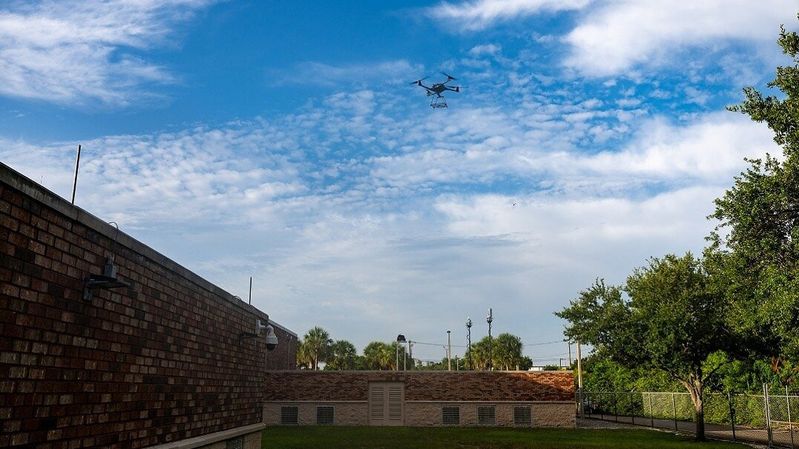
NetSense™ system combines AI, 5G and commercial tech to detect Unmanned Aerial Systems during a July demonstration in the Miami area.
(Source: Lockheed Martin)
Lockheed Martin (NYSE: LMT), in collaboration with Verizon, NVIDIA, Keysight Technologies, ODC and Astris AI, recently showcased how commercial off-the-shelf (COTS) technologies can make detecting and tracking unmanned aircraft systems (UAS) more accessible, faster to deploy, and easier to scale for public and critical infrastructure protection.
In a July demonstration in the Miami area, the NetSense™ Airspace Awareness-as-a-Service™ system demonstrated an AI-enabled system capable of identifying, tracking and monitoring UAS utilising existing 5G networks.
The technology has broad commercial applications across critical infrastructure, large-scale events at stadiums, utilities like power plants, and the everyday places people depend on, like schools, hospitals and airports. City, state and federal government customers can also gain proactive monitoring and alerts from the NetSense solution.
The big picture
As drones become more affordable, capable and widely available, the need for persistent, intelligent airspace awareness to protect the public grows. By leveraging existing technology, the NetSense solution can help protect people and critical infrastructure across a wide range of environments.
The successful live demonstration took place in a critical, high-traffic, urban area important for American protection, showcasing NetSense's components, capabilities, and UAS detection and alert systems in real-time. Leveraging an existing Verizon 5G network spectrum, ODC's AI-native Radio Access Network (RAN) software, NVIDIA's AI Aerial platform, and Keysight's advanced radio frequency (RF) simulation platform, NetSense detected and alerted the team to the presence of drones and maintained track custody through the flight.
How it works
The NetSense solution combines Lockheed Martin's warning and tracking systems, which work together using AI to read RF disturbances, predict and track a UAS's flight path and automatically send real-time alerts.
The NetSense solution revolutionises airspace awareness through:
AI-native sensing: Uses NVIDIA AI Aerial to analyse RF signal disturbances in real time and feed them to Lockheed Martin's NetSense algorithms.
Speed and agility: Can be procured and deployed faster than traditional or custom-built systems leveraging COTS.
Innovation and cost-effectiveness: The competitive commercial market can drive down costs and foster innovation.
Integration potential: Open architecture commercial systems let new interceptors and technologies be added to existing platforms without the need for entirely new hardware.
Scalability: The solution can grow from protecting a single critical site to supporting a mobile command and control system for larger operations.
Open architecture design: Makes continuous enhancements of the offering possible, including deployment of existing Lockheed Martin capabilities for improved data interpretation and target classification.
The demonstration proved the NetSense system can sense UAS without changing existing cellular radio deployments. This approach means at-scale, cost-effective sensing is available without recapitalisation of cellular infrastructure, ahead of the timeline for 6G Integrated Sensing and Communication (ISAC).
The NetSense system and its algorithms are also complementary to 6G ISAC and can enhance those systems when they are available. The NetSense system currently leverages Verizon's 5G network spectrum, with a roadmap toward broader deployment across 5G and future 6G networks.
Next steps
The NetSense system will be delivered as a subscription that interfaces with customer's existing security operations. Pilot deployments are planned for the second half of 2026 and early 2027, with commercial general availability planned for 2027. Early deployments will be limited to select customers that urgently need the capability. Interested organissations can contact Astris AI, Lockheed Martin's wholly owned subsidiary: https://astrisai.com/request-a-briefing.
Expert perspectives
"As drones become more affordable and accessible, airspace awareness technology needs to evolve rapidly to outpace potential threats. That's why we developed the NetSense solution," said Sarah Hiza, senior vice president, Technology and Strategic Innovation at Lockheed Martin. "By working within the established 5G network spectrum, we're able to collaborate with the commercial technology industry and deploy a solution that's ready at the time of need."
"By applying AI to the RF signal measurement data already traversing our 5G infrastructure, we can effectively turn our network into an intelligent sensing platform," said Anil Guntupali, senior vice president of Technology and Product Development at Verizon. "By collaborating with Lockheed Martin to apply intelligence to our existing 5G spectrum, we're proving that the most complex security problems often have an answer embedded in the network."
Date: 08.12.2025
Naturally, we always handle your personal data responsibly. Any personal data we receive from you is processed in accordance with applicable data protection legislation. For detailed information please see our privacy policy.
Consent to the use of data for promotional purposes
I hereby consent to Vogel Communications Group GmbH & Co. KG, Max-Planck-Str. 7-9, 97082 Würzburg including any affiliated companies according to §§ 15 et seq. AktG (hereafter: Vogel Communications Group) using my e-mail address to send editorial newsletters. A list of all affiliated companies can be found here
Newsletter content may include all products and services of any companies mentioned above, including for example specialist journals and books, events and fairs as well as event-related products and services, print and digital media offers and services such as additional (editorial) newsletters, raffles, lead campaigns, market research both online and offline, specialist webportals and e-learning offers. In case my personal telephone number has also been collected, it may be used for offers of aforementioned products, for services of the companies mentioned above, and market research purposes.
Additionally, my consent also includes the processing of my email address and telephone number for data matching for marketing purposes with select advertising partners such as LinkedIn, Google, and Meta. For this, Vogel Communications Group may transmit said data in hashed form to the advertising partners who then use said data to determine whether I am also a member of the mentioned advertising partner portals. Vogel Communications Group uses this feature for the purposes of re-targeting (up-selling, cross-selling, and customer loyalty), generating so-called look-alike audiences for acquisition of new customers, and as basis for exclusion for on-going advertising campaigns. Further information can be found in section “data matching for marketing purposes”.
In case I access protected data on Internet portals of Vogel Communications Group including any affiliated companies according to §§ 15 et seq. AktG, I need to provide further data in order to register for the access to such content. In return for this free access to editorial content, my data may be used in accordance with this consent for the purposes stated here. This does not apply to data matching for marketing purposes.
Right of revocation
I understand that I can revoke my consent at will. My revocation does not change the lawfulness of data processing that was conducted based on my consent leading up to my revocation. One option to declare my revocation is to use the contact form found at https://contact.vogel.de. In case I no longer wish to receive certain newsletters, I have subscribed to, I can also click on the unsubscribe link included at the end of a newsletter. Further information regarding my right of revocation and the implementation of it as well as the consequences of my revocation can be found in the data protection declaration, section editorial newsletter.
"The NetSense system demonstrates how AI can transform existing telecommunications infrastructure into a real-time sensing platform," said Ronnie Vasishta, senior vice president of telecoms at NVIDIA. "NVIDIA AI Aerial and AI-RAN turn existing 5G infrastructure into an AI-powered sensing platform, bringing the power of AI and accelerated computing to the network edge, so RF signal disturbances can be analysed instantaneously, enabling faster detection, more accurate classification and immediate alerts for public safety and critical infrastructure protection."
"By providing RF modeling, simulation, digital twin, emulation and test capabilities across the full engineering workflow, we are helping customers prove out feasibility, reduce complexity, and bring mission-critical technologies to market faster," said Kailash Narayanan, senior vice president of Communications Solutions Group, Keysight." This collaboration reflects Keysight's commitment to enabling the next generation of defence innovation with trusted design, simulation, emulation, and test solutions."
"This strategic collaboration marks a decisive milestone in the evolution of joint Counter-UAS and layered homeland air defence for low-flying objects," said Shaygan Kheradpir, chairman of the ODC board of directors. "By leveraging our AI-Native, Zero Trust AI-RAN platform, ODC enables true Integrated Sensing and Communications (ISAC) via a standards-compliant commercial architecture—turning everyday mobile network infrastructure into an intelligent, wide-area sensor fabric that detects, tracks and identifies low-altitude threats at the forward edge via applications such as NetSense."




:quality(80)/p7i.vogel.de/wcms/6a/a9/6aa9e5a5611a39fcc9e57828e3dbde42/digital-shield-exercise--september-2022--viii-2048x1152v1.webp "Saildrone’s unmanned Surveyor surveillance vessels have been in service with the U.S. Navy for several years, seen here during a joint naval exercise with Israel in 2022. (Photo: )")
:quality(80)/p7i.vogel.de/wcms/1c/3f/1c3fb30279d00d6bf81bae313f24433b/nasa-admin-isaacman-meets-with-esa-director-general-aschbacher--nhq202602110012-1920x1080v1.jpeg "ESA Director General Josef Aschbacher, right, has warned of a potential bottleneck in European launch capacity in the coming years. He is pictured here meeting NASA Administrator Jared Isaacman at NASA Headquarters in Washington. (Photo: NASA/Bill Ingalls)")
:quality(80)/p7i.vogel.de/wcms/6f/5d/6f5df6a4fb2abf0a54b967b5f7090e23/bild-gastbeitrag-ad-1536x864v1.png "(Source: AI-Generated Illusration / Microsoft Copilot)")
:quality(80)/p7i.vogel.de/wcms/d6/ee/d6ee0edd4cf33d218d48eea94315c251/0132555049v1.jpeg "On December 1 and 2, 2026, the T3 – Transform The Tomorrow conference will explore strategies that help companies future-proof their operations. (Image: ©Vogel Corporate Solutions / AdobeStock 1280236166, Oksana)")
:quality(80)/p7i.vogel.de/wcms/b0/f3/b0f385879d74f4c0a19e76f5f4292bb5/header-antenne-fahrzeug-gloom960x540v1.jpeg "(Source: Franke GmbH)")
:quality(80)/p7i.vogel.de/wcms/bf/b0/bfb0d0693aaf56f1360459f18a7a11db/9e0fdb49-4246-4e96-ae39-32164c3a5eb6-1672x940v1.png "Germany is moving from a naval laser demonstrator towards an operational high-energy laser weapon system. (Source: KI-generiert / Gemini)")
:quality(80)/p7i.vogel.de/wcms/fb/68/fb683ea66fd1ef9992fb03af66fbde79/rs-mp007-portable-direction-finding-system-side-view-rohde-schwarz-200-203086-1920-1080-1-1920x1079v1.jpeg "(Source: Rohde & Schwarz)")
:quality(80)/p7i.vogel.de/wcms/a7/e7/a7e747efafbb0725573621c20d08769b/electro-optical-system-300dpi-2-1772x997v1.jpeg "Electro optical sensor systems must be watertight. (Source: CETA Testsysteme GmbH / Canva / AI generated)")
:quality(80)/p7i.vogel.de/wcms/05/46/054632df58c2d600fc72f3f76baf74ac/lockheed-martin-hypersonic-1672x940v1.png "(Source: Lockheed Martin)")
:quality(80)/p7i.vogel.de/wcms/2e/04/2e04856d99487daf473ae94c7f32ee42/l3harris-ngi-hotfire-test-1220-1217x684v1.png "L3Harris conducts successful hot fire test of the stage two solid rocket motor for Lockheed Martin’s Next Generation Interceptor program. (Source: L3Harris)")
:quality(80)/p7i.vogel.de/wcms/07/89/07896dcfbfd7112832cbf7b7fc62d911/mq-28valiantshieldfoto40thflighttestsquadronusairforcev1.jpeg "(Source: Rheinmetall AG)")
:quality(80)/p7i.vogel.de/wcms/17/13/17133b6dc65e5470d229dc8b3ca7c798/0132661461v1.jpeg "GE Aerospace, in collaboration with NASA, Beta Technologies, and Boeing, conducted the first hybrid-electric flight at nearly 9,200 meters (approx. 30,000 ft). (Source: GE Aerospace)")
:quality(80)/p7i.vogel.de/wcms/d0/70/d070157885d390faeede32e7ed4d6697/nord069-image-1920x1080v1.jpeg "The Skylo certification inherited from embedded modem developer LooUQ enables IoT developers to develop devices faster that connect via cellular and satellite networks using Skylo’s standards-based NTN service. (Source: Nordic Semiconductor)")
:quality(80)/p7i.vogel.de/wcms/78/3f/783fd32af96f559bb43f0650302b6791/multicore-tech-byte-1327x747v1.jpeg "(Source: Green Hills Software)")
:quality(80)/p7i.vogel.de/wcms/22/48/2248d2d763fb6d2b0e15b87846199624/0132406729v1.jpeg "ESA commissions Keysight and Sateliot to develop a blockchain-based framework for non-terrestrial 5G networks. (Source: Keysight)")
:quality(80)/p7i.vogel.de/wcms/f9/3a/f93ad97bbfa51aee8601c31c3e59e2df/innova-labs-on-pixabay-1920x1080v1.jpeg "(Source: Innova Labs on Pixabay)")
:quality(80)/p7i.vogel.de/wcms/9b/25/9b255f54c9d2933ac0361ab0c18b9863/lockheed-martin-netsense-july-demonstration-1077x605v1.jpeg "NetSense™ system combines AI, 5G and commercial tech to detect Unmanned Aerial Systems during a July demonstration in the Miami area. (Source: Lockheed Martin)")
:quality(80)/p7i.vogel.de/wcms/03/39/0339b9cf8425ebdf24aaba9f2fc23ff1/thales-minerva-camera-copie-3-1680x944v1.jpeg "(Source: Thales)")
:quality(80)/p7i.vogel.de/wcms/58/cd/58cdd5effb6d0faf2dc95406a26fa812/asw-rimpac-1920x1080v1.jpeg "Lockheed Martin’s rapidly retrainable AI “super brain” demonstrated during the world’s largest maritime exercise, proving the Navy’s ability to field cutting edge antisubmarine warfare (ASW) tools at the speed of operational need. (Source: Lockheed Martin)")
:quality(80)/p7i.vogel.de/wcms/14/97/1497befe1511854099204c3d45398c03/drohne-flughafen-1536x864v1.png "(Illustration photo) (Source: KI-generiert / Gemini)")
:quality(80)/p7i.vogel.de/wcms/90/a8/90a849f0023f11d1eb642eb4751a0321/bild2-h-c3-a4nel-ict-20truck-20and-20trailer-20parts-4320x2429v1.jpeg "Product information is visible at all times and retrieval of items
is confirmed by employees directly on the display of the Hänel MP 14 N
controller. (Source: René Marks)")
:quality(80)/p7i.vogel.de/wcms/4e/ca/4ecaa39f247490eded591b652c33aee3/thilmann-hcp-web-20kleiner-20ausschnitt-1442x811v1.jpeg "Entering the defence market can be challenging for start-ups, says HCP Sense CEO Ansgar Thilmann. (Picture: HCP Sense)")
:quality(80)/p7i.vogel.de/wcms/7a/51/7a511b80041d3f1335f3a5aa56fe75da/delivery-7022432-1280-1280x720v1.png "(Source: Mohamed_hassan)")
:quality(80)/p7i.vogel.de/wcms/f9/2f/f92f1ef8c739c34c70d99f7b0997621b/stra007-20--20cover-20image-5472x3076v1.jpeg "(Source: Stratasys)")
:quality(80)/p7i.vogel.de/wcms/ec/a9/eca9062ccbe4b042f8515846340410d8/aerospace-and-defence-stairways-platforms-and-much-morev1.jpeg "Modular constructions enable flexible modification. That applies to larger structures such as stairways and platforms, too. And that means aerospace and defence companies can reconfigure their maintenance platforms fast (itemitem)")
:quality(80)/p7i.vogel.de/wcms/30/2a/302a7b5723ad38fbde812fd3a468ad04/safety-on-stairways-in-industry-key-considerationsv1.jpeg "Stairways and platforms are used widely in maintenance and assembly areas in the aerospace and defence sectors. (Source: item)")
:quality(80)/p7i.vogel.de/wcms/f3/4e/f34ed744bb30817d3432c7ad522e6f30/engine-1v1.jpeg "Engineering with aluminium profiles really can be this easy – the item Engineeringtool and its smart functions help you save valuable time. (Source: item)")
:fill(fff,0)/p7i.vogel.de/companies/69/6d/696de2483d115/logo--fastems-rgb-horizontal.jpeg "logo--fastems-rgb-horizontal (Fastems)")
:fill(fff,0)/images.vogel.de/vogelonline/companyimg/84700/84735/65.jpg "logo_item_rgb_neu.jpg ()")
:quality(80)/p7i.vogel.de/wcms/58/cd/58cdd5effb6d0faf2dc95406a26fa812/asw-rimpac-1920x1080v1.jpeg "Lockheed Martin’s rapidly retrainable AI “super brain” demonstrated during the world’s largest maritime exercise, proving the Navy’s ability to field cutting edge antisubmarine warfare (ASW) tools at the speed of operational need. (Source: Lockheed Martin)")
:quality(80)/p7i.vogel.de/wcms/71/3a/713a5ae1572a8c4505f9c4b8ffa99134/meropslauncher-2720x1530v1.png "meropslauncher-2720x1530v1 (Source: Polish Armed Forces)")