LinkedIn has unveiled its 20 most promising start-ups in Germany for 2026, with artificial intelligence and defence technology featuring prominently. Three defence technology companies—Helsing, STARK and SWARM Biotactics—rank among the top seven, while Berlin and Munich and their surrounding areas account for 16 of the 20 companies on the list.
LinkedIn’s Top Startups 2026 ranking highlights Germany’s emerging companies, with AI, defence technology and energy innovation featuring prominently.
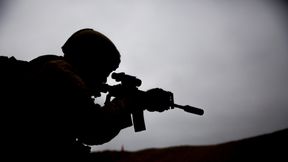
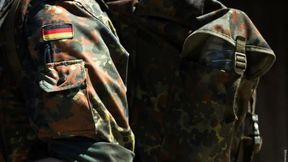
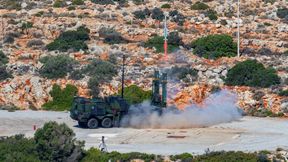
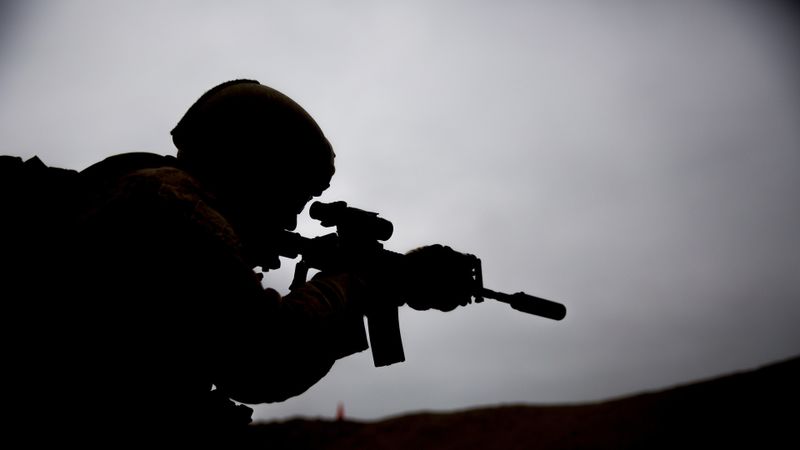
(Source: Military_Material on Pixabay)
LinkedIn’s German Top Startups 2026 ranking reflects a start-up ecosystem evolving alongside the country itself: from the energy transition to the AI transformation, and from the post-Cold War peace dividend to Germany’s Zeitenwende, or strategic turning point in security and defence policy. Three defence technology companies—Helsing (ranked second), STARK (third) and SWARM Biotactics (seventh)—have made it into the top seven. Regional concentration also remains high, with 16 of the 20 companies recognised coming from Berlin, Munich and their surrounding areas.
This year’s ranking is led by Berlin-based Langdock, Munich-based defence technology company Helsing and drone specialist STARK. LinkedIn assesses young companies using four factors: employee growth, engagement on the platform, interest in job opportunities and the ability to attract top talent. The assessment period runs from 1 July 2025 to 30 June 2026.
AI and defence technology dominate the top rankings
Artificial intelligence plays an important role at many of the companies featured in this year’s ranking, from automating business processes to developing autonomous defence systems. Leading the list is Langdock (ranked first), a Berlin-based company that supports AI integration and workflow automation. Peec AI (fourth) analyses how visible brands are in AI-powered search engines.
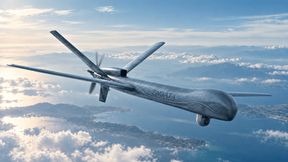
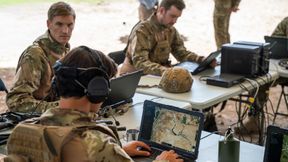
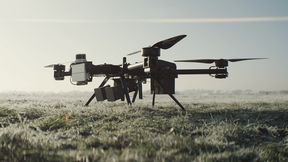
The strong presence of defence technology companies is particularly notable. Helsing, STARK and SWARM Biotactics all feature among the top seven. Helsing, which also performed strongly in previous years, develops AI-enabled defence systems and autonomous technologies for military applications. STARK works on uncrewed defence systems, while SWARM Biotactics combines biological systems with sensors and robotics, including for reconnaissance and surveillance tasks. STARK and SWARM Biotactics are new additions to the national ranking this year.
“The ranking shows how quickly Germany’s start-up landscape is adapting to new geopolitical and technological realities. AI is no longer a hype topic confined to individual industries; it has become a key technology, spanning everything from business process automation to the development of new defence systems. The fact that three defence technology companies feature among the top seven illustrates the importance this field has also assumed among Germany’s emerging start-ups,” says Matthias Bergleiter, Editorial Director DACH at LinkedIn.
The energy transition remains prominent
Alongside AI and defence technology, five companies from the energy and climate sectors feature in the ranking. They cover a range of activities: 1KOMMA5° (sixth) provides renewable energy solutions, Reonic (15th) develops software for installation companies, and Cloover (16th) facilitates financing for these technologies. Emidat (12th) supports the construction industry in analysing environmental and product data, while Tanso (17th) develops software for carbon accounting and sustainability reporting. Two companies in this sector, 1KOMMA5° and Tanso, also appeared in last year’s ranking.
“Germany is under pressure to make faster progress in key technologies and build its own capabilities. Above all, this requires the right talent. Our Top Startups show that companies are emerging here that are developing technological solutions and offering skilled professionals exciting opportunities. The decisive factor is whether we can attract the best people from Germany and abroad, thereby laying the foundations for internationally competitive technologies,” Bergleiter adds.
Berlin excels in software, Munich in research and technology
Berlin remains the creative centre of Germany’s start-up ecosystem in this year’s ranking, with 12 of the 20 companies based in the capital and its surrounding area. Munich is represented by five companies. Hamburg, with 1KOMMA5°, Kassel, with SWARM Biotactics, and Stuttgart, with Blockbrain, also feature on the list.
The differences are particularly apparent in the companies’ business models. Berlin is home to numerous software platforms and digital services, while Munich stands out for research-intensive technologies such as defence systems, spacecraft and quantum sensors. Software and AI play important roles in both regions. The comparison highlights that Germany has no single, uniform start-up identity.
Date: 08.12.2025
Naturally, we always handle your personal data responsibly. Any personal data we receive from you is processed in accordance with applicable data protection legislation. For detailed information please see our privacy policy.
Consent to the use of data for promotional purposes
I hereby consent to Vogel Communications Group GmbH & Co. KG, Max-Planck-Str. 7-9, 97082 Würzburg including any affiliated companies according to §§ 15 et seq. AktG (hereafter: Vogel Communications Group) using my e-mail address to send editorial newsletters. A list of all affiliated companies can be found here
Newsletter content may include all products and services of any companies mentioned above, including for example specialist journals and books, events and fairs as well as event-related products and services, print and digital media offers and services such as additional (editorial) newsletters, raffles, lead campaigns, market research both online and offline, specialist webportals and e-learning offers. In case my personal telephone number has also been collected, it may be used for offers of aforementioned products, for services of the companies mentioned above, and market research purposes.
Additionally, my consent also includes the processing of my email address and telephone number for data matching for marketing purposes with select advertising partners such as LinkedIn, Google, and Meta. For this, Vogel Communications Group may transmit said data in hashed form to the advertising partners who then use said data to determine whether I am also a member of the mentioned advertising partner portals. Vogel Communications Group uses this feature for the purposes of re-targeting (up-selling, cross-selling, and customer loyalty), generating so-called look-alike audiences for acquisition of new customers, and as basis for exclusion for on-going advertising campaigns. Further information can be found in section “data matching for marketing purposes”.
In case I access protected data on Internet portals of Vogel Communications Group including any affiliated companies according to §§ 15 et seq. AktG, I need to provide further data in order to register for the access to such content. In return for this free access to editorial content, my data may be used in accordance with this consent for the purposes stated here. This does not apply to data matching for marketing purposes.
Right of revocation
I understand that I can revoke my consent at will. My revocation does not change the lawfulness of data processing that was conducted based on my consent leading up to my revocation. One option to declare my revocation is to use the contact form found at https://contact.vogel.de. In case I no longer wish to receive certain newsletters, I have subscribed to, I can also click on the unsubscribe link included at the end of a newsletter. Further information regarding my right of revocation and the implementation of it as well as the consequences of my revocation can be found in the data protection declaration, section editorial newsletter.
The Top 20 Startups in this year’s ranking
1. Langdock (Berlin): Enterprise software for AI-powered automation and agents.2. Helsing (Munich): AI-enabled defence systems.3. STARK (Berlin): Autonomous drones and defence systems.4. Peec AI (Berlin): Platform analysing brand visibility in AI-powered search engines.5. Augustus (Berlin): Banking infrastructure for global fintech companies and banks.6. 1KOMMA5° (Hamburg): Provider of renewable energy solutions for homes and businesses.7. SWARM Biotactics (Kassel): Biohybrid robotics for reconnaissance and surveillance.8. The Exploration Company (Gauting near Munich): Developer of space cargo and transportation vehicles.9. Andercore (Berlin): B2B platform for industrial procurement and logistics.10. AveThera (Hennigsdorf near Berlin): Manufacturer of biological medicines and production solutions.11. Almetra (Berlin): AI software for production monitoring.12. Emidat (Munich): Platform for environmental and product data analysis in the construction industry.13. Nelly Solutions (Berlin): Digital patient intake and medical practice management.14. QuantumDiamonds (Munich): Quantum sensors for semiconductor testing.15. Reonic (Berlin): Software for renewable energy installers.16. Cloover (Berlin): Financing platform for solar installations and renewable technologies.17. Tanso (Munich): Software for carbon emissions tracking and sustainability reporting.18. bunch (Berlin): Software for fund management and private capital markets.19. Blockbrain (Stuttgart): AI platform for knowledge management and process automation.20. Mama Health (Potsdam): Free AI app for health questions and symptom tracking.
Methodology
LinkedIn’s start-up ranking considers four factors: employee growth, engagement, interest in job opportunities and the ability to attract top talent.
Employee growth is calculated as the percentage increase in headcount during the assessment period, with a minimum growth threshold of 10 per cent. Engagement is measured by the number of LinkedIn members who do not work for the start-up but visit and follow its company page, as well as the number who view the profiles of its employees.
Interest in job opportunities is measured by views of the company’s job advertisements, both paid and free, and the number of applications submitted for those positions. The ability to attract top talent is assessed by measuring how many employees the start-up has recruited from companies featured on LinkedIn’s global Top Companies list. This figure is expressed as a percentage of the start-up’s total workforce. The results for all eligible start-ups are then compared. The assessment period runs from 1 July 2025 to 30 June 2026.
Only independently owned, privately held companies with at least 30 full-time employees, founded in 2021 or later and headquartered in the country whose ranking they appear in are eligible. Recruitment agencies, think tanks, venture capital firms, law firms, management and IT consultancies, non-profit organisations, charities, start-up accelerators and government institutions are excluded.
Start-ups that, according to company announcements or public sources, laid off 10 per cent or more of their employees between 1 July 2025 and the publication date of the list are also excluded. These decisions are made by the LinkedIn News team based on company announcements and/or reports from reputable news outlets.