Defence companies are hiring beyond their traditional talent pools. But leaders who succeed in automotive, aerospace or energy do not automatically succeed in defence.
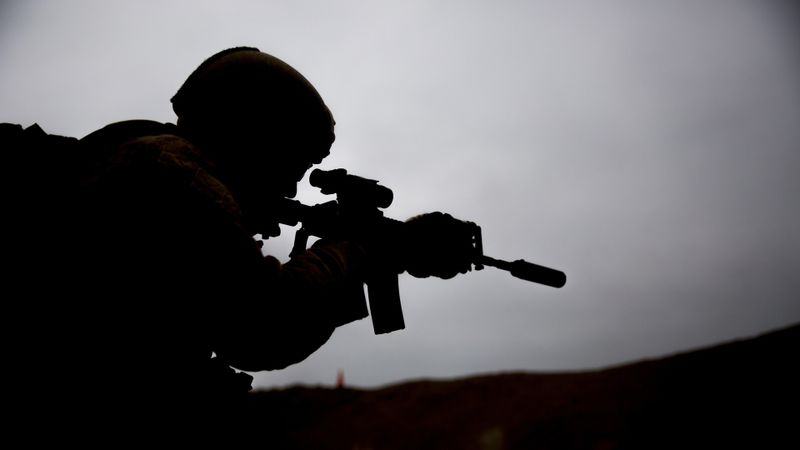
(Source: Military_Material on Pixabay)
The defence sector plays by different rules—shaped by governments, regulation, geopolitics and unusually long decision cycles.
Defence companies are looking beyond their traditional talent pools as they scale. Automotive, aerospace, energy and high-tech offer experienced leaders—but importing skills is easier than importing successful leadership. In defence, commercial decisions collide with geopolitics, regulation and national security. That changes who can lead successfully.
In defence, there is rarely just one customer
Automotive executives are accustomed to decisions shaped largely by cost, competition, product quality, market demand and operational performance. Defence introduces a different set of actors: governments, ministries, procurement authorities, military users and regulators. Export controls, security requirements and national interests add further complexity.
Defence executives must therefore do more than optimise operations. They need to reconcile competing interests, understand when regulation sets the pace and recognise when a commercial decision is also a political one. That requires political judgement, negotiation skills and exceptional stakeholder management.
Strategy meets geopolitical reality
Changes of government, conflicts, alliance decisions, budget shifts or export restrictions can fundamentally alter the conditions in which defence businesses operate. In defence, strategy is never entirely yours to control. That is why leadership matters most when the playbook stops working.
Executives must remain effective when assumptions change: think in scenarios, decide with incomplete information and recognise which geopolitical shifts affect customers, programmes, supply chains, investments or partnerships. Geopolitical awareness is therefore not an optional skill in defence—it is part of strategic leadership.
Regulation is part of the strategy
In defence, regulation is more than a compliance matter. Procurement rules, export regimes, security requirements and government approvals can shape market access, partnerships and programme timelines.
Regulatory literacy therefore cannot sit entirely with legal or compliance teams. Senior leaders need enough command of the regulatory landscape to recognise when strategic options change. Strong defence executives do not see regulation merely as a constraint; they understand it as one of the forces shaping the business itself.
Some decisions outlast the leader
Defence programmes can run for many years and involve upgrades, maintenance, supplier commitments and long-term spare-parts availability.
These decisions rarely end with the person who made them. Leaders must therefore weigh two imperatives at once: the urgency to act today and the responsibility for choices that will shape programmes, supplier relationships and partnerships for years to come.
What can other industries contribute?
Recruiting from outside defence can provide exactly the capabilities needed for transformation—if the background fits the mandate. Automotive leaders bring expertise in scaling, industrialsation, operational excellence and global supply chains. But that experience alone does not prepare executives for state procurement, politically influenced programmes or long decision horizons.
For roles centred on government relations, procurement or military requirements, deep sector knowledge remains difficult to substitute. One distinction is especially important: having managed through a transformation is not the same as having led one. What matters is not whether candidates have witnessed disruption, but what they actually did when the operating model came under pressure.
Different adjacent sectors contribute different strengths. Aerospace leaders may be well prepared for safety-critical systems, international programmes, state-linked customers, certification requirements and long product lifecycles. Energy and critical infrastructure leaders, by contrast, often bring experience with regulation, political scrutiny and long investment horizons. The right source of talent depends on the strategic challenge: scaling production requires a different leadership profile from managing a long-term international programme or building a new technology platform.
Date: 08.12.2025
Naturally, we always handle your personal data responsibly. Any personal data we receive from you is processed in accordance with applicable data protection legislation. For detailed information please see our privacy policy.
Consent to the use of data for promotional purposes
I hereby consent to Vogel Communications Group GmbH & Co. KG, Max-Planck-Str. 7-9, 97082 Würzburg including any affiliated companies according to §§ 15 et seq. AktG (hereafter: Vogel Communications Group) using my e-mail address to send editorial newsletters. A list of all affiliated companies can be found here
Newsletter content may include all products and services of any companies mentioned above, including for example specialist journals and books, events and fairs as well as event-related products and services, print and digital media offers and services such as additional (editorial) newsletters, raffles, lead campaigns, market research both online and offline, specialist webportals and e-learning offers. In case my personal telephone number has also been collected, it may be used for offers of aforementioned products, for services of the companies mentioned above, and market research purposes.
Additionally, my consent also includes the processing of my email address and telephone number for data matching for marketing purposes with select advertising partners such as LinkedIn, Google, and Meta. For this, Vogel Communications Group may transmit said data in hashed form to the advertising partners who then use said data to determine whether I am also a member of the mentioned advertising partner portals. Vogel Communications Group uses this feature for the purposes of re-targeting (up-selling, cross-selling, and customer loyalty), generating so-called look-alike audiences for acquisition of new customers, and as basis for exclusion for on-going advertising campaigns. Further information can be found in section “data matching for marketing purposes”.
In case I access protected data on Internet portals of Vogel Communications Group including any affiliated companies according to §§ 15 et seq. AktG, I need to provide further data in order to register for the access to such content. In return for this free access to editorial content, my data may be used in accordance with this consent for the purposes stated here. This does not apply to data matching for marketing purposes.
Right of revocation
I understand that I can revoke my consent at will. My revocation does not change the lawfulness of data processing that was conducted based on my consent leading up to my revocation. One option to declare my revocation is to use the contact form found at https://contact.vogel.de. In case I no longer wish to receive certain newsletters, I have subscribed to, I can also click on the unsubscribe link included at the end of a newsletter. Further information regarding my right of revocation and the implementation of it as well as the consequences of my revocation can be found in the data protection declaration, section editorial newsletter.
A title tells you where someone sat—not how they led
Rigorous assessment matters because a senior title or prestigious employer does not predict future performance. A title tells you where someone sat. It does not tell you how they led when things went wrong.
The better question is whether the executive created success—or merely succeeded within a system that was already working. Companies should look for patterns, not positions: Has the person genuinely led transformation? How did they respond when the original plan failed? How did they handle resistance, pressure and unfamiliar stakeholders?
A strong candidate therefore needs more than a credible track record. Companies should assess the full leadership profile: proven results, hands-on transformation experience, adaptability, stakeholder management and learning agility. What matters is not any single credential, but how these capabilities come together under pressure.
Hire for the environment, not the industry label
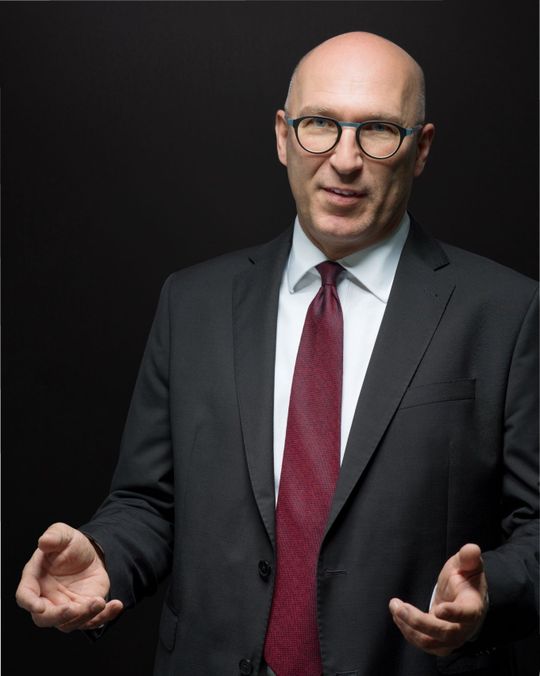
Stefan Diemer is Partner at DHR Global in Munich and has more than 30 years of experience in executive search. He specialises in filling senior leadership and key positions for mid-sized, owner-managed companies as well as large corporations, boards, and private equity-backed organisations. Diemer studied psychology and computer science at Saarland University, with a focus on organisational psychology and assessment.
(Source: DHR Global)
Defence companies are not simply competing for sector specialists. They need leaders who can deliver when conditions are uncertain, stakeholders are political and decision cycles are long. Boards should therefore test more than industry familiarity. They should ask whether a leadership model that worked elsewhere will still work when governments are customers, regulation shapes strategy and geopolitics can change the rules overnight. The next generation of defence leaders should be selected for the environment they can navigate—not merely the industry on their CV.



:quality(80)/p7i.vogel.de/wcms/b7/63/b7636f2b1f7d6bb6336d335e59e4f36e/rheinmetall-werft-im-abendlicht-1672x940v1.png "Rheinmetall plans together with MSC to expand its naval shipbuilding activities at Romania’s Mangalia shipyard. (Symbolic Picture: AI generated)")
:quality(80)/p7i.vogel.de/wcms/45/3e/453ea7d14c36fb525ab9bcc6764021c2/teoresi-delta-1920x1079v1.jpeg "Guido Garelli (Teoresi), Robert Muirhead (Delta), Francesco Cianelli (Teoresi), Stuart Baskcomb (Delta) (Source: Foto Rumberger)")
:quality(80)/p7i.vogel.de/wcms/39/2a/392a5c99cee448cd241259b10273dbf8/ugvs-at-eu-opex-26-1920x1079v1.jpeg "Held with the Portuguese Armed Forces at the Santa Margarida military camp from 21 September to 14 October, it brought European defence innovators together with military users in realistic scenarios. (Source: European Defence Agency)")
:quality(80)/p7i.vogel.de/wcms/13/3a/133a672a407af81d20fcd97c4a10ff91/geralt-handshake-6796386-1920x1081v1.jpeg "(Source: Gerd Altmann from Pixabay)")
:quality(80)/p7i.vogel.de/wcms/9a/bf/9abfeb002156253fb3a82749de35ca28/saf2020-0333676-1800x1013v1.jpeg "A new \"Factory 4.0\" to make primary mirror segments for the Extremely Large Telescope. (Source: Safran Group)")
:quality(80)/p7i.vogel.de/wcms/a6/71/a6713b64fb8aee687258fcf1014ea3b5/2026-03-08-aerospike-09-980x551v1.jpeg "The engine was developed with the aid of Noyron, LEAP 71’s computer-aided design model. Noyron uses basic physical principles, engineering logic, and manufacturing specifications to design autonomously without human intervention. (Source: LEAP 71)")
:quality(80)/p7i.vogel.de/wcms/91/c9/91c93dbd66b08824c35643875aabe61f/bild1-1245x700v1.jpeg "Two scientists in front of a vacuum chamber used for testing. (Source: Busch Group)")
:quality(80)/p7i.vogel.de/wcms/76/1d/761de63f32752dc5a9722559c527fc1f/design-ohne-titel-5-1920x1079v1.png "(Source: Analog Devices)")
:quality(80)/p7i.vogel.de/wcms/f6/90/f69066c327229cfea821628238013ad1/6e0dd4339494960c5f2c491aa30a8d26-l-jpg-1920x1079v1.webp "(Source: Arianespace)")
:quality(80)/p7i.vogel.de/wcms/ae/c1/aec143cc59607cd59eeb8b824b860172/faroe-flag-image-for-pr-6-1680x944v1.png "(Source: Thales)")
:quality(80)/p7i.vogel.de/wcms/94/c2/94c200c11610b28c5107f271c8269c48/airbus-u740-valkyrie-first-flight-photo-02-valkyrie-heroshots-0010-8033-1920x1079v1.jpeg "The Airbus U740 takes off for its first flight in Europe.
(Source: Airbus Defence and Space GmbH 2026)")
:quality(80)/p7i.vogel.de/wcms/41/16/41162d793da057b8926aa216d1917f3a/image-2000-87c4e85417d8ad2252869e1109a24719-1918x1079v1.jpeg "Launch of SpaceX’s Transporter-18 Mission. (Source: SpaceX)")
:quality(80)/p7i.vogel.de/wcms/50/85/50856774ce46ad8f94f37e328ba3b6d3/ptc-frau-arbeitet-mit-model-am-pc-neben-turbine-1911x1076v1.jpeg "(Source: PTC)")
:quality(80)/p7i.vogel.de/wcms/9c/60/9c60e13e660fe6b444ec71c59b5598ce/publicdomainarchive-on-pixabay-1920x1079v1.jpeg "(Source: PublicDomainArchive on Pixabay)")
:quality(80)/p7i.vogel.de/wcms/b6/6d/b66d11215bcdb8e107ca626e6cfd3643/tungart7-future-9045696-1920x1079v1.jpeg "Transparent and controllable AI architectures can support crisis management by making data sources, reasoning processes and uncertainties visible to human decision-makers. (Source: Tung Lam on Pixabay)")
:quality(80)/p7i.vogel.de/wcms/ed/e6/ede67e479952b7bad62244697e3cd3db/aa383c9a-015c-424b-95da-d8d56156c227-1536x864v1.png "Intelic's AI-supported command-and-control system Nexus can integrate sensors and interceptor drones to counter aerial threats (Illustration). (Picture: AI generated)")
:quality(80)/p7i.vogel.de/wcms/25/1f/251f3ec674139d548928e3a2f0a0a040/airbus-1920x1079v1.jpeg "IRIS-T SLM Live Firing. (Source: Bundeswehr/ Hildemann)")
:quality(80)/p7i.vogel.de/wcms/ef/41/ef4177615d9b75cf072b762e861bf907/img-20261013-wa-0024-ef35b96969-1920x1079v1.jpeg "(Source: KNDS)")
:quality(80)/p7i.vogel.de/wcms/77/05/770532609ad5c97f627447f731bf1895/airbus-demonstrates-operational-readiness-for-nato-air-defence-in-crete-1920x1079v1.jpeg "Airbus Demonstrates Operational Readiness for NATO Air Defence in Crete. (Source: Airbus)")
:quality(80)/p7i.vogel.de/wcms/b9/fa/b9fa8db023a4ba7b2f0c7b6e0a611d89/2026-10-12-american-rheinmetall-auf-der-ausa-2026-69222c75-1225x690v1.jpeg "American Rheinmetall presents next-generation defence technologies and capabilities at AUSA 2026 in Washington, D.C. (Source: Rheinmetall AG)")
:quality(80)/p7i.vogel.de/wcms/90/a8/90a849f0023f11d1eb642eb4751a0321/bild2-h-c3-a4nel-ict-20truck-20and-20trailer-20parts-4320x2429v1.jpeg "Product information is visible at all times and retrieval of items
is confirmed by employees directly on the display of the Hänel MP 14 N
controller. (Source: René Marks)")
:quality(80)/p7i.vogel.de/wcms/4e/ca/4ecaa39f247490eded591b652c33aee3/thilmann-hcp-web-20kleiner-20ausschnitt-1442x811v1.jpeg "Entering the defence market can be challenging for start-ups, says HCP Sense CEO Ansgar Thilmann. (Picture: HCP Sense)")
:quality(80)/p7i.vogel.de/wcms/7a/51/7a511b80041d3f1335f3a5aa56fe75da/delivery-7022432-1280-1280x720v1.png "(Source: Mohamed_hassan)")
:quality(80)/p7i.vogel.de/wcms/f9/2f/f92f1ef8c739c34c70d99f7b0997621b/stra007-20--20cover-20image-5472x3076v1.jpeg "(Source: Stratasys)")
:quality(80)/p7i.vogel.de/wcms/ec/a9/eca9062ccbe4b042f8515846340410d8/aerospace-and-defence-stairways-platforms-and-much-morev1.jpeg "Modular constructions enable flexible modification. That applies to larger structures such as stairways and platforms, too. And that means aerospace and defence companies can reconfigure their maintenance platforms fast (itemitem)")
:quality(80)/p7i.vogel.de/wcms/30/2a/302a7b5723ad38fbde812fd3a468ad04/safety-on-stairways-in-industry-key-considerationsv1.jpeg "Stairways and platforms are used widely in maintenance and assembly areas in the aerospace and defence sectors. (Source: item)")
:quality(80)/p7i.vogel.de/wcms/f3/4e/f34ed744bb30817d3432c7ad522e6f30/engine-1v1.jpeg "Engineering with aluminium profiles really can be this easy – the item Engineeringtool and its smart functions help you save valuable time. (Source: item)")
:fill(fff,0)/p7i.vogel.de/companies/69/6d/696de2483d115/logo--fastems-rgb-horizontal.jpeg "logo--fastems-rgb-horizontal (Fastems)")
:fill(fff,0)/images.vogel.de/vogelonline/companyimg/84700/84735/65.jpg "logo_item_rgb_neu.jpg ()")
:quality(80)/p7i.vogel.de/wcms/69/11/6911d8eae109755ebaabd914db4b1c20/0133126677v1.jpeg "0133126677v1 (Image:AI-generated)")
:quality(80)/p7i.vogel.de/wcms/3a/4e/3a4eee9a02e9c88c4b88fe5b430be79d/bild1-1386x779v1.jpeg "Defence companies need more than investment and technology: They also need the skilled professionals who can turn both into new capabilities. (Source: YER Germany)")