



:quality(80)/p7i.vogel.de/wcms/92/ca/92ca054cb3c1fe2ea3860b63d9d12339/june-2026-official-portrait-of-donald-j--trump-by-daniel-torok--cropped-960x540v1.jpeg "US President Donald Trump wants to increase the number of commercial space launches and re-entries in the United States to at least 1,000 annually by 2030. (Photo: The White House/Daniel Torok)")
:quality(80)/p7i.vogel.de/wcms/71/ed/71edbe8a449f75de6b64f1700d0ec560/ee-safe-corp-1920x1080v1.png "(Source: European Commission)")
:quality(80)/p7i.vogel.de/wcms/69/f5/69f594cc2e44964217970969dd13e3f1/0132798694v1.jpeg "The naval shipbuilder TKMS reports stronger growth than previously anticipated. Submarine construction is not necessarily the main driver of it all... (Source: TKMS)")
:quality(80)/p7i.vogel.de/wcms/6a/a9/6aa9e5a5611a39fcc9e57828e3dbde42/digital-shield-exercise--september-2022--viii-2048x1152v1.webp "Saildrone’s unmanned Surveyor surveillance vessels have been in service with the U.S. Navy for several years, seen here during a joint naval exercise with Israel in 2022. (Photo: )")
:quality(80)/p7i.vogel.de/wcms/6a/c1/6ac15ac9e2f36be33d6b3d662473a1f8/spartan-space-642x361v1.png "Photographs of the drone’s launch and flight at an altitude of more than 24 km (approx. 14.9 miles). (Source: SPARTAN SPACE)")
:quality(80)/p7i.vogel.de/wcms/5e/18/5e181f17002694ae7538c2c79548a67f/0132826776v1.jpeg "Image 1: Difender tank steels from Dillinger are characterised by top values in ballistic testing and cold edges. Defence companies therefore like to use them. They can be found, for example, in the armored vehicles Fuchs and GTK Boxer of the German Armed Forces. (Source: Dillinger)")
:quality(80)/p7i.vogel.de/wcms/8a/6e/8a6ec7d3a96fc9a8c887d9ebedf8806d/kodiak-900x506v1.jpeg "The Kodiak containerised launcher successfully completes a live-fire test, proving rapid, reloadable employment from a containerised launcher with a test rocket at Yakima Training Center, Washington. (Source: Lockheed Martin)")
:quality(80)/p7i.vogel.de/wcms/b0/f3/b0f385879d74f4c0a19e76f5f4292bb5/header-antenne-fahrzeug-gloom960x540v1.jpeg "(Source: Franke GmbH)")
:quality(80)/p7i.vogel.de/wcms/b3/7c/b37c4ae902b609855f68e9795cc71a9d/251116-pegasus-02-wichita-bombardier-1920x1080v1.jpeg "A modified Bombardier Global 6000 for Germany’s PEGASUS program at Bombardier Defense in Wichita, Kansas. The aircraft is one of three platforms being prepared for the Bundeswehr’s future airborne signals-intelligence capability. (Source: Bombardier Defense)")
:quality(80)/p7i.vogel.de/wcms/69/63/6963a7019bc462898ca7f834a7290ea1/0132815308v1.jpeg "The state-owned Chinese aircraft manufacturer Comac reports that its C919 has now completed a regular scheduled flight for the first time. This increases the chances of the plan to get closer to Boeing and Airbus in terms of competition succeeding... (Source: Comac)")
:quality(80)/p7i.vogel.de/wcms/05/46/054632df58c2d600fc72f3f76baf74ac/lockheed-martin-hypersonic-1672x940v1.png "(Source: Lockheed Martin)")
:quality(80)/p7i.vogel.de/wcms/2e/04/2e04856d99487daf473ae94c7f32ee42/l3harris-ngi-hotfire-test-1220-1217x684v1.png "L3Harris conducts successful hot fire test of the stage two solid rocket motor for Lockheed Martin’s Next Generation Interceptor program. (Source: L3Harris)")
:quality(80)/p7i.vogel.de/wcms/2a/ae/2aae2c389f328a77a3c1eb502b79f019/mc1779-image-space-csac-sa-65-1898x1067v1.jpeg "The Space CSAC-SA65 combines atomic-clock accuracy with built-in 1 PPS disciplining and low-power consumption. (Source: Microchip Technology Inc.)")
:quality(80)/p7i.vogel.de/wcms/d0/70/d070157885d390faeede32e7ed4d6697/nord069-image-1920x1080v1.jpeg "The Skylo certification inherited from embedded modem developer LooUQ enables IoT developers to develop devices faster that connect via cellular and satellite networks using Skylo’s standards-based NTN service. (Source: Nordic Semiconductor)")
:quality(80)/p7i.vogel.de/wcms/78/3f/783fd32af96f559bb43f0650302b6791/multicore-tech-byte-1327x747v1.jpeg "(Source: Green Hills Software)")
:quality(80)/p7i.vogel.de/wcms/22/48/2248d2d763fb6d2b0e15b87846199624/0132406729v1.jpeg "ESA commissions Keysight and Sateliot to develop a blockchain-based framework for non-terrestrial 5G networks. (Source: Keysight)")
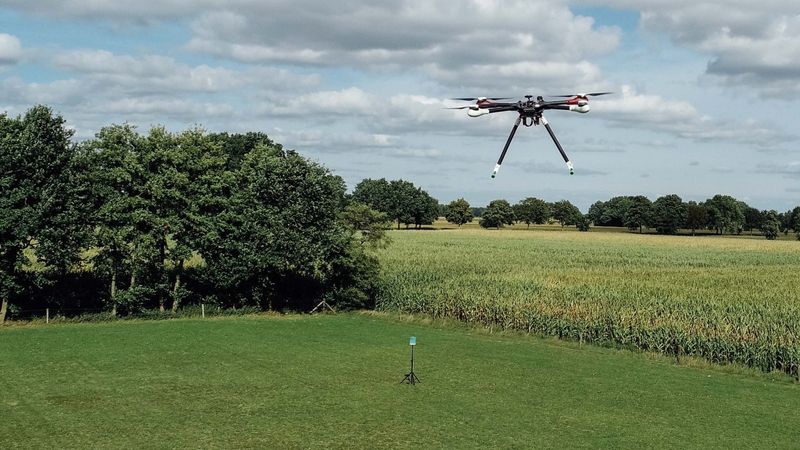
:quality(80)/p7i.vogel.de/wcms/f8/8e/f88e718457a57ca9d2a9432b5e032c53/amboss-test-c-fraunhoferidmt-hanneskalter-2720x1613px-1440x810v1.jpeg "Hearing drones before you see them: Fraunhofer IDMT’s solution detects and localizes drones also beyond the line of sight using intelligent acoustic sensing. (Source: Fraunhofer IDMT/ Hannes Kalter)")
:quality(80)/p7i.vogel.de/wcms/4a/26/4a266b04fd09c37d89e6ee1caba35d67/saab-gripen-in-formation-1920x1079v1.jpeg "Arexis was originally developed for Saab’s Gripen E/F fighters and is now being adapted for the Eurofighter EK. (Source: Saab AB)")
:quality(80)/p7i.vogel.de/wcms/48/8e/488efd3795a1a40f937259652c98cc11/pexels-drone-1866742-1920x1079v1.jpeg "A comprehensive drone detection system combines different sensor technologies to create a reliable situational picture and support the assessment and documentation of potential threats. (Source: Pexels on Pixabay)")
:quality(80)/p7i.vogel.de/wcms/9b/25/9b255f54c9d2933ac0361ab0c18b9863/lockheed-martin-netsense-july-demonstration-1077x605v1.jpeg "NetSense™ system combines AI, 5G and commercial tech to detect Unmanned Aerial Systems during a July demonstration in the Miami area. (Source: Lockheed Martin)")
:quality(80)/p7i.vogel.de/wcms/90/a8/90a849f0023f11d1eb642eb4751a0321/bild2-h-c3-a4nel-ict-20truck-20and-20trailer-20parts-4320x2429v1.jpeg "Product information is visible at all times and retrieval of items
is confirmed by employees directly on the display of the Hänel MP 14 N
controller. (Source: René Marks)")
:quality(80)/p7i.vogel.de/wcms/4e/ca/4ecaa39f247490eded591b652c33aee3/thilmann-hcp-web-20kleiner-20ausschnitt-1442x811v1.jpeg "Entering the defence market can be challenging for start-ups, says HCP Sense CEO Ansgar Thilmann. (Picture: HCP Sense)")
:quality(80)/p7i.vogel.de/wcms/7a/51/7a511b80041d3f1335f3a5aa56fe75da/delivery-7022432-1280-1280x720v1.png "(Source: Mohamed_hassan)")
:quality(80)/p7i.vogel.de/wcms/f9/2f/f92f1ef8c739c34c70d99f7b0997621b/stra007-20--20cover-20image-5472x3076v1.jpeg "(Source: Stratasys)")
:quality(80)/p7i.vogel.de/wcms/ec/a9/eca9062ccbe4b042f8515846340410d8/aerospace-and-defence-stairways-platforms-and-much-morev1.jpeg "Modular constructions enable flexible modification. That applies to larger structures such as stairways and platforms, too. And that means aerospace and defence companies can reconfigure their maintenance platforms fast (itemitem)")
:quality(80)/p7i.vogel.de/wcms/30/2a/302a7b5723ad38fbde812fd3a468ad04/safety-on-stairways-in-industry-key-considerationsv1.jpeg "Stairways and platforms are used widely in maintenance and assembly areas in the aerospace and defence sectors. (Source: item)")
:quality(80)/p7i.vogel.de/wcms/f3/4e/f34ed744bb30817d3432c7ad522e6f30/engine-1v1.jpeg "Engineering with aluminium profiles really can be this easy – the item Engineeringtool and its smart functions help you save valuable time. (Source: item)")
:fill(fff,0)/p7i.vogel.de/companies/69/6d/696de2483d115/logo--fastems-rgb-horizontal.jpeg "logo--fastems-rgb-horizontal (Fastems)")
:fill(fff,0)/images.vogel.de/vogelonline/companyimg/84700/84735/65.jpg "logo_item_rgb_neu.jpg ()")
Date: 08.12.2025
Naturally, we always handle your personal data responsibly. Any personal data we receive from you is processed in accordance with applicable data protection legislation. For detailed information please see our privacy policy.
Consent to the use of data for promotional purposes
I hereby consent to Vogel Communications Group GmbH & Co. KG, Max-Planck-Str. 7-9, 97082 Würzburg including any affiliated companies according to §§ 15 et seq. AktG (hereafter: Vogel Communications Group) using my e-mail address to send editorial newsletters. A list of all affiliated companies can be found here
Newsletter content may include all products and services of any companies mentioned above, including for example specialist journals and books, events and fairs as well as event-related products and services, print and digital media offers and services such as additional (editorial) newsletters, raffles, lead campaigns, market research both online and offline, specialist webportals and e-learning offers. In case my personal telephone number has also been collected, it may be used for offers of aforementioned products, for services of the companies mentioned above, and market research purposes.
Additionally, my consent also includes the processing of my email address and telephone number for data matching for marketing purposes with select advertising partners such as LinkedIn, Google, and Meta. For this, Vogel Communications Group may transmit said data in hashed form to the advertising partners who then use said data to determine whether I am also a member of the mentioned advertising partner portals. Vogel Communications Group uses this feature for the purposes of re-targeting (up-selling, cross-selling, and customer loyalty), generating so-called look-alike audiences for acquisition of new customers, and as basis for exclusion for on-going advertising campaigns. Further information can be found in section “data matching for marketing purposes”.
In case I access protected data on Internet portals of Vogel Communications Group including any affiliated companies according to §§ 15 et seq. AktG, I need to provide further data in order to register for the access to such content. In return for this free access to editorial content, my data may be used in accordance with this consent for the purposes stated here. This does not apply to data matching for marketing purposes.
Right of revocation
I understand that I can revoke my consent at will. My revocation does not change the lawfulness of data processing that was conducted based on my consent leading up to my revocation. One option to declare my revocation is to use the contact form found at https://contact.vogel.de. In case I no longer wish to receive certain newsletters, I have subscribed to, I can also click on the unsubscribe link included at the end of a newsletter. Further information regarding my right of revocation and the implementation of it as well as the consequences of my revocation can be found in the data protection declaration, section editorial newsletter.
:quality(80)/p7i.vogel.de/wcms/b2/f9/b2f9a21ab26f0c771bf23348a71fbfb6/2025-11-11-drohnenerkennung-pm-1500x1000-c-fraunhofer-idmt-leona-hofmann-1440x810v1.jpeg "The system provides 360° coverage, with detection ranges from 50 to 200 meters depending on environmental noise, and updates every second. (Source: Fraunhofer IDMT/Leona Hofmann)")
:quality(80)/p7i.vogel.de/wcms/24/be/24be8a3901cb87d32228f51ef73af239/fkie-radioaktives-material-schnell-und-praezise-lokalisieren-bild-1-1600x899v1.jpeg "fkie-radioaktives-material-schnell-und-praezise-lokalisieren-bild-1-1600x899v1 (Copyright: Fraunhofer FKIE)")