Global partnerships, multi‑domain launch platforms and C‑UAS bolster Indo‑Pacific readiness.
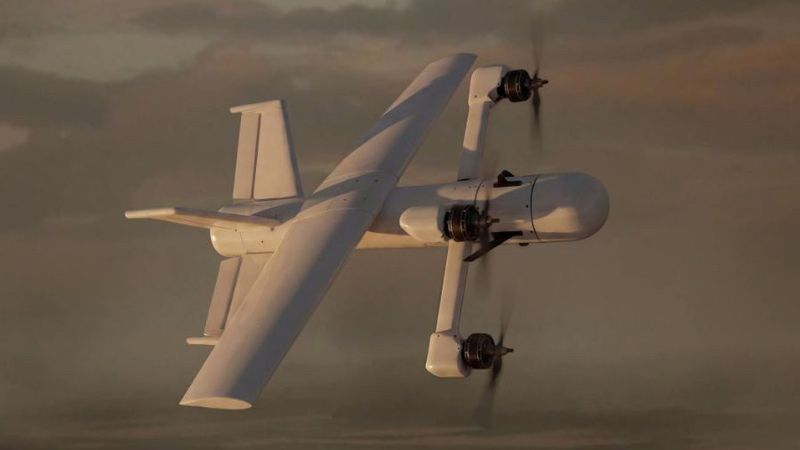
Lockheed Martin’s MORFIUS® X-Rotor is the first of its kind counter-drone system.
(Source: Lockheed Martin)
The Indo-Pacific’s rapidly shifting security environment demands next generation integrated defence solutions that go beyond conventional concepts. Lockheed Martin’s cutting-edge Counter Unmanned Aerial Systems (C-UAS) solutions, paired with advanced multidomain launch platforms, enable allied forces to detect, defeat and deter unmanned threats while delivering precise strike power across domains.
By weaving together innovative technology, interoperable systems and strong Indo‑Pacific partnerships, Lockheed Martin’s unified capability empowers regional allies to maintain air‑space dominance, protect critical assets and project decisive force wherever the challenge arises.
Advanced layered C-UAS integration
Countering UAS isn't about any one sensor or interceptor. It's about an integrated, layered architecture that can detect, identify, track, and defeat threats at speed and at scale. Lockheed Martin is focused on delivering an open, interoperable C-UAS ecosystem that allows customers to integrate best-of-breed technologies and adapt as threats continue to evolve.
Lockheed Martin’s Sanctum™ isn’t just another C-UAS capability. It’s a new signal of deterrence. Designed to evolve with every engagement, Sanctum uses advanced AI, cloud computing, and combat-proven systems to detect, identify, track, and defeat the most complex UAS threats, whether it’s a solo drone or a coordinated swarm.
This is integrated defence for the modern battlespace: modular and scalable to meet evolving mission needs, seamlessly interoperable with existing infrastructure, and built on real-world mission experience to deliver proven performance when it matters most.
When it comes to countering commercial swarms of hostile drones, MORFIUS® X-Rotor offers a sensor- and command and control-agnostic solution. Designed for field recovery and reuse, MORFIUS keeps a significantly low cost per kill, protecting defence budgets while maintaining relentless firepower.
This airborne, high-power microwave (HPM) counter-drone system can neutralise more than 50 enemy drones in a single flight. MORFIUS X-Rotor builds off past variants which have flown since 2017 and leverages the same family of HPM effectors, which have proven they can take down the hardest targets while minimising collateral damage. The system is uniquely suited for today's modern battlefield challenges.
Next‑generation multi‑domain launch platforms
Across the globe, next‑generation multi‑domain launch platforms are showcasing how rapid, precise firepower can be delivered seamlessly across air, land and sea environments. Leveraging advanced propulsion, networking and modular payload options, these systems give Indo‑Pacific forces the flexibility to respond instantly to emerging threats wherever they arise.
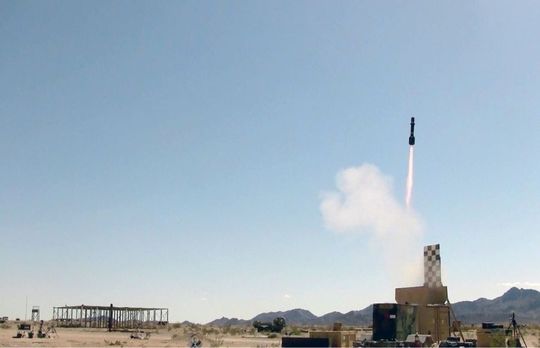
Throughout the year, GRIZZLY™ has demonstrated the ability to load and launch both HELLFIRE and JAGM in 45-degree launch, vertical launch and counter-unmanned aerial system settings. By leveraging proven weapon and launcher architectures, GRIZZLY shortens acquisition cycles while minimising logistics footprints. GRIZZLY’s rapid flight test schedules continue to demonstrate speed, agility and affordability as a solution for our warfighters.
GRIZZLY Containerised Launcher shooting a JAGM, guided by the Sanctum battle manager, at Yuma Proving Grounds.
(Source: Lockheed Martin)
The GRIZZLY containerised launcher delivers cost-efficient, rapid-mobility and low-observable distributed expeditionary weapon delivery capability. This provides a purpose-built asymmetric capability that seamlessly augments traditional artillery, point-defence and missile-launch systems, enhancing both flexibility and lethality.
Date: 08.12.2025
Naturally, we always handle your personal data responsibly. Any personal data we receive from you is processed in accordance with applicable data protection legislation. For detailed information please see our privacy policy.
Consent to the use of data for promotional purposes
I hereby consent to Vogel Communications Group GmbH & Co. KG, Max-Planck-Str. 7-9, 97082 Würzburg including any affiliated companies according to §§ 15 et seq. AktG (hereafter: Vogel Communications Group) using my e-mail address to send editorial newsletters. A list of all affiliated companies can be found here
Newsletter content may include all products and services of any companies mentioned above, including for example specialist journals and books, events and fairs as well as event-related products and services, print and digital media offers and services such as additional (editorial) newsletters, raffles, lead campaigns, market research both online and offline, specialist webportals and e-learning offers. In case my personal telephone number has also been collected, it may be used for offers of aforementioned products, for services of the companies mentioned above, and market research purposes.
Additionally, my consent also includes the processing of my email address and telephone number for data matching for marketing purposes with select advertising partners such as LinkedIn, Google, and Meta. For this, Vogel Communications Group may transmit said data in hashed form to the advertising partners who then use said data to determine whether I am also a member of the mentioned advertising partner portals. Vogel Communications Group uses this feature for the purposes of re-targeting (up-selling, cross-selling, and customer loyalty), generating so-called look-alike audiences for acquisition of new customers, and as basis for exclusion for on-going advertising campaigns. Further information can be found in section “data matching for marketing purposes”.
In case I access protected data on Internet portals of Vogel Communications Group including any affiliated companies according to §§ 15 et seq. AktG, I need to provide further data in order to register for the access to such content. In return for this free access to editorial content, my data may be used in accordance with this consent for the purposes stated here. This does not apply to data matching for marketing purposes.
Right of revocation
I understand that I can revoke my consent at will. My revocation does not change the lawfulness of data processing that was conducted based on my consent leading up to my revocation. One option to declare my revocation is to use the contact form found at https://contact.vogel.de. In case I no longer wish to receive certain newsletters, I have subscribed to, I can also click on the unsubscribe link included at the end of a newsletter. Further information regarding my right of revocation and the implementation of it as well as the consequences of my revocation can be found in the data protection declaration, section editorial newsletter.
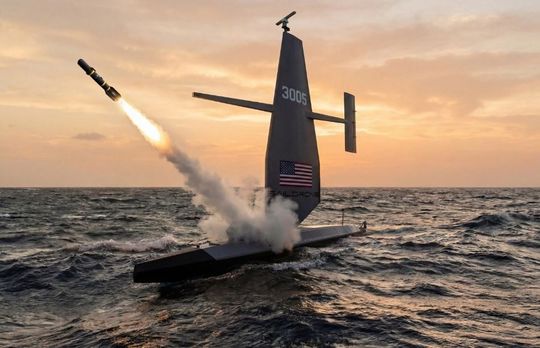
JAGM being shot from the JAGM Dual Launcher (JDL) off Saildrone’s Surveyor‑class USV.
(Source: Lockheed Martin)
Another great example is the recent Saildrone‑Lockheed Martin demonstration, which showcased how commercial unmanned surface vessels (USVs) can be equipped with launch system capabilities for maritime protection. Using a Surveyor‑class Saildrone fitted with a Joint‑Air‑to‑Ground (JAGM) Dual Launcher and the Adjunct Remote Engagement System (ARES) fire‑control C2, the platform executed two live‑fire rounds. Conducted near Hawaii during RIMPAC 2026, the test proved that the JAGM Dual Launcher can operate from an unmanned maritime platform and, with JAGM’s dual‑mode seeker, provide all‑weather C-UAS precision in a maritime environment.
Lockheed Martin’s partnership with Saildrone accelerates fielding of proven combat‑ready technology onto commercial USVs, delivering ready‑now lethality for naval forces and offering rapid, scalable protection for high‑value assets in the Indo‑Pacific theater.
Strategic Indo‑Pacific partnerships and interoperability
Building future-ready defence capability requires an industrial base that can deliver at scale and partnerships are central to that effort. Lockheed Martin Australia is working with Australian companies including AW Bell and Moog Australia to manufacture critical GMLRS components domestically, while connecting local suppliers into global defence supply chains. The result is a growing network of Australian industry contributing directly to advanced weapons production and strengthening the resilience of the supply chain.
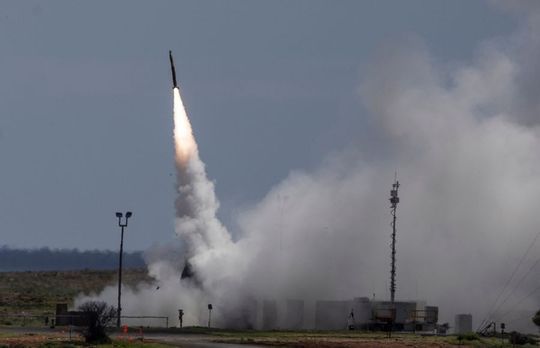
The first Australian-made guided multiple launch rocket system missiles are test fired at the Woomera Test Range in South Australia.
(Source: Andrew Green)
That network is expanding as Australia develops its sovereign guided-weapons capability. With partners across manufacturing, technology and sustainment—including Thales and Marand—Lockheed Martin Australia is helping establish an industrial ecosystem designed to support Australia’s Defence needs while contributing to broader allied capability. For the Indo-Pacific, these partnerships provide greater depth in production and sustainment, creating a more resilient defence industry capable of supporting demand when and where it is needed.
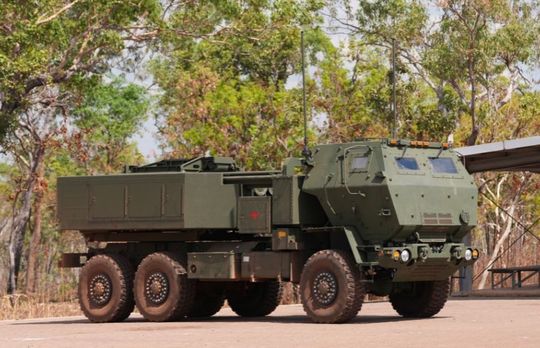
In addition, the Australian Army’s long-range fires capability is set to expand with the selection of Lockheed Martin’s HIMARS and Precision Strike Missile (PrSM) Increment 2 for the Australian Army’s second Long-Range Fires Regiment under LAND 8113 Phase 2. Building on the Army’s existing fleet of HIMARS launchers, Australia is expanding the Army’s ability to deliver mobile, long-range precision fires across the Indo-Pacific. Combining rapid mobility with GMLRS and the longer-range Precision Strike Missile (PrSM), HIMARS gives Australian forces greater reach and flexibility in a contested operating environment, while supporting the shift toward integrated land, maritime and joint fires.
Australian HIMARS forward during Talisman Sabre 2025.
(Source: US Army)
The capability is also being strengthened through Australia’s growing sovereign munitions industry. The production and successful test firing of Australian-manufactured GMLRS from HIMARS in April 2026 marked an important step toward for domestic production and a more resilient precision-strike supply chain. Together, mobility, precision, networking and sovereign sustainment are positioning HIMARS as an important component of Australia’s future multi-domain strike capability.
Currently in development, HIMARS FLEX represents the next evolutionary step of the HIMARS launcher. Building on legacy performance, HIMARS FLEX offers double the loadout, an expanded munitions open architecture, and autonomous control. At its core is the new FLEXFires technology ecosystem, which adds a modular loadout capability and autonomous functions to the existing XM1140 chassis while maintaining C‑130 transportability. The system can be fielded as a single‑pod baseline or a dual‑pod configuration, doubling offensive firepower and allowing rapid reconfiguration for air and missile defence munitions such as PAC‑3, IFPC, and future payloads.
By fusing cutting-edge C-UAS technology, next generation launch systems and strong Indo-Pacific partnerships, Lockheed Martin delivers rapid, interoperable defence solutions that protect maritime assets and sustain airspace superiority. This integrated solution equips allies with the decisive, scalable firepower needed to deter emerging threats and ensure lasting stability across the region.




:quality(80)/p7i.vogel.de/wcms/b8/a1/b8a140d8496d6744a5fd8573e048bce4/esanasa-k--barber-1920x1080v1.jpeg "NASA’s SpaceX Crew-12 Splashdown (NHQ202610080008) ESA (European Space Agency) astronaut Sophie Adenot is helped out of the SpaceX Dragon Freedom spacecraft onboard the SpaceX recovery ship SHANNON after she and NASA astronauts Jessica Meir, Jack Hathaway, and Roscosmos cosmonaut Andrey Fedyaev landed in the Pacific Ocean off the coast of Los Angeles, Calif., Thursday, Oct. 8, 2026. (Source: ESA/ NASA–Keegan Barber)")
:quality(80)/p7i.vogel.de/wcms/70/78/7078a1bd268b3f708eab4913d2cd0b92/eudex-ganter-messe-essen-1920x1080v1.jpeg "An unmanned aerial platform from Maddos, autonomous ground robots from ARX Robotics and standard parts from Ganter illustrate the breadth of Eudex. Ganter supplies components for positioning, fastening and locking in defence applications too. (Source: Messe Essen)")
:quality(80)/p7i.vogel.de/wcms/a2/da/a2da4222cfe9ec14a72668ce4100fd5b/pistorius-experimentalserie-land-1400x787v1.jpeg "Defence Minister Boris Pistorius at the Land Experimental Series at the Bergen military training area in Lower Saxony. Innovative systems are being tested for their suitability for use by the troops — not in a laboratory, but out in the open. (Source: Bundeswehr/Janin Garzke)")
:quality(80)/p7i.vogel.de/wcms/ae/e3/aee34d59fdc80ce5fc6722e1107500b6/word-press-featured-image-1024x695-1024x576v1.jpeg "(Source: Bundesregierung/Tobias Koch)")
:quality(80)/p7i.vogel.de/wcms/a6/71/a6713b64fb8aee687258fcf1014ea3b5/2026-03-08-aerospike-09-980x551v1.jpeg "The engine was developed with the aid of Noyron, LEAP 71’s computer-aided design model. Noyron uses basic physical principles, engineering logic, and manufacturing specifications to design autonomously without human intervention. (Source: LEAP 71)")
:quality(80)/p7i.vogel.de/wcms/91/c9/91c93dbd66b08824c35643875aabe61f/bild1-1245x700v1.jpeg "Two scientists in front of a vacuum chamber used for testing. (Source: Busch Group)")
:quality(80)/p7i.vogel.de/wcms/76/1d/761de63f32752dc5a9722559c527fc1f/design-ohne-titel-5-1920x1079v1.png "(Source: Analog Devices)")
:quality(80)/p7i.vogel.de/wcms/33/a7/33a7f8ac37b143e73964dad10c8aafbc/0133560493v1.jpeg "Benedikt Gundling and Tobias Hannen in front of a tank component of the Ariane 6. (Source: Grob Works)")
:quality(80)/p7i.vogel.de/wcms/0c/e8/0ce8f0a9f1d56d603e7ff50f38caf7b2/abbildung-1-feierliche-er-ffnung-der-space-factory-im-esa-phi-lab-austria-1920x1079v1.jpeg "Official opening of the Space Factory at ESA Phi-Lab Austria at Vienna Airport. (Source: Vienna Airport)")
:quality(80)/p7i.vogel.de/wcms/22/f8/22f8044bacf96ce5f5c1c36a04000a34/hensec-aisvogel-seeueberwachung-1536x864v1.jpeg "aisvogel—airborne sensor platform for maritime intelligence (Source: hensec—secure solutions)")
:quality(80)/p7i.vogel.de/wcms/72/b0/72b0b2076f21d59e64cd8bdf5e9d8c57/image-1920-93a1849ed81939cb2c94fb0d76d4d72a-1920x1079v1.jpeg "Economic report on Germany as an aviation location: connectivity, competitive conditions, climate impacts and development. (Source: william87—stock.adobe.com)")
:quality(80)/p7i.vogel.de/wcms/6e/32/6e326befcb6db2834c32c9485bd3db20/hyperion-and-posidonia-satellites-1920x1079v1.png "(Source: Open Cosmos)")
:quality(80)/p7i.vogel.de/wcms/b6/6d/b66d11215bcdb8e107ca626e6cfd3643/tungart7-future-9045696-1920x1079v1.jpeg "Transparent and controllable AI architectures can support crisis management by making data sources, reasoning processes and uncertainties visible to human decision-makers. (Source: Tung Lam on Pixabay)")
:quality(80)/p7i.vogel.de/wcms/ed/e6/ede67e479952b7bad62244697e3cd3db/aa383c9a-015c-424b-95da-d8d56156c227-1536x864v1.png "Intelic's AI-supported command-and-control system Nexus can integrate sensors and interceptor drones to counter aerial threats (Illustration). (Picture: AI generated)")
:quality(80)/p7i.vogel.de/wcms/cb/a2/cba2ecda891b2874327a30f69f773bdb/hexaforce-15-1920x1079v1.jpeg "(Source: Thales/Gauthier Chauffrut)")
:quality(80)/p7i.vogel.de/wcms/9d/8a/9d8addea8cc4e6f7a4793563ca397f2a/ai-im-milit-r-1672x940v1.png "(Source: KI-generiert / Gemini)")
:quality(80)/p7i.vogel.de/wcms/d4/8e/d48e922adf87b94ec8356eabaaebc9b8/morfius-image-resize-jpg-pc-adaptive-full-medium-900x506v1.jpeg "Lockheed Martin’s MORFIUS® X-Rotor is the first of its kind counter-drone system. (Source: Lockheed Martin)")
:quality(80)/p7i.vogel.de/wcms/93/7e/937e0958ca684b36382d6025daa4880e/2026-10-06-rheinmetall-integriert-human-machine-teaming-in-gepanzerte-fahrzeuge-media-06a35258-query-2x-c641d5e7-1910x1075v1.jpeg "Rheinmetall and Breaker are integrating Human-Machine Teaming into the Boxer Combat Reconnaissance Vehicle, enabling crews to control teams of autonomous systems by voice command. (Source: Rheinmetall AG)")
:quality(80)/p7i.vogel.de/wcms/d4/8a/d48a3c3d03168bfd49db0a816aa308ae/image1-39-1294x728v1.png "(Source: Department of National Defence (DND))")
:quality(80)/p7i.vogel.de/wcms/54/d5/54d5207a3dab5139de6761523319cf84/airbus-delivers-first-batch-of-new-eutelsat-s-oneweb-satellites-23-1920x1079v1.jpeg "(Source: Airbus Defence and Space SAS 2026)")
:quality(80)/p7i.vogel.de/wcms/90/a8/90a849f0023f11d1eb642eb4751a0321/bild2-h-c3-a4nel-ict-20truck-20and-20trailer-20parts-4320x2429v1.jpeg "Product information is visible at all times and retrieval of items
is confirmed by employees directly on the display of the Hänel MP 14 N
controller. (Source: René Marks)")
:quality(80)/p7i.vogel.de/wcms/4e/ca/4ecaa39f247490eded591b652c33aee3/thilmann-hcp-web-20kleiner-20ausschnitt-1442x811v1.jpeg "Entering the defence market can be challenging for start-ups, says HCP Sense CEO Ansgar Thilmann. (Picture: HCP Sense)")
:quality(80)/p7i.vogel.de/wcms/7a/51/7a511b80041d3f1335f3a5aa56fe75da/delivery-7022432-1280-1280x720v1.png "(Source: Mohamed_hassan)")
:quality(80)/p7i.vogel.de/wcms/f9/2f/f92f1ef8c739c34c70d99f7b0997621b/stra007-20--20cover-20image-5472x3076v1.jpeg "(Source: Stratasys)")
:quality(80)/p7i.vogel.de/wcms/ec/a9/eca9062ccbe4b042f8515846340410d8/aerospace-and-defence-stairways-platforms-and-much-morev1.jpeg "Modular constructions enable flexible modification. That applies to larger structures such as stairways and platforms, too. And that means aerospace and defence companies can reconfigure their maintenance platforms fast (itemitem)")
:quality(80)/p7i.vogel.de/wcms/30/2a/302a7b5723ad38fbde812fd3a468ad04/safety-on-stairways-in-industry-key-considerationsv1.jpeg "Stairways and platforms are used widely in maintenance and assembly areas in the aerospace and defence sectors. (Source: item)")
:quality(80)/p7i.vogel.de/wcms/f3/4e/f34ed744bb30817d3432c7ad522e6f30/engine-1v1.jpeg "Engineering with aluminium profiles really can be this easy – the item Engineeringtool and its smart functions help you save valuable time. (Source: item)")
:fill(fff,0)/p7i.vogel.de/companies/69/6d/696de2483d115/logo--fastems-rgb-horizontal.jpeg "logo--fastems-rgb-horizontal (Fastems)")
:fill(fff,0)/images.vogel.de/vogelonline/companyimg/84700/84735/65.jpg "logo_item_rgb_neu.jpg ()")
:quality(80)/p7i.vogel.de/wcms/ff/b1/ffb1d2c79ae4ac90473f50287e7bd7c0/saildrone-1567x881v1.jpeg "Saildrone Surveyor class unmanned surface vessel integrated with JAGM dual launcher. (Source: Lockheed Martin)")
:quality(80)/p7i.vogel.de/wcms/8a/6e/8a6ec7d3a96fc9a8c887d9ebedf8806d/kodiak-900x506v1.jpeg "The Kodiak containerised launcher successfully completes a live-fire test, proving rapid, reloadable employment from a containerised launcher with a test rocket at Yakima Training Center, Washington. (Source: Lockheed Martin)")