Rheinmetall makes billions from military equipment such as tanks, artillery and ammunition. The company is now also turning its attention to space as it looks to expand its product portfolio.
(Source: Rheinmetall AG)
The tank manufacturer has begun series production of satellites as part of its efforts to broaden its portfolio and cover every layer of the modern battlefield. Production has successfully started in Neuss, the company said. Following preparatory work, including planning and construction, the project has moved into industrial production.
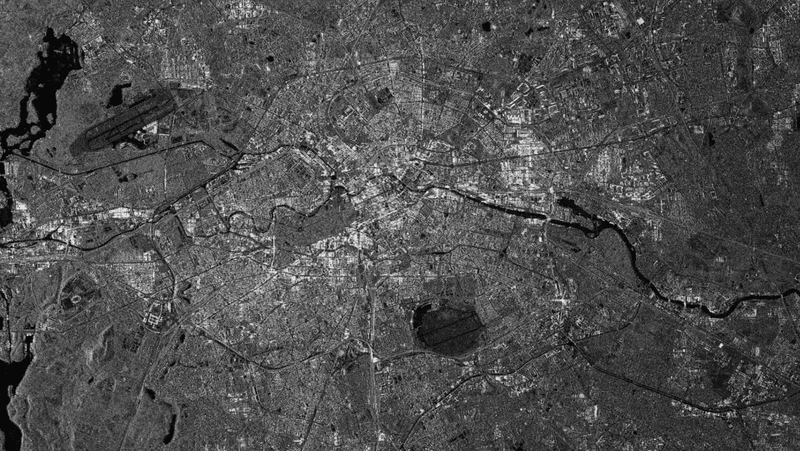
The satellites are based on synthetic aperture radar (SAR) technology and are being built in partnership with Finnish company Iceye. SAR provides precise images of troop movements and enemy positions, even at night and in poor weather. Artificial intelligence (AI) is used to identify and process relevant information. The manufacturer is Rheinmetall Iceye Space Solutions GmbH, in which Rheinmetall holds a 60 per cent stake.
The company plans to produce around 50 satellites a year. The first satellite built in Neuss is due to be launched into orbit by a SpaceX rocket in early 2027. The SAR satellites are 3.3 metres long and 0.8 metres wide, and weigh around 220 kilograms. Their antenna has an area of approximately 2.6 square metres. “The successful start of production in Neuss shows that we can not only provide innovative space technology, but also scale it up industrially in Germany,” said Rheinmetall CEO Armin Papperger.
With its satellites, Rheinmetall is entering a new business area. The defence group is broadening its product range to meet as much of NATO forces’ demand as possible and prevent competitors from winning contracts. Rheinmetall has, for example, acquired a shipbuilder and opened a plant for aircraft components in Weeze, in the Lower Rhine region. It has also expanded its drone production.
Europe’s security landscape is changing rapidly
(Source: VCG)
As defence budgets rise and EU programmes expand, civil technology providers are becoming vital contributors to Europe’s strategic autonomy. The event will act as a neutral platform for dialogue between technology suppliers, integrators, and decision-makers shaping the next generation of European defence capabilities and aims to open doors between civil industry and defence procurement, providing practical insights.
The satellite business involves selling radar imagery to help NATO forces assess the situation. The focus is particularly on NATO’s eastern flank, including support for the Bundeswehr brigade in Lithuania. Rheinmetall’s subsidiary has a multi-year contract with the Bundeswehr worth around €1.7 billion, with an option to extend it. The German armed forces already receive imagery from satellites built and launched by Iceye before Rheinmetall became involved.
The Bundeswehr’s capabilities are set to improve further. Alongside the start of series production, Rheinmetall announced that the German armed forces had secured exclusive access to an unspecified number of satellites. The radar systems on these satellites will be used solely by the Bundeswehr. This means the German military will no longer have to wait for a satellite to become available to capture the requested image.
Rheinmetall is currently converting the Neuss plant, which was previously used to manufacture automotive parts. The group has since sold its struggling automotive division but retained the Neuss site for the production of drones, combat turrets and satellites.
Expert sees improvement in defence capability
In the view of experts, SAR technology is now indispensable to an effective modern military. “On a transparent battlefield, you need to keep a constant and accurate eye on the enemy, so that movements of troops and heavy equipment can be detected as quickly as possible,” says Juliana Süß of the German Institute for International and Security Affairs (SWP). She notes that the Ukrainian military also uses imagery from Iceye satellites, of which 35 are currently in orbit.
“Depending on the resolution, a great deal of detail can be identified,” Süß says. Radar signals can penetrate camouflage nets and the foliage of trees and shrubs, making it possible to see whether tanks or artillery pieces are concealed there.
The Bundeswehr has so far had access to only a small number of SAR satellites, so the contract with Rheinmetall-Iceye represents an improvement in defence capability, the expert says. “We have not had the volume of imagery needed to maintain a continuous and therefore tactically relevant overview.” The “revisit rate”—the frequency with which satellites pass over an area—will then increase, making it possible to monitor conditions on the ground and potential changes in the situation.
Date: 08.12.2025
Naturally, we always handle your personal data responsibly. Any personal data we receive from you is processed in accordance with applicable data protection legislation. For detailed information please see our privacy policy.
Consent to the use of data for promotional purposes
I hereby consent to Vogel Communications Group GmbH & Co. KG, Max-Planck-Str. 7-9, 97082 Würzburg including any affiliated companies according to §§ 15 et seq. AktG (hereafter: Vogel Communications Group) using my e-mail address to send editorial newsletters. A list of all affiliated companies can be found here
Newsletter content may include all products and services of any companies mentioned above, including for example specialist journals and books, events and fairs as well as event-related products and services, print and digital media offers and services such as additional (editorial) newsletters, raffles, lead campaigns, market research both online and offline, specialist webportals and e-learning offers. In case my personal telephone number has also been collected, it may be used for offers of aforementioned products, for services of the companies mentioned above, and market research purposes.
Additionally, my consent also includes the processing of my email address and telephone number for data matching for marketing purposes with select advertising partners such as LinkedIn, Google, and Meta. For this, Vogel Communications Group may transmit said data in hashed form to the advertising partners who then use said data to determine whether I am also a member of the mentioned advertising partner portals. Vogel Communications Group uses this feature for the purposes of re-targeting (up-selling, cross-selling, and customer loyalty), generating so-called look-alike audiences for acquisition of new customers, and as basis for exclusion for on-going advertising campaigns. Further information can be found in section “data matching for marketing purposes”.
In case I access protected data on Internet portals of Vogel Communications Group including any affiliated companies according to §§ 15 et seq. AktG, I need to provide further data in order to register for the access to such content. In return for this free access to editorial content, my data may be used in accordance with this consent for the purposes stated here. This does not apply to data matching for marketing purposes.
Right of revocation
I understand that I can revoke my consent at will. My revocation does not change the lawfulness of data processing that was conducted based on my consent leading up to my revocation. One option to declare my revocation is to use the contact form found at https://contact.vogel.de. In case I no longer wish to receive certain newsletters, I have subscribed to, I can also click on the unsubscribe link included at the end of a newsletter. Further information regarding my right of revocation and the implementation of it as well as the consequences of my revocation can be found in the data protection declaration, section editorial newsletter.
However, personnel need specialist training to interpret SAR imagery. This is an important consideration compared with other satellite imagery, such as electro-optical images. According to Süß, the systems are not directly comparable; rather, they complement one another and can provide a comprehensive picture of the situation. “SAR satellites are extremely important for the military, but they are not wonder satellites,” she says. “SAR satellites can also be attacked, for example through signal jamming or cyberattacks.”
Who are the competitors?
Rheinmetall’s competitors in the satellite business include Airbus Defence and Space and Bremen-based OHB. OHB has supplied the Bundeswehr with a total of eight satellites under the SAR-Lupe and SARah programmes. Seven remain in orbit and are producing SAR imagery. The first OHB satellites were launched in 2007.
SAR imagery offers significant benefits to a military, an OHB spokesperson said. “Radar technology works day and night and is therefore largely independent of external conditions.” Combined with conventional reconnaissance images, it provides a more complete picture of the situation. However, interpreting SAR imagery requires a trained eye. By contrast, even personnel without specialist training can quickly draw conclusions from electro-optical images that are relevant to military operations.
After Rheinmetall secured the Bundeswehr contract for direct access to satellites through a direct award, a larger SAR tender is now in preparation. OHB and Airbus also intend to bid. “Airbus offers both complex, high-resolution satellites for strategic reconnaissance and smaller satellite systems that provide high revisit rates and tactical reconnaissance,” an Airbus spokesperson said.




:quality(80)/p7i.vogel.de/wcms/9a/34/9a3492b2b9cab1e4004875782216c4b2/rheinmetall-iceye-space-solutions-berlin-header-7ec06bca-1225x690v1.png "(Source: Rheinmetall AG)")
:quality(80)/p7i.vogel.de/wcms/d4/28/d428b0ac9373f8febcf18ffec14e93af/osiris-rex-feature-1920x1079v1.jpeg "(Source: Lockheed Martin)")
:quality(80)/p7i.vogel.de/wcms/97/29/97293bc01fcd40ac9f5d5b4f4b1c1227/995ffab6-abca-4366-b067-078aee746368-1536x864v1.png "Symbolic image of a Leopard 2 main battle tank: Production and maintenance starts in Lithuania. (Picture: AI generated)")
:quality(80)/p7i.vogel.de/wcms/a6/5a/a65a0979453bbbd1812271415d3c5496/aws-constellation-pink-201220-1800x200-1024x683-1-1024x576v1.png "(Source: OHB Sweden)")
:quality(80)/p7i.vogel.de/wcms/76/1d/761de63f32752dc5a9722559c527fc1f/design-ohne-titel-5-1920x1079v1.png "(Source: Analog Devices)")
:quality(80)/p7i.vogel.de/wcms/33/a7/33a7f8ac37b143e73964dad10c8aafbc/0133560493v1.jpeg "Benedikt Gundling and Tobias Hannen in front of a tank component of the Ariane 6. (Source: Grob Works)")
:quality(80)/p7i.vogel.de/wcms/4f/3a/4f3a22eb23991207008533412c8dc817/screenshot-2026-09-25-125155-1405x790v1.png "(Source: BINDER GmbH)")
:quality(80)/p7i.vogel.de/wcms/4a/9f/4a9f831c424718e98ef3cf6b10b4dc3e/hot-fire-jarvisv1-900x506v1.jpeg "Developed in record time: A “JARVIS-class” jet engine capable of up to 100 pounds of thrust. It was designed in a four-week sprint using generative AI and established CAD/CAE tools. (Source: MIT)")
:quality(80)/p7i.vogel.de/wcms/45/d0/45d0707281dcef7a1a2c2a6e255d18fc/0133602931v1.jpeg "This is how the SpaceX specialists were working just a few years ago on the world’s largest rocket—the Starship. Now, Elon Musk’s company has reached a milestone as part of a test flight: orbit around the Earth! But there was also a bitter aftertaste... (Source: Spacex)")
:quality(80)/p7i.vogel.de/wcms/f0/33/f033d97ea29988a0defb0531fb51cfc8/arek-socha-on-pixabay-1707x960v1.jpeg "(Source: Arek Socha on Pixabay)")
:quality(80)/p7i.vogel.de/wcms/73/32/73325c11b708c7c53230359e46b9c63c/0133625653v1.jpeg "The Bundeswehr does have more than 50 transport aircraft, but it lacks any that also bring tactical capabilities. With the Airbus A400M, this shortcoming could be remedied, which is why there are plans to buy 16 aircraft of this type ... (Source: Airbus)")
:quality(80)/p7i.vogel.de/wcms/00/dc/00dcad81b11488711a69893092df7124/thedigitalartist-ai-generated-8314615-1920x1080v1.jpeg "(Source: Pete Linforth on Pixabay)")
:quality(80)/p7i.vogel.de/wcms/cb/a2/cba2ecda891b2874327a30f69f773bdb/hexaforce-15-1920x1079v1.jpeg "(Source: Thales/Gauthier Chauffrut)")
:quality(80)/p7i.vogel.de/wcms/9d/8a/9d8addea8cc4e6f7a4793563ca397f2a/ai-im-milit-r-1672x940v1.png "(Source: KI-generiert / Gemini)")
:quality(80)/p7i.vogel.de/wcms/7f/5f/7f5fba2c729ec3aa256bf1a18d74529b/ai-chip-1672x940v1.png "(Source: KI-generiert / Gemini)")
:quality(80)/p7i.vogel.de/wcms/64/1b/641b6474b2a614cde7730c89ef2a3015/2026-09-09-rheinmetall-veroeffentlicht-battlesuite-schnittstellen-e8c18194-1225x690v1.jpeg "Rheinmetall’s Battlesuite provides a modular digital platform for connecting and integrating sensors, hardware and software components. (Source: Rheinmetall AG)")
:quality(80)/p7i.vogel.de/wcms/c3/88/c3883045ed165f260b062bf0480b7db1/rti-connext-tss-4-2-0-1920x1081v1.png "Connext TSS 4.2.0 offers development teams a clear path to production-ready solutions. (Source: RTI)")
:quality(80)/p7i.vogel.de/wcms/e4/12/e412db949bc60f18e285917ed9d18a03/4h0cmyvufqhmaeu0kg6rwxaif9-q9m1tuvcg5sccfbzpiwm6yqizkewpiwxs8peywacypxcbbyczoowlekiqeqd-h-9hxv921myouexibytkuf5co6brk7qln-n6v2ibemnpxdpnirquv6wecfqptyrias0ri1fxveqgfkbwkt4vwinfpczenerdta42lwkq-1652x930v1.jpeg "Quantum Systems is scaling up the production of interceptor drones in Ukraine as demand for counter-UAS capabilities continues to grow. (Photo: Quantum Systems)")
:quality(80)/p7i.vogel.de/wcms/fe/11/fe1187f54b38f08ec4e244b50edf3201/toulouse-si-ge-airbus-853x480v1.jpeg "Airbus is expanding its European cybersecurity activities through a series of acquisitions (Picture: Nemausensis Asinus / Public Domain)")
:quality(80)/p7i.vogel.de/wcms/b4/0f/b40f9a9262229f0ad6f652dcff9012d8/ministry-of-defence-uk-1672x940v1.png "(Source: Ministry of Defence UK)")
:quality(80)/p7i.vogel.de/wcms/90/a8/90a849f0023f11d1eb642eb4751a0321/bild2-h-c3-a4nel-ict-20truck-20and-20trailer-20parts-4320x2429v1.jpeg "Product information is visible at all times and retrieval of items
is confirmed by employees directly on the display of the Hänel MP 14 N
controller. (Source: René Marks)")
:quality(80)/p7i.vogel.de/wcms/4e/ca/4ecaa39f247490eded591b652c33aee3/thilmann-hcp-web-20kleiner-20ausschnitt-1442x811v1.jpeg "Entering the defence market can be challenging for start-ups, says HCP Sense CEO Ansgar Thilmann. (Picture: HCP Sense)")
:quality(80)/p7i.vogel.de/wcms/7a/51/7a511b80041d3f1335f3a5aa56fe75da/delivery-7022432-1280-1280x720v1.png "(Source: Mohamed_hassan)")
:quality(80)/p7i.vogel.de/wcms/f9/2f/f92f1ef8c739c34c70d99f7b0997621b/stra007-20--20cover-20image-5472x3076v1.jpeg "(Source: Stratasys)")
:quality(80)/p7i.vogel.de/wcms/ec/a9/eca9062ccbe4b042f8515846340410d8/aerospace-and-defence-stairways-platforms-and-much-morev1.jpeg "Modular constructions enable flexible modification. That applies to larger structures such as stairways and platforms, too. And that means aerospace and defence companies can reconfigure their maintenance platforms fast (itemitem)")
:quality(80)/p7i.vogel.de/wcms/30/2a/302a7b5723ad38fbde812fd3a468ad04/safety-on-stairways-in-industry-key-considerationsv1.jpeg "Stairways and platforms are used widely in maintenance and assembly areas in the aerospace and defence sectors. (Source: item)")
:quality(80)/p7i.vogel.de/wcms/f3/4e/f34ed744bb30817d3432c7ad522e6f30/engine-1v1.jpeg "Engineering with aluminium profiles really can be this easy – the item Engineeringtool and its smart functions help you save valuable time. (Source: item)")
:fill(fff,0)/p7i.vogel.de/companies/69/6d/696de2483d115/logo--fastems-rgb-horizontal.jpeg "logo--fastems-rgb-horizontal (Fastems)")
:fill(fff,0)/images.vogel.de/vogelonline/companyimg/84700/84735/65.jpg "logo_item_rgb_neu.jpg ()")

:quality(80)/p7i.vogel.de/wcms/5a/28/5a28da7c95fd0ab16fcee678411bc709/0127809833v1.jpeg "The sharp and icy cold gaze of a SAR satellite provides top reconnaissance material for militaries. It has now been revealed that Rheinmetall is venturing into the construction of these space spies. Here’s more about it ... (Image:Iceye)")
:quality(80)/p7i.vogel.de/wcms/85/90/8590f13c4e931e9be66b3de845bf456d/0129102702v1.jpeg "After Rheinmetall embarked on the path to space armament at the end of last year, it is now taking the next step in this direction. It intends to cooperate with OHB. More about it here ... (Image:OHB)")