Modern parts cleaning is far more than a necessary evil at the end of production. Markus Mitschele from Hemo explains the benefits of this strategic product refinement for optimising the entire process chain.
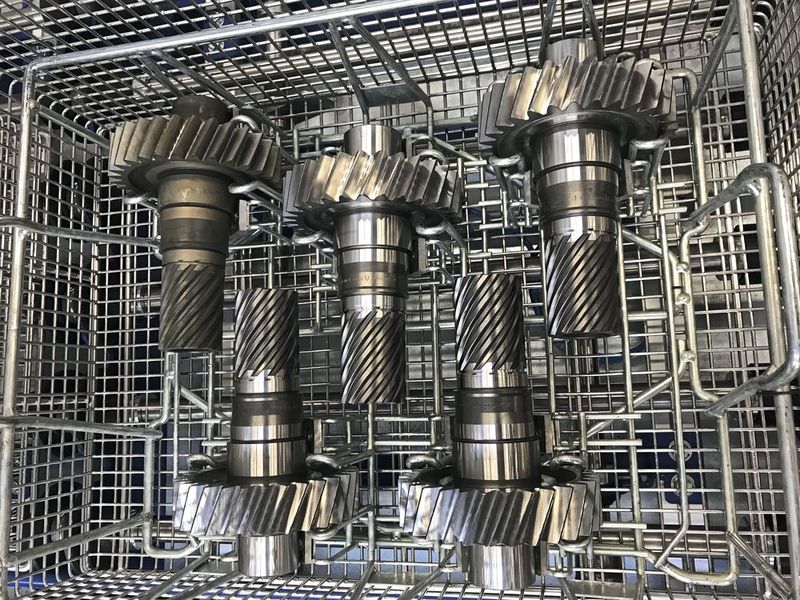
The image shows cleaned components from the overhaul sector.
(Image: Hemo)
Mr. Mitschele, what role does industrial parts cleaning play in modern production chains?
Markus Mitschele: A decisive one, because parts cleaning is at the critical endpoint of almost all manufacturing processes. Before components go into assembly or are delivered, they must be absolutely clean. As a cross-industry equipment manufacturer, we see daily that cleaning is not a necessary evil but the final guarantee for the quality and functionality of the end product.
The requirements for surface cleanliness in the aerospace sector are often many times higher than, for example, in the automotive industry. Why does cleaning, especially for structural components or engine parts, allow no room for errors?
This has very pragmatic but existential reasons. Fundamentally, we distinguish between two focuses in cleaning: particulate and filmic cleanliness. Particulate cleanliness addresses any remaining residual chips or particles. If these later cause a component failure during operation, it is naturally far more serious in the aerospace sector than in a car. The second focus is on filmic contamination, such as residual layers of oils or emulsions on the surface, which disrupt downstream processes like painting or coating. Particularly in the engine sector, where highly complex heat protection coatings are applied, even minimal residues cause massive adhesion problems. In the end, this becomes a highly critical safety issue.
Why is solvent cleaning often the better choice for aerospace components compared to aqueous methods?
Solvent cleaning demonstrates its advantages wherever oils are used instead of emulsions in the machining process—and in aerospace manufacturing, a great deal of work is done with oil, although this always depends on the specific component and material. In such cases, the solvent system is simply the more economical and efficient solution. Additionally, there are two significant technological advantages: First, solvent is chemically inert to the materials. This means we can process a mix of various materials through the same system without having to laboriously adjust the cleaning agent to each specific metal, as is necessary with aqueous systems. Second, we operate completely without water. This ensures a 100% complete drying process at the end, fully eliminating any form of oxidative damage or corrosion issues from the outset.
You just mentioned that whether oil or emulsion is used depends on the component and material. Many machinists inevitably use both coolants in their production. This is exactly where your hybrid process comes into play. What advantage does this concept offer in practice?
The hybrid process is our solution for reliably managing the issue of emulsions. If you treat components contaminated with emulsions purely with solvent, you won’t achieve complete cleanliness. Solvent cannot dissolve the polar components, such as salts or certain additives from the emulsion, which would remain as residues on the surface. To remove them, a polar medium is needed—namely, water. That’s why we developed a concept that integrates an additional aqueous process step based on full vacuum technology. This combines two different cleaning approaches in a single machine. The result is maximum safety for the user.
Two different processes in one machine sounds like an intensive cycle. Doesn't the time factor play a critical role for many companies?
Of course, such a hybrid process takes noticeably longer than a pure solvent process—roughly two to three times longer. However, in industries like aerospace or demanding heat treatment, the time factor is absolutely secondary. Here, the principle of "Safety First" prevails. The clear priority is on uncompromising quality and process reliability. A component failure in aviation is vastly more costly and consequential than a few extra minutes in the cleaning chamber.
What technological advantage does your central system platform 'FLEX' offer manufacturing companies that need to position themselves securely for the future in a dynamic market?
In the early 1990s, there was a massive upheaval due to strict emissions regulations and CFC bans. At that time, we were pioneers in bringing full vacuum technology for flammable solvents to the market and having it patented—a true milestone. 'FLEX' means for our customers that this basic concept can always be tailored to specific situations as needed—flexible indeed. We first enhanced the system with the hybrid process and, in recent years, have taken it further with our latest development, the Beyond process. The goal of the platform is to expand the physical capabilities of the full vacuum system using solvents with complementary processes, providing customers with maximum future-proofing—no matter what technological advancements their production might achieve.
In addition to the pure future viability of processes, sustainability and energy efficiency are key criteria. How does a Hemo system specifically help companies reduce the CO2 footprint in manufacturing?
Compared to many conventional methods, a solvent process is inherently very energy-efficient because it already integrates the continuous reconditioning of the medium. For us, a cleaning process is only truly complete when it not only cleans the component but also independently circulates and cleans the medium. Instead of relying on constant fresh and wastewater or high solvent waste, we operate the media in a closed loop for extremely long periods. Additionally, we use highly advanced systems for internal heat recovery to reuse reconditioning heat as process heat—our systems are technically optimised to the maximum in this regard. Particularly in the aerospace sector, we often build larger, customised special systems. These are directly integrated into the thermal material flows of the respective industrial hall. If the user already has cooling water or hot water networks in the plant, we connect the system to them to release excess heat or utilise cooling capacity. This further significantly optimises the connection values of the cleaning system.
What is your strongest argument that parts cleaning is not a cost driver, but a real competitive advantage?
The decisive argument remains quality assurance. Nearly every supplier today must contractually guarantee and sign off on strict residual contamination requirements from end customers. In the past, this could sometimes be handled informally, with attitudes like, "We’ll machine it; you’ll figure out the rest somehow." That approach is now completely obsolete, especially in the aerospace sector. To remain capable of delivering here, a reliable strategy is essential. For smaller machining companies, for whom owning a machine may not initially be worthwhile, contract cleaning is a viable option—a service we directly provide through a provider within our own corporate group. However, once a certain volume of components is reached, it becomes economically and process-wise sensible to bring cleaning in-house as a core competency.
When we shift the focus from pure quality assurance to the specific production process: How does the importance of cleaning change there?
I clearly see cleaning today as a genuine refinement step at the end of production. In the past, it was often regarded as a necessary evil that shouldn't cost anything because the machine doesn’t physically produce a new component. However, the reality is that professional cleaning ensures the components are even marketable and usable in the first place. It is, therefore, a form of product refinement. Additionally, there is an important trend: cleaning is no longer just positioned at the very end of the chain. Components now undergo complex, multi-stage manufacturing processes. Today, we analyse the entire chain together with customers and identify at which transition points—from process A to process B—intermediate cleaning would make sense. As a member of the Industrial Parts Cleaning Association (FiT), we also use standardised tools for this purpose. By thoroughly mapping out the process chain together and strategically incorporating pre-cleaning, the entire production process is optimised, and handling is significantly simplified at the end.
In aerospace, the strict principle applies: What is not documented has not happened. How do your systems support seamless traceability?
The aerospace industry is just as uncompromising as the medical technology sector, where every step must also be seamlessly traceable for implants. As system manufacturers, we typically do not validate the processes ourselves but instead provide the technological foundation at the machine level to ensure the end customer can validate their processes smoothly. To achieve this, we integrate extensive sensor technology that monitors and records the entire cleaning process without gaps. The systems capture all operating data, generate process diagrams, and transmit these protocols in a completely tamper-proof manner via modern network interfaces such as OPC UA. Since the requirements of auditors can be very specific, we always tailor the software and documentation package individually to the end customer and their specific needs. A one-size-fits-all standard solution does not yet exist—at least for now.
When we talk about customer-specific solutions: Does it actually make a difference for the system whether the components are made of titanium, Inconel, or high-strength aluminum alloys?
On the pure solvent side, handling is fortunately relatively straightforward since there are no chemical material changes to worry about. If there are specific temperature limits related to the material, we simply regulate this via the operating temperature of the solvent. However, one must be much more cautious with aqueous cleaners when using a hybrid process. Here, the chemistry must be precisely tailored to the material to avoid any surface damage. To ensure absolute safety, we operate an in-house laboratory and technical center. There, we conduct structured pre-tests with original or defective customer components, which are then precisely analysed.
What is increasingly coming into focus for customers is the "ghost shift." How can cleaning technology be integrated into such automated production cells?
This has now become a standard part of nearly every project, even for our smaller standard systems. Integration with MES systems or communication via the OPC UA interface is now an industry-wide standard. We also regularly implement robot connections for automated loading and unloading when required by the customer's automation concept. Additionally, we offer our own loading systems that provide automated material input and output for the system and integrate seamlessly into the on-site logistics. However, the same applies here: the automation landscape in factories is extremely diverse, so the specific integration always remains a very individual matter.
What does this interaction look like in practice?
Most concepts are based on the components being prearranged by the customer on specific carriers or racks. These carriers are then sent to an accumulating conveyor system directly linked to our cleaning system. The system automatically pulls in the carrier, runs the cleaning program, and then discharges it again. This is the proven standard concept that enables a very high level of automation without manual intervention.
In addition to traditional machining processes, metal 3D printing is rapidly gaining importance in the aerospace sector. What new challenges does this create?
This is indeed a highly exciting field, and we currently have some groundbreaking projects on the table—including printed engine parts for aerospace technology. The biggest challenge with these components is fully removing the powder from the internal cavities. To dislodge the powder from the intricate channels, extremely effective flow-through is required. A targeted mechanical docking and flushing approach is typically impossible for these geometries due to the many inlets and outlets. That’s why we rely on our pressure-change technology in a full vacuum. By deliberately varying the pressure in the chamber, we generate solvent gas bubbles inside the component, which then immediately collapse again. This creates strong pulsation and internal flow within the part: the solvent actively pushes out the powder and pulls in fresh medium. Another typical solvent-related 3D printing topic is the use of protective wax. The fine internal bores of printed components are often sealed with wax before subsequent external machining to prevent chips from entering. At the end of the process, our systems remove this wax completely and without any residue.
How should one envision this process?
The component is essentially filled with liquid paraffin wax directly after 3D printing, even before the mechanical processing. This completely seals the narrow internal channels, ensuring that no dirt or chips can enter during subsequent milling or turning processes. Once machining is complete, the component is placed in our system. There, the wax is first melted out in a combined process, and any remaining residues are then completely removed in the same operation. The beauty of this is that paraffin wax dissolves excellently in modified alcohol—the solvent we use in the systems. In the end, the customer receives a perfectly machined and absolutely clean component.
People often talk only about visible chips, but in aviation, it is specifically the invisible, filmic contaminants that massively disrupt subsequent bonding or welding processes. How do you ensure consistent filmic cleanliness?
The filmic cleanliness of the medium is best monitored indirectly during operation at the system level. We ensure constant high bath quality in the tanks through continuous monitoring of the reconditioning circuits. This is primarily achieved via precise temperature and pressure control in the distillation process. When these values remain within the defined target range, it reliably indicates that no critical oil or grease content remains in the system. Although optical or chemical measurement systems could be directly integrated into the equipment, these are currently used only rarely in the market due to their high cost. In practice, therefore, process reliability of the system is typically ensured through bath maintenance, while the final quality control is carried out directly on the component itself—using separate, downstream measurement systems that operate independently of the cleaning system.
The aviation industry is undergoing a massive shift towards more sustainable and entirely new propulsion technologies. Do the requirements for parts cleaning change as a result?
We maintain very close and continuous communication with our customers in the industry on this matter. As soon as new components or alternative drives are developed, we analyse the requirements together. We provide comprehensive advice to companies on whether their existing on-site system technology can still handle these new tasks or whether new technological approaches are necessary. Especially when it comes to forward-looking areas like fuel cells, entirely new cleaning processes emerge that need to be completely reevaluated. These can often no longer be addressed one-to-one with the existing standard technology.
Are there, in addition to the long-term future trends, new requirements that have recently been increasingly requested from your company?
What we have been noticing more frequently recently concerns segments that have previously been less in focus. One is clearly the defence sector, where many new regulations and safety requirements are currently coming into effect, prompting us to adapt accordingly. The other major topic involves a step that actually comes after traditional component cleaning: the reconditioning and cleaning of machining chips. Particularly in the aerospace sector, titanium chips are extremely valuable. To remelt this valuable material in the spirit of a true circular economy without any loss of quality or value, it must be absolutely clean. We have developed specialised solutions for this based on our solvent systems. The challenge here lies in not only reliably and safely cleaning and degreasing the chip masses in a vacuum but also drying them completely without any residues. This is a market that is currently experiencing strong growth.
What specifically lands on your desk?
The range here is essentially very broad. We see almost everything that we also encounter in civilian aviation: highly complex mechanical components, drive and transmission parts, or landing gear elements. Additionally, in the defence sector, there are sensitive components such as circuit board controls for electronics or increased requests from ammunition manufacturing, for example, for projectile casings. Especially with casings or smaller mass-produced items—as we typically know from the automotive industry—we’re dealing with bulk materials. As long as there are no requirements prohibiting any micro-scratches on the surface, these parts are washed in large cleaning baskets with a capacity of 20 to 80 liters per batch. In a solvent system, this bulk material is then cleaned and dried extremely efficiently under full vacuum. If it is purely about quick degreasing after mechanical processing, these processes are carried out in very short cycle times.
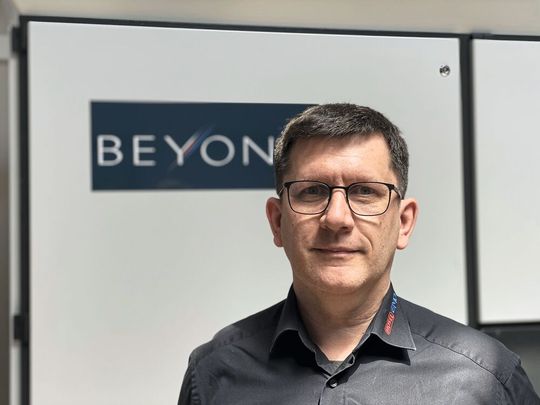
Markus Mitschele is responsible for project planning and sales as Sales Manager at Hemo GmbH.
(Source: Hemo)
Markus Mitschele is responsible for project planning and sales / Sales Manager at Hemo GmbH. Hemo is an exhibitor at the Machining User Meeting with a focus on Aerospace.
Date: 08.12.2025
Naturally, we always handle your personal data responsibly. Any personal data we receive from you is processed in accordance with applicable data protection legislation. For detailed information please see our privacy policy.
Consent to the use of data for promotional purposes
I hereby consent to Vogel Communications Group GmbH & Co. KG, Max-Planck-Str. 7-9, 97082 Würzburg including any affiliated companies according to §§ 15 et seq. AktG (hereafter: Vogel Communications Group) using my e-mail address to send editorial newsletters. A list of all affiliated companies can be found here
Newsletter content may include all products and services of any companies mentioned above, including for example specialist journals and books, events and fairs as well as event-related products and services, print and digital media offers and services such as additional (editorial) newsletters, raffles, lead campaigns, market research both online and offline, specialist webportals and e-learning offers. In case my personal telephone number has also been collected, it may be used for offers of aforementioned products, for services of the companies mentioned above, and market research purposes.
Additionally, my consent also includes the processing of my email address and telephone number for data matching for marketing purposes with select advertising partners such as LinkedIn, Google, and Meta. For this, Vogel Communications Group may transmit said data in hashed form to the advertising partners who then use said data to determine whether I am also a member of the mentioned advertising partner portals. Vogel Communications Group uses this feature for the purposes of re-targeting (up-selling, cross-selling, and customer loyalty), generating so-called look-alike audiences for acquisition of new customers, and as basis for exclusion for on-going advertising campaigns. Further information can be found in section “data matching for marketing purposes”.
In case I access protected data on Internet portals of Vogel Communications Group including any affiliated companies according to §§ 15 et seq. AktG, I need to provide further data in order to register for the access to such content. In return for this free access to editorial content, my data may be used in accordance with this consent for the purposes stated here. This does not apply to data matching for marketing purposes.
Right of revocation
I understand that I can revoke my consent at will. My revocation does not change the lawfulness of data processing that was conducted based on my consent leading up to my revocation. One option to declare my revocation is to use the contact form found at https://contact.vogel.de. In case I no longer wish to receive certain newsletters, I have subscribed to, I can also click on the unsubscribe link included at the end of a newsletter. Further information regarding my right of revocation and the implementation of it as well as the consequences of my revocation can be found in the data protection declaration, section editorial newsletter.



:quality(80)/p7i.vogel.de/wcms/f6/95/f6954fa7c09ba58863a3730f5e384a62/arek-socha-on-pixabay-1707x960v1.jpeg "A new national space strategy brings together UK’s plans for growth, defence, and national security to help reindustrialise the UK. (Source: Arek Socha on Pixabay)")
:quality(80)/p7i.vogel.de/wcms/63/0f/630f214fa760b8c7f7f7d6279d411fcf/d4ceed8f2f52-2026-08-30-hydef-06--msc4159-1200x675v1.webp "(Source: Diehl Defence)")
:quality(80)/p7i.vogel.de/wcms/4e/7d/4e7d38327c6c928b403249e3c24a2a7c/0132118791v1.jpeg "Porsche Holding SE announces that it is once again turning to rocket technology. Following its investment in Isar Aerospace, the company is now acquiring a stake in a U.S. firm ... (Source: Porsche)")
:quality(80)/p7i.vogel.de/wcms/1c/08/1c082bbd9d05b634168b617aa26fcdcf/safe-bg-lv-ro-v1-991x557v1.png "(Source: European Commission)")
:quality(80)/p7i.vogel.de/wcms/0a/14/0a1495d9b570ae32a5a7cc748b9a3c60/st-hannover-035-1920x1079v1-999x562v1.jpeg "Fastening technology you can experience first-hand—visitors to Schraubtec in Bochum (Germany) can see it for themselves at the Ruhr Congress on September 30, 2026. (Source: PHOTOVISION-DH GmbH)")
:quality(80)/p7i.vogel.de/wcms/cd/a9/cda92b173afa9d0b455d4f11b281c9ea/0094-to-image--capstone-cdr-1440x810v1.png "(Source: Terran Orbital)")
:quality(80)/p7i.vogel.de/wcms/e0/45/e045bc5414d7263fb308bdd501b5fcc1/0133113962v1.jpeg "The HSWL 354 is the transmission used, for example, in the Leopard 2 main battle tank. Renk manufactures this system and is now preparing to significantly increase its cycle time. As a result, Renk is placing greater emphasis on the military sector as a customer ... (Source: Renk)")
:quality(80)/p7i.vogel.de/wcms/a1/5c/a15c2aeba563d5bc3e11fb879b21eb2c/0132989650v1.jpeg "FSS, the flexible clamping system for varying free-form surfaces, is designed for the aerospace industry and other sectors. (Source: Römheld GmbH Friedrichshütte)")
:quality(80)/p7i.vogel.de/wcms/46/8e/468effa87546a2b036dc88ca40e2843e/129fbcac92ce7da872b13af0281b0799-l-png-1920x1079v1.webp "(Source: Arianespace)")
:quality(80)/p7i.vogel.de/wcms/8f/10/8f10697d4bfbd70edf615cca76eaedfd/pete-linforth-on-pixabay-1920x1080v1.jpeg "(Source: Pete Linforth on Pixabay / AI-generated)")
:quality(80)/p7i.vogel.de/wcms/0f/99/0f99561bf51818af92b2960656405aa5/roland-4d-pippes-on-pixabay-1460x820v1.jpeg "(Source: Roland 4D Pippes on Pixabay)")
:quality(80)/p7i.vogel.de/wcms/05/49/054906f874b94ef08b09d5920396e27d/airbus-h160-1920x1079v1.jpeg "Airbus H160 (Source: Airbus)")
:quality(80)/p7i.vogel.de/wcms/9d/8a/9d8addea8cc4e6f7a4793563ca397f2a/ai-im-milit-r-1672x940v1.png "(Source: KI-generiert / Gemini)")
:quality(80)/p7i.vogel.de/wcms/7f/5f/7f5fba2c729ec3aa256bf1a18d74529b/ai-chip-1672x940v1.png "(Source: KI-generiert / Gemini)")
:quality(80)/p7i.vogel.de/wcms/64/1b/641b6474b2a614cde7730c89ef2a3015/2026-09-09-rheinmetall-veroeffentlicht-battlesuite-schnittstellen-e8c18194-1225x690v1.jpeg "Rheinmetall’s Battlesuite provides a modular digital platform for connecting and integrating sensors, hardware and software components. (Source: Rheinmetall AG)")
:quality(80)/p7i.vogel.de/wcms/6f/fe/6ffef325e7f233cc3521943158eb1ebd/0132763535v1.jpeg "Two companies are planning to establish, for the first time in 2027, an optical laser communication link directly between a satellite in low Earth orbit (LEO) and a re-entering spacecraft. (Source: ATMOS Space Cargo)")
:quality(80)/p7i.vogel.de/wcms/8f/f9/8ff91b78b26cb5a2b8a29e39835005b1/2026-09-10-repmus-teaser-images-retouched-dsc01292-1024x683-1024x576v1.jpeg "(Source: Quantum Systems GmbH)")
:quality(80)/p7i.vogel.de/wcms/bf/4a/bf4a237e60d3d4bd1bbdbad918f3c697/airbus-defence-and-space-3-1280x720v1.jpeg "(Source: Airbus Defence and Space)")
:quality(80)/p7i.vogel.de/wcms/e0/d1/e0d112a0d54a4fa9603ec855f7d25b47/t-rex-content-photo-jpg-pc-adaptive-990-medium-988x556v1.jpeg "Swarm of UAVs conducting a fully autonomous collaborative swarm mission. (Source: Lockheed Martin)")
:quality(80)/p7i.vogel.de/wcms/79/fc/79fcaa7ca33e393b11a4740d7d8f3dbe/vilkasss-handshake-9459740-1911x1076v1.jpeg "(Source: Vilius Kukanauskas on Pixabay)")
:quality(80)/p7i.vogel.de/wcms/90/a8/90a849f0023f11d1eb642eb4751a0321/bild2-h-c3-a4nel-ict-20truck-20and-20trailer-20parts-4320x2429v1.jpeg "Product information is visible at all times and retrieval of items
is confirmed by employees directly on the display of the Hänel MP 14 N
controller. (Source: René Marks)")
:quality(80)/p7i.vogel.de/wcms/4e/ca/4ecaa39f247490eded591b652c33aee3/thilmann-hcp-web-20kleiner-20ausschnitt-1442x811v1.jpeg "Entering the defence market can be challenging for start-ups, says HCP Sense CEO Ansgar Thilmann. (Picture: HCP Sense)")
:quality(80)/p7i.vogel.de/wcms/7a/51/7a511b80041d3f1335f3a5aa56fe75da/delivery-7022432-1280-1280x720v1.png "(Source: Mohamed_hassan)")
:quality(80)/p7i.vogel.de/wcms/f9/2f/f92f1ef8c739c34c70d99f7b0997621b/stra007-20--20cover-20image-5472x3076v1.jpeg "(Source: Stratasys)")
:quality(80)/p7i.vogel.de/wcms/ec/a9/eca9062ccbe4b042f8515846340410d8/aerospace-and-defence-stairways-platforms-and-much-morev1.jpeg "Modular constructions enable flexible modification. That applies to larger structures such as stairways and platforms, too. And that means aerospace and defence companies can reconfigure their maintenance platforms fast (itemitem)")
:quality(80)/p7i.vogel.de/wcms/30/2a/302a7b5723ad38fbde812fd3a468ad04/safety-on-stairways-in-industry-key-considerationsv1.jpeg "Stairways and platforms are used widely in maintenance and assembly areas in the aerospace and defence sectors. (Source: item)")
:quality(80)/p7i.vogel.de/wcms/f3/4e/f34ed744bb30817d3432c7ad522e6f30/engine-1v1.jpeg "Engineering with aluminium profiles really can be this easy – the item Engineeringtool and its smart functions help you save valuable time. (Source: item)")
:fill(fff,0)/p7i.vogel.de/companies/69/6d/696de2483d115/logo--fastems-rgb-horizontal.jpeg "logo--fastems-rgb-horizontal (Fastems)")
:fill(fff,0)/images.vogel.de/vogelonline/companyimg/84700/84735/65.jpg "logo_item_rgb_neu.jpg ()")
:quality(80)/p7i.vogel.de/wcms/1c/90/1c909a6a0c80f73a5f280a407041f811/ecoclean-fb-20hpo-1-v-2100x1181v1.jpeg "ecoclean-fb-20hpo-1-v-2100x1181v1 (Picture: Ecoclean)")
:quality(80)/p7i.vogel.de/wcms/22/0f/220f18c2bd4c568655f4b73b2f4caa30/hohe-20sp-c3-bclqualit-c3-a4t-20bei-20high-20purity-20reinigung-kompr--6000x3373v1.jpeg "High flushing quality for high-purity cleaning: Test cleaning at the BvL Technology Center with the Atlantic cleaning system and a ultrapure water treatment system (EnviroFalk) (Source: BvL Oberflächentechnik GmbH )")