As aerospace systems become increasingly software-driven, certification is emerging as a critical factor in development schedules. Digital continuity and end-to-end traceability can help integrate compliance into engineering processes, reducing delays and improving certification readiness.
(Source: PublicDomainArchive on Pixabay)
Developing aerospace products today looks very different than it did just a few years ago. Products are increasingly shaped by software and interconnected architectures that continue to evolve throughout development. Engineering organisations have responded with more integrated, model based processes in which changes can be tracked against an evolving product representation.
Certification often follows a different rhythm. Regulatory evidence is still frequently prepared for formal reviews and assembled into documents that summarise work after it has taken place. This creates distance between the current engineering state and the representation submitted for approval. When evidence has to be reconstructed late in a program, teams must determine how a requirement was implemented, whether previous verification is still valid after a change, and which product state the evidence refers to. As complexity grows, certification can therefore become the critical path.
Compliance needs to develop with the product
A more digital approach starts earlier. Regulatory requirements should become part of the engineering process as soon as they begin to influence the system. Their relationship to implementation and verification needs to remain visible while the product changes. This is particularly important for software. A relatively small code change can affect behaviour elsewhere in the system or invalidate previous verification work. Engineers therefore need to understand the impact before they can decide whether existing evidence remains sufficient. If this context is preserved digitally, the assessment can take place during development instead of being reconstructed at the next certification milestone. Continuous traceability also makes missing evidence or inconsistencies visible while the relevant engineering context is still current.
Traceability improves program predictability
Certification delays can affect release schedules, postpone entry into service, and trigger additional engineering work late in a program. A connected evidence chain gives teams a clearer view of whether the information required for a specific configuration is complete and current. It also changes how progress can be assessed. Instead of relying primarily on finished document packages, organisations can evaluate the maturity of the underlying evidence. When a change occurs, its consequences can be checked against the engineering record rather than investigated manually across disconnected sources. Program managers gain earlier visibility into potential certification bottlenecks, while engineers can address unresolved dependencies before they become formal findings.
ALM and PLM need a shared context
One practical challenge lies in the relationship between software development and the physical product definition. Application Lifecycle Management (ALM) structures the development and verification of software, while Product Lifecycle Management (PLM) governs the evolving product configuration. Certification depends on both because software behaviour has to be assessed in the context of the configuration in which it operates. If these domains remain disconnected, organisations have to recreate their relationships whenever changes cross system boundaries. This becomes especially difficult when software evolves more frequently than the surrounding hardware. Connecting ALM and PLM helps preserve the context required for impact analysis and certification.
The Intelligent Product Lifecycle (IPL) provides the principle behind this continuity. Engineering information remains connected as the product develops, allowing the relationship between requirements, implementation, verification, and approved states to remain understandable over time. The value lies in maintaining that context instead of rebuilding it for each review.
Regulators need access to engineering context
Certification authorities face the same rise in complexity as manufacturers. They need to assess increasingly software intensive systems while maintaining regulatory rigor. Their task becomes harder when the evidence they receive is mainly a static representation of a dynamic engineering process. Documents will remain important because certification requires formal records and clearly defined responsibilities. The difficulty arises when those records lose their connection to the engineering context from which they were created. A verification result, for example, has limited value if it is difficult to determine whether it still applies after a relevant change.
Date: 08.12.2025
Naturally, we always handle your personal data responsibly. Any personal data we receive from you is processed in accordance with applicable data protection legislation. For detailed information please see our privacy policy.
Consent to the use of data for promotional purposes
I hereby consent to Vogel Communications Group GmbH & Co. KG, Max-Planck-Str. 7-9, 97082 Würzburg including any affiliated companies according to §§ 15 et seq. AktG (hereafter: Vogel Communications Group) using my e-mail address to send editorial newsletters. A list of all affiliated companies can be found here
Newsletter content may include all products and services of any companies mentioned above, including for example specialist journals and books, events and fairs as well as event-related products and services, print and digital media offers and services such as additional (editorial) newsletters, raffles, lead campaigns, market research both online and offline, specialist webportals and e-learning offers. In case my personal telephone number has also been collected, it may be used for offers of aforementioned products, for services of the companies mentioned above, and market research purposes.
Additionally, my consent also includes the processing of my email address and telephone number for data matching for marketing purposes with select advertising partners such as LinkedIn, Google, and Meta. For this, Vogel Communications Group may transmit said data in hashed form to the advertising partners who then use said data to determine whether I am also a member of the mentioned advertising partner portals. Vogel Communications Group uses this feature for the purposes of re-targeting (up-selling, cross-selling, and customer loyalty), generating so-called look-alike audiences for acquisition of new customers, and as basis for exclusion for on-going advertising campaigns. Further information can be found in section “data matching for marketing purposes”.
In case I access protected data on Internet portals of Vogel Communications Group including any affiliated companies according to §§ 15 et seq. AktG, I need to provide further data in order to register for the access to such content. In return for this free access to editorial content, my data may be used in accordance with this consent for the purposes stated here. This does not apply to data matching for marketing purposes.
Right of revocation
I understand that I can revoke my consent at will. My revocation does not change the lawfulness of data processing that was conducted based on my consent leading up to my revocation. One option to declare my revocation is to use the contact form found at https://contact.vogel.de. In case I no longer wish to receive certain newsletters, I have subscribed to, I can also click on the unsubscribe link included at the end of a newsletter. Further information regarding my right of revocation and the implementation of it as well as the consequences of my revocation can be found in the data protection declaration, section editorial newsletter.
A more digital interaction model could preserve more of this context. Structured evidence with reliable version history and traceable relationships would allow specific certification questions to be examined with greater precision. It would give regulatory judgment a more transparent information base.
Digital certification starts inside engineering
Fully digital certification will not emerge through a single technology project. Aerospace organisations operate long running programs and complex tool environments that cannot be replaced at once. The practical starting point is digital continuity inside the engineering organisation. Information must remain connected as it changes over time. Approved configurations need to be unambiguous, and verification evidence must remain linked to the product state for which it was created. Once these foundations are in place, certification readiness can become part of everyday engineering instead of an activity concentrated around major review milestones. Digital systems can then help identify missing relationships or flag evidence that may have been affected by a change, reducing the manual effort required before engineers and regulators can make informed decisions.
Certification must become part of the development flow
As aerospace systems become more complex, certification can no longer depend on reconstructing engineering decisions after the fact. The information required to demonstrate compliance already originates inside the development process. The challenge is to preserve its context and keep it usable as the product evolves.
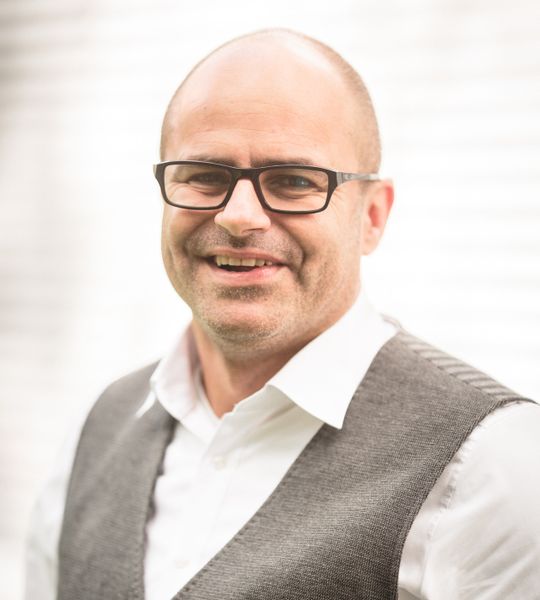
Reda Mostafa is Senior Director Market Development Aerospace and Defense at PTC and brings more than 20 years of experience in delivering complex digitalisation and transformation projects, particularly in the areas of aerospace and defense, Industry 4.0, and product lifecycle management.
(Source: PTC)
Closer integration between ALM and PLM provides an important foundation. Combined with continuous traceability, it helps organisations identify certification risks earlier, assess changes with greater confidence, and maintain a clearer view of readiness throughout development. The longer term objective is a certification process in which trusted digital evidence can move more directly between engineering organisations and authorities. Reaching that point will require common standards and close cooperation across the aerospace sector. For manufacturers facing growing complexity and continued pressure on development schedules, digital certification is becoming an essential engineering capability.



:quality(80)/p7i.vogel.de/wcms/24/d7/24d7cb3e5341f65678b914829b3650f8/airbus-u740-valkyrie-first-flight-photo-02-valkyrie-heroshots-0010-8033-1920x1079v1.jpeg "The Airbus U740 Valkyrie during its first European flight test. (Photo: Airbus Defence and Space GmbH 2026)")
:quality(80)/p7i.vogel.de/wcms/b8/a1/b8a140d8496d6744a5fd8573e048bce4/esanasa-k--barber-1920x1080v1.jpeg "NASA’s SpaceX Crew-12 Splashdown (NHQ202610080008) ESA (European Space Agency) astronaut Sophie Adenot is helped out of the SpaceX Dragon Freedom spacecraft onboard the SpaceX recovery ship SHANNON after she and NASA astronauts Jessica Meir, Jack Hathaway, and Roscosmos cosmonaut Andrey Fedyaev landed in the Pacific Ocean off the coast of Los Angeles, Calif., Thursday, Oct. 8, 2026. (Source: ESA/ NASA–Keegan Barber)")
:quality(80)/p7i.vogel.de/wcms/70/78/7078a1bd268b3f708eab4913d2cd0b92/eudex-ganter-messe-essen-1920x1080v1.jpeg "An unmanned aerial platform from Maddos, autonomous ground robots from ARX Robotics and standard parts from Ganter illustrate the breadth of Eudex. Ganter supplies components for positioning, fastening and locking in defence applications too. (Source: Messe Essen)")
:quality(80)/p7i.vogel.de/wcms/a2/da/a2da4222cfe9ec14a72668ce4100fd5b/pistorius-experimentalserie-land-1400x787v1.jpeg "Defence Minister Boris Pistorius at the Land Experimental Series at the Bergen military training area in Lower Saxony. Innovative systems are being tested for their suitability for use by the troops — not in a laboratory, but out in the open. (Source: Bundeswehr/Janin Garzke)")
:quality(80)/p7i.vogel.de/wcms/a6/71/a6713b64fb8aee687258fcf1014ea3b5/2026-03-08-aerospike-09-980x551v1.jpeg "The engine was developed with the aid of Noyron, LEAP 71’s computer-aided design model. Noyron uses basic physical principles, engineering logic, and manufacturing specifications to design autonomously without human intervention. (Source: LEAP 71)")
:quality(80)/p7i.vogel.de/wcms/91/c9/91c93dbd66b08824c35643875aabe61f/bild1-1245x700v1.jpeg "Two scientists in front of a vacuum chamber used for testing. (Source: Busch Group)")
:quality(80)/p7i.vogel.de/wcms/76/1d/761de63f32752dc5a9722559c527fc1f/design-ohne-titel-5-1920x1079v1.png "(Source: Analog Devices)")
:quality(80)/p7i.vogel.de/wcms/33/a7/33a7f8ac37b143e73964dad10c8aafbc/0133560493v1.jpeg "Benedikt Gundling and Tobias Hannen in front of a tank component of the Ariane 6. (Source: Grob Works)")
:quality(80)/p7i.vogel.de/wcms/94/c2/94c200c11610b28c5107f271c8269c48/airbus-u740-valkyrie-first-flight-photo-02-valkyrie-heroshots-0010-8033-1920x1079v1.jpeg "The Airbus U740 takes off for its first flight in Europe.
(Source: Airbus Defence and Space GmbH 2026)")
:quality(80)/p7i.vogel.de/wcms/41/16/41162d793da057b8926aa216d1917f3a/image-2000-87c4e85417d8ad2252869e1109a24719-1918x1079v1.jpeg "Launch of SpaceX’s Transporter-18 Mission. (Source: SpaceX)")
:quality(80)/p7i.vogel.de/wcms/93/dc/93dc54d701f833f3dc771b588f236047/noemie-flugzeugv1.jpeg "The aircraft, designed to carry nine passengers, is intended to be able to operate both from bodies of water and from conventional runways. (Source: Noemi Aerospace)")
:quality(80)/p7i.vogel.de/wcms/0c/e8/0ce8f0a9f1d56d603e7ff50f38caf7b2/abbildung-1-feierliche-er-ffnung-der-space-factory-im-esa-phi-lab-austria-1920x1079v1.jpeg "Official opening of the Space Factory at ESA Phi-Lab Austria at Vienna Airport. (Source: Vienna Airport)")
:quality(80)/p7i.vogel.de/wcms/50/85/50856774ce46ad8f94f37e328ba3b6d3/ptc-frau-arbeitet-mit-model-am-pc-neben-turbine-1911x1076v1.jpeg "(Source: PTC)")
:quality(80)/p7i.vogel.de/wcms/9c/60/9c60e13e660fe6b444ec71c59b5598ce/publicdomainarchive-on-pixabay-1920x1079v1.jpeg "(Source: PublicDomainArchive on Pixabay)")
:quality(80)/p7i.vogel.de/wcms/b6/6d/b66d11215bcdb8e107ca626e6cfd3643/tungart7-future-9045696-1920x1079v1.jpeg "Transparent and controllable AI architectures can support crisis management by making data sources, reasoning processes and uncertainties visible to human decision-makers. (Source: Tung Lam on Pixabay)")
:quality(80)/p7i.vogel.de/wcms/ed/e6/ede67e479952b7bad62244697e3cd3db/aa383c9a-015c-424b-95da-d8d56156c227-1536x864v1.png "Intelic's AI-supported command-and-control system Nexus can integrate sensors and interceptor drones to counter aerial threats (Illustration). (Picture: AI generated)")
:quality(80)/p7i.vogel.de/wcms/d4/8e/d48e922adf87b94ec8356eabaaebc9b8/morfius-image-resize-jpg-pc-adaptive-full-medium-900x506v1.jpeg "Lockheed Martin’s MORFIUS® X-Rotor is the first of its kind counter-drone system. (Source: Lockheed Martin)")
:quality(80)/p7i.vogel.de/wcms/93/7e/937e0958ca684b36382d6025daa4880e/2026-10-06-rheinmetall-integriert-human-machine-teaming-in-gepanzerte-fahrzeuge-media-06a35258-query-2x-c641d5e7-1910x1075v1.jpeg "Rheinmetall and Breaker are integrating Human-Machine Teaming into the Boxer Combat Reconnaissance Vehicle, enabling crews to control teams of autonomous systems by voice command. (Source: Rheinmetall AG)")
:quality(80)/p7i.vogel.de/wcms/d4/8a/d48a3c3d03168bfd49db0a816aa308ae/image1-39-1294x728v1.png "(Source: Department of National Defence (DND))")
:quality(80)/p7i.vogel.de/wcms/54/d5/54d5207a3dab5139de6761523319cf84/airbus-delivers-first-batch-of-new-eutelsat-s-oneweb-satellites-23-1920x1079v1.jpeg "(Source: Airbus Defence and Space SAS 2026)")
:quality(80)/p7i.vogel.de/wcms/90/a8/90a849f0023f11d1eb642eb4751a0321/bild2-h-c3-a4nel-ict-20truck-20and-20trailer-20parts-4320x2429v1.jpeg "Product information is visible at all times and retrieval of items
is confirmed by employees directly on the display of the Hänel MP 14 N
controller. (Source: René Marks)")
:quality(80)/p7i.vogel.de/wcms/4e/ca/4ecaa39f247490eded591b652c33aee3/thilmann-hcp-web-20kleiner-20ausschnitt-1442x811v1.jpeg "Entering the defence market can be challenging for start-ups, says HCP Sense CEO Ansgar Thilmann. (Picture: HCP Sense)")
:quality(80)/p7i.vogel.de/wcms/7a/51/7a511b80041d3f1335f3a5aa56fe75da/delivery-7022432-1280-1280x720v1.png "(Source: Mohamed_hassan)")
:quality(80)/p7i.vogel.de/wcms/f9/2f/f92f1ef8c739c34c70d99f7b0997621b/stra007-20--20cover-20image-5472x3076v1.jpeg "(Source: Stratasys)")
:quality(80)/p7i.vogel.de/wcms/ec/a9/eca9062ccbe4b042f8515846340410d8/aerospace-and-defence-stairways-platforms-and-much-morev1.jpeg "Modular constructions enable flexible modification. That applies to larger structures such as stairways and platforms, too. And that means aerospace and defence companies can reconfigure their maintenance platforms fast (itemitem)")
:quality(80)/p7i.vogel.de/wcms/30/2a/302a7b5723ad38fbde812fd3a468ad04/safety-on-stairways-in-industry-key-considerationsv1.jpeg "Stairways and platforms are used widely in maintenance and assembly areas in the aerospace and defence sectors. (Source: item)")
:quality(80)/p7i.vogel.de/wcms/f3/4e/f34ed744bb30817d3432c7ad522e6f30/engine-1v1.jpeg "Engineering with aluminium profiles really can be this easy – the item Engineeringtool and its smart functions help you save valuable time. (Source: item)")
:fill(fff,0)/p7i.vogel.de/companies/69/6d/696de2483d115/logo--fastems-rgb-horizontal.jpeg "logo--fastems-rgb-horizontal (Fastems)")
:fill(fff,0)/images.vogel.de/vogelonline/companyimg/84700/84735/65.jpg "logo_item_rgb_neu.jpg ()")

:quality(80)/p7i.vogel.de/wcms/bf/57/bf571db49f6948c9fcefd95bc1eb7980/368945-20dam-20imagery-digital-transformation-pc-1920x1079v1.jpeg "A modern commercial aircraft symbolizes the growing need for seamless digital traceability in aerospace programs — a core capability enabled by the Intelligent Product Lifecycle (IPL) and its AI-driven data backbone. (Source: PTC)")
:quality(80)/p7i.vogel.de/wcms/50/85/50856774ce46ad8f94f37e328ba3b6d3/ptc-frau-arbeitet-mit-model-am-pc-neben-turbine-1911x1076v1.jpeg "ptc-frau-arbeitet-mit-model-am-pc-neben-turbine-1911x1076v1 (Source: PTC)")