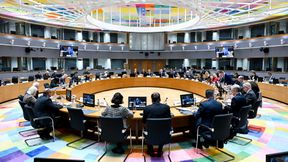
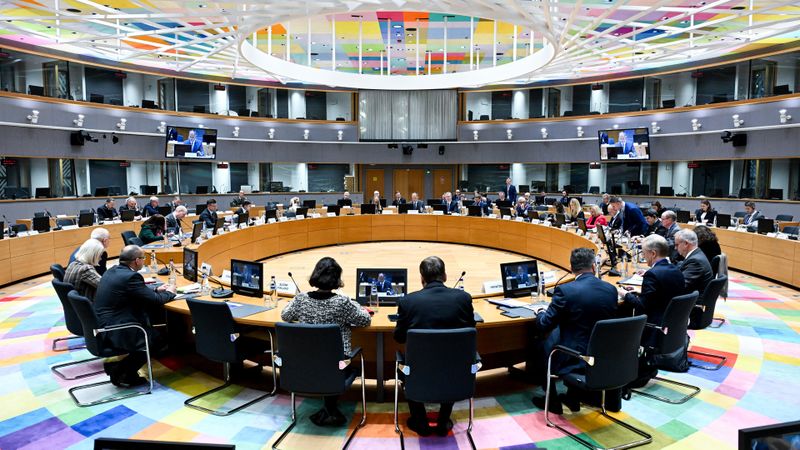
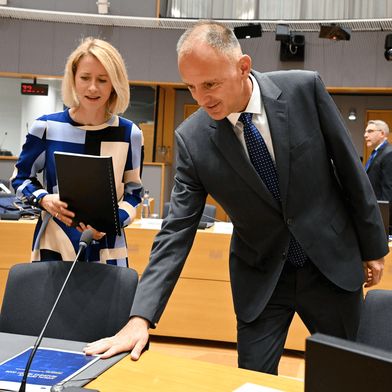
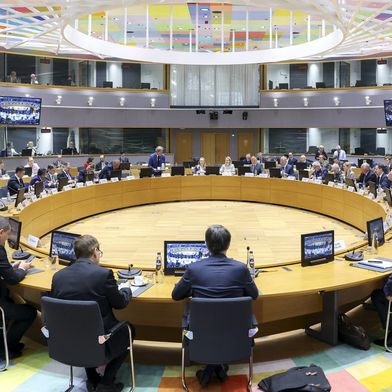
Ministers of Defence approved the 2026 Coordinated Annual Review on Defence (CARD), endorsed a joint statement on defence security of supply, and agreed to increase the Agency’s budget.
(Source: European Defence Agency)
The 2026 CARD report recommends that Member States consider collaboration from the outset—at the capability planning stage—rather than only when delivering capabilities already defined nationally. The report also identifies eight collaborative opportunities endorsed by Ministers, with a particular focus on strategic enablers.
The CARD report assesses Europe’s defence landscape and identifies opportunities for Member States to strengthen cooperation on critical capabilities.
“With CARD, we have identified three collaborative opportunities related to strategic enablers,” EDA Chief Executive André Denk said. “From space-based early warning to strategic air mobility, and a secure, federated defence cloud architecture, these strategic enablers are essential to strengthening Europe’s deterrence and defence capabilities.”
CARD 2026: Five recommendations
1. Cooperation should be considered as early as possible. Member States increasingly agree on priorities, but procurement remains national and cooperation is often arranged after national decisions are taken. Member States should consider cooperation in national programmes and budgets and prepare projects that can tap into EU funding.
2. Look also beyond 2030. The focus on defence readiness must be balanced with sustained attention to medium- and long-term needs. Underinvestment there may only become visible after several cycles and would then be costly and slow to reverse.
3. Work on strategic enablers together. These are the capabilities that allow Europe to decide, act and sustain operations autonomously. They exceed what any single country can develop and support alone, and access to them cannot be assumed in every future contingency. Because of their scale, cost and reliance on shared architectures and networks, cooperation is a necessity rather than a choice.
4. Address each part of capability development. Personnel, training, doctrine, logistics, sustainment and interoperability increasingly determine how much investment turns into deployable weapons and equipment.
5. Bring innovation to the field faster. Promising results are slow to become operational capability because experimentation, requirements and acquisition are managed too sequentially.
CARD 2026: Eight collaborative opportunities
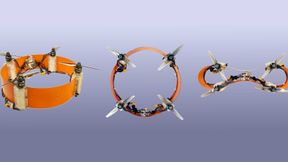
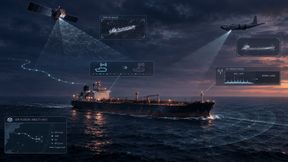
1. Family of cruise missiles 2. Long-range artillery (multiple launch rocket systems) 3. Modular and interoperable unmanned ground vehicles 4. Layered counter-unmanned aircraft systems for critical infrastructure and force protection 5. Family of long-range air defence interceptors 6. Space early warning, detection and tracking (strategic enabler) 7. European secure defence cloud (strategic enabler) 8. European approach to strategic air mobility (strategic enabler)
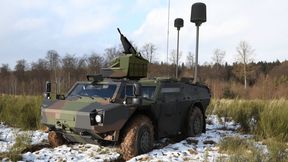
The European Union needs more fielded capability, with unmanned ground vehicles as one example. Other opportunities go beyond equipment, such as shared training capacity, common information-sharing architectures, and integration of sensors and command and control. These can be delivered faster than large programmes.
The report calls for a collaborative approach to strategic enablers, in coherence with NATO, building on EDA’s work and addressing these challenges in the Priority Capability Areas (PCAs). CARD 2026 recommends further analysis, stronger Member State involvement and dedicated roadmaps.
Building the capacity to cooperate
Furthermore, the challenge is not only to identify collaborative opportunities but to strengthen the capacity to act on them. Intergovernmental support for joint acquisition, collaborative capability development and research is being reinforced through EDA’s strengthening process, allowing CARD and the Permanent Structured Cooperation (PESCO) to deliver, supported by EU incentives such as the European Defence Industry Programme. More systematic cooperation would also give industry clearer, more predictable demand, supporting production at scale and reducing supply chain dependencies.
Date: 08.12.2025
Naturally, we always handle your personal data responsibly. Any personal data we receive from you is processed in accordance with applicable data protection legislation. For detailed information please see our privacy policy.
Consent to the use of data for promotional purposes
I hereby consent to Vogel Communications Group GmbH & Co. KG, Max-Planck-Str. 7-9, 97082 Würzburg including any affiliated companies according to §§ 15 et seq. AktG (hereafter: Vogel Communications Group) using my e-mail address to send editorial newsletters. A list of all affiliated companies can be found here
Newsletter content may include all products and services of any companies mentioned above, including for example specialist journals and books, events and fairs as well as event-related products and services, print and digital media offers and services such as additional (editorial) newsletters, raffles, lead campaigns, market research both online and offline, specialist webportals and e-learning offers. In case my personal telephone number has also been collected, it may be used for offers of aforementioned products, for services of the companies mentioned above, and market research purposes.
Additionally, my consent also includes the processing of my email address and telephone number for data matching for marketing purposes with select advertising partners such as LinkedIn, Google, and Meta. For this, Vogel Communications Group may transmit said data in hashed form to the advertising partners who then use said data to determine whether I am also a member of the mentioned advertising partner portals. Vogel Communications Group uses this feature for the purposes of re-targeting (up-selling, cross-selling, and customer loyalty), generating so-called look-alike audiences for acquisition of new customers, and as basis for exclusion for on-going advertising campaigns. Further information can be found in section “data matching for marketing purposes”.
In case I access protected data on Internet portals of Vogel Communications Group including any affiliated companies according to §§ 15 et seq. AktG, I need to provide further data in order to register for the access to such content. In return for this free access to editorial content, my data may be used in accordance with this consent for the purposes stated here. This does not apply to data matching for marketing purposes.
Right of revocation
I understand that I can revoke my consent at will. My revocation does not change the lawfulness of data processing that was conducted based on my consent leading up to my revocation. One option to declare my revocation is to use the contact form found at https://contact.vogel.de. In case I no longer wish to receive certain newsletters, I have subscribed to, I can also click on the unsubscribe link included at the end of a newsletter. Further information regarding my right of revocation and the implementation of it as well as the consequences of my revocation can be found in the data protection declaration, section editorial newsletter.
The 2026 CARD report was prepared by EDA in coordination with the European External Action Service (EEAS) and the EU Military Staff (EUMS). The report is the final deliverable of the fourth CARD cycle, covering the period 2025-2026.
A joint statement on security of supply in the defence sector
The joint statement on security of supply highlights three key points: (1) defence requirements need to be systematically reflected in relevant EU initiatives; (2) industry needs to take greater responsibility for the resilience of its supply chains; and (3) public and private investment needs greater predictability and visibility so that industry can sustain the investments required to expand production capacity. Overall, security of supply and secure access to critical materials are a prerequisite for meeting the EU’s 2030 defence readiness goal.