
























Maritime ISR & sensor fusion The Ship That Switches Off Its Identity: Why Dark-Vessel Detection Is Becoming a Sensor-Fusion Problem
Related Vendors


Automatic Identification System data can tell an analyst what a ship claims to be, where it says it is and how it says it is moving. None of that proves that the vessel is physically there. New maritime-surveillance architectures therefore combine AIS with optical satellite imagery, synthetic-aperture radar, RF geolocation and airborne sensors.
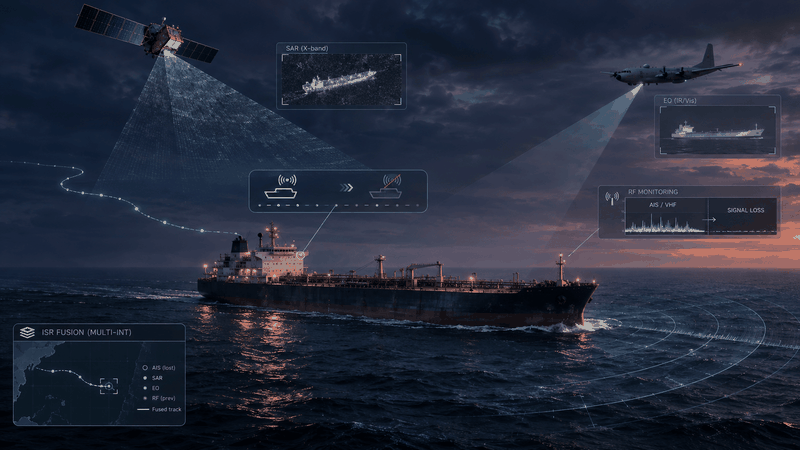
A vessel does not become invisible when its AIS transponder stops transmitting. It becomes ambiguous. AIS broadcasts identity, position, course and speed. For compliant shipping it remains one of the most useful sources of maritime situational awareness. But it is self-reported. A transponder can fail, be switched off, transmit incorrect information or be affected by GNSS interference.“Dark vessel” is therefore often used too loosely. A ship without a current AIS position is not automatically suspicious. Small craft may not require AIS, equipment can fail and interference can affect an entire region.The real intelligence problem begins when the reported digital identity no longer matches independent physical observation.
Sign in or register and read on
Please log in or register and read this article. To be able to read this article in full, you must be registered. Free registration gives you access to exclusive specialist information.
Already registered? Log in here

