The international IGNITE-X research project is investigating how low-sulphur aviation fuel and modern engine technology can reduce particle emissions and the climate impact of contrails.
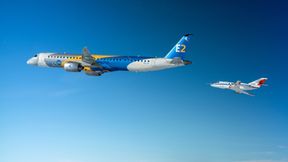
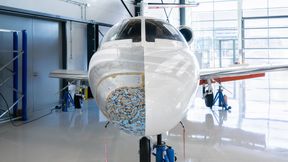
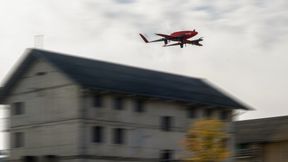
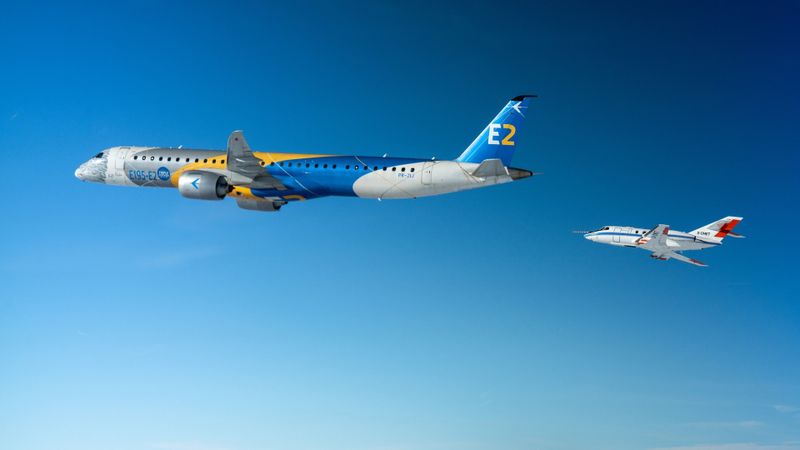
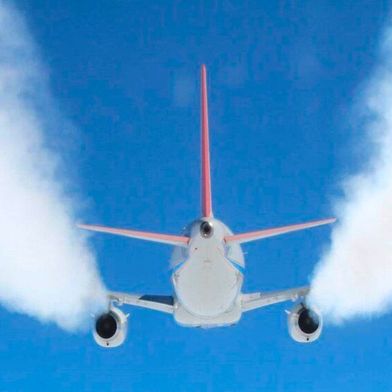
DLR research aircraft Falcon 20E following the Embraer E195-E2.
(Source: DLR (CC BY-NC-ND 3.0))
Contrails make a significant contribution to the climate impact of aviation. One key to reducing this impact lies in optimising aircraft fuels and engines. But how does the composition of a fuel affect the emissions of modern aircraft engines? What role does the sulphur content in particular play in contrail formation? The IGNITE-X (International Ground and Inflight Turbine Emission Experiment) research project, led by the German Aerospace Centre (DLR), is investigating these questions. To this end, the teams conducted ground measurements in Manching (Germany) and flight measurements over test zones in Bavaria (Germany) and Saxony (Germany) over a period of approximately four weeks in October and November 2026.
An Embraer E195-E2 equipped with GTFTM PW1900G engines from Pratt & Whitney served as the test aircraft. The project team used a particularly low-sulphur fuel and conventional kerosene with its naturally occurring sulphur content. Comparing the two fuels makes it possible to investigate the influence of fuel properties on particle formation. During measurements under cruise flight conditions, the DLR research aircraft Falcon 20E flew close behind the Brazilian test aircraft, entering its exhaust plume. The project involves DLR, Embraer, RTX's Pratt & Whitney, Aerodyne Research and Missouri University of Science and Technology.
"We measure emissions directly in the exhaust plume—which is an extremely demanding undertaking, both scientifically and in terms of flying skills. The test procedure, which involves using low-sulphur fuel in modern Pratt & Whitney engines fitted to an Embraer E2 passenger aircraft, provides unique insights into the potential for reducing emissions. These innovative yet challenging tests with our international partners are the result of exceptionally committed, trusting and inspiring cooperation between applied research and industry," emphasises Dr Markus Fischer, Member of the DLR Executive Board responsible for Aeronautics.
Less soot and sulphur, fewer ice crystals?
Contrails are clouds of ice crystals that form at cruising altitude when hot exhaust gases meet very cold, humid air. Soot particles from engine exhaust act as nuclei on which ice crystals can form, creating contrails. Lower soot emissions could therefore lead to fewer ice particles and, consequently, a reduced climate impact from contrails.
In addition to soot, volatile particles also play an important role. The sulphur content of the fuel influences the formation of these particles, which can also lead to the formation of ice crystals. IGNITE-X is therefore investigating how fuel composition affects engine emissions and the properties of contrails. The researchers aim to determine whether combining an engine with low soot emissions and low-sulphur fuel can significantly reduce contrail formation. The findings are intended to contribute to a better understanding of the non-CO₂ climate impact of air traffic and to the assessment of potential mitigation measures.
Chase flight in the exhaust plume
Known as the "Profit Hunter", the Embraer E195-E2 test aircraft is particularly fuel-efficient and economical to operate. It is equipped with Pratt & Whitney GTFTM PW1900G engines featuring advanced combustion chamber technology. This technology is designed to significantly reduce particulate emissions, including soot, compared with engines from the previous generation.
"The E195-E2 was designed to deliver outstanding efficiency and lower emissions, making it an ideal platform for advancing research into the future of sustainable aviation. Through our participation in IGNITE-X, we are working together with leading research institutions and industry partners to better understand the relationship between fuel properties, engine performance and contrail formation. This collaboration underscores Embraer's commitment to science-based solutions that contribute to a more sustainable and environmentally responsible aviation industry," says Cleiton Silva, Vice President of Technology and Advanced Projects at Embraer.
Date: 08.12.2025
Naturally, we always handle your personal data responsibly. Any personal data we receive from you is processed in accordance with applicable data protection legislation. For detailed information please see our privacy policy.
Consent to the use of data for promotional purposes
I hereby consent to Vogel Communications Group GmbH & Co. KG, Max-Planck-Str. 7-9, 97082 Würzburg including any affiliated companies according to §§ 15 et seq. AktG (hereafter: Vogel Communications Group) using my e-mail address to send editorial newsletters. A list of all affiliated companies can be found here
Newsletter content may include all products and services of any companies mentioned above, including for example specialist journals and books, events and fairs as well as event-related products and services, print and digital media offers and services such as additional (editorial) newsletters, raffles, lead campaigns, market research both online and offline, specialist webportals and e-learning offers. In case my personal telephone number has also been collected, it may be used for offers of aforementioned products, for services of the companies mentioned above, and market research purposes.
Additionally, my consent also includes the processing of my email address and telephone number for data matching for marketing purposes with select advertising partners such as LinkedIn, Google, and Meta. For this, Vogel Communications Group may transmit said data in hashed form to the advertising partners who then use said data to determine whether I am also a member of the mentioned advertising partner portals. Vogel Communications Group uses this feature for the purposes of re-targeting (up-selling, cross-selling, and customer loyalty), generating so-called look-alike audiences for acquisition of new customers, and as basis for exclusion for on-going advertising campaigns. Further information can be found in section “data matching for marketing purposes”.
In case I access protected data on Internet portals of Vogel Communications Group including any affiliated companies according to §§ 15 et seq. AktG, I need to provide further data in order to register for the access to such content. In return for this free access to editorial content, my data may be used in accordance with this consent for the purposes stated here. This does not apply to data matching for marketing purposes.
Right of revocation
I understand that I can revoke my consent at will. My revocation does not change the lawfulness of data processing that was conducted based on my consent leading up to my revocation. One option to declare my revocation is to use the contact form found at https://contact.vogel.de. In case I no longer wish to receive certain newsletters, I have subscribed to, I can also click on the unsubscribe link included at the end of a newsletter. Further information regarding my right of revocation and the implementation of it as well as the consequences of my revocation can be found in the data protection declaration, section editorial newsletter.
During the flight tests, the DLR research aircraft Falcon 20E followed the "Profit Hunter", measuring its emissions and the contrails that formed. Researchers from the DLR Institute of Atmospheric Physics were responsible for the flight measurements and conducted tests at different distances. During far-field measurements, the Falcon flew at distances of between ten and 30 kilometres (approx. 6.2 and 18.6 miles). For near-field measurements, the research aircraft approached the Embraer to within 30 metres (approx. 98.4 ft).
Flying into the exhaust plume to collect targeted samples requires a high degree of flying skill. Experienced and specially trained pilots from the DLR Flight Experiments Facility are therefore involved in the operation. This facility is also responsible for operating the Falcon 20E.
Ground measurements at the nanometre scale
The ground measurements complement the flight measurements and are a central component of the IGNITE-X campaign. Led by the DLR Institute of Combustion Technology, the international team systematically investigated the engines' emission behaviour across the entire thrust range, from idle to take-off thrust. To this end, the "Profit Hunter" was positioned at a designated test location, and a sampling probe specially designed for the campaign was positioned in the exhaust plume. The two engines were operated individually, each running through defined thrust settings. This enabled the researchers to clearly attribute the measured emissions to the respective engine and its operating condition, as well as to identify potential differences between the engines.
"The IGNITE-X test campaign, which brings together world-class technical expertise and testing capabilities, makes a significant contribution to a fundamental understanding of contrail formation, including the question of how different fuel types affect the properties of contrails," says Graham Webb, Vice President of Advanced Commercial Engine Programs at Pratt & Whitney. "The results of this campaign will feed into the development of advanced engine technologies for future aircraft by confirming the exceptionally low emission levels of our GTF engine and its Talon-X combustor design."
Particular attention was paid to the smallest particles in the nanometre range. Investigating their number, size distribution and properties provides insights into early particle formation and the initial transformation processes within the exhaust plume. However, detecting nanoparticles places considerable demands on measurement technology. The IGNITE-X project team succeeded in doing so by configuring a dedicated measurement setup for the campaign.
The technically demanding setup also required careful coordination of the sampling process and measurement instruments. The ground measurements were carried out at the Bundeswehr airfield in Manching (Germany), with on-site support from the Bundeswehr Technical and Airworthiness Centre for Aircraft.
From experiment to more climate-friendly aviation
Through IGNITE-X, DLR contributes its extensive expertise in aviation, ranging from scientific analysis and measurement technology to research flight operations. The low-sulphur kerosene used in the campaign was specially produced for the measurement programme. It is certified as an aviation fuel and can therefore be used in any aircraft. Following the completion of the test campaign, the flight and ground measurements are now being jointly evaluated.
If low-sulphur kerosene does indeed cause fewer ice particles to form, it could be an important lever for reducing the climate impact of contrails in the near future. The findings from IGNITE-X are intended to help shape and advance the transformation of aviation on a sound scientific basis.