
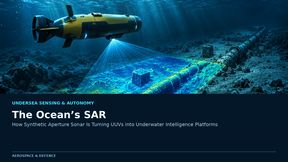






The ocean’s SAR How SAS Is Turning UUVs into Underwater Intelligence Platforms
Related Vendors


Undersea warfare is often discussed in terms of autonomous vehicles: longer endurance, greater depth, fewer sailors in danger. Yet the decisive change may lie not in the vehicle itself, but in what happens when its motion becomes part of the sensor. Synthetic aperture sonar gatheres successive acoustic echoes to create a virtual array.
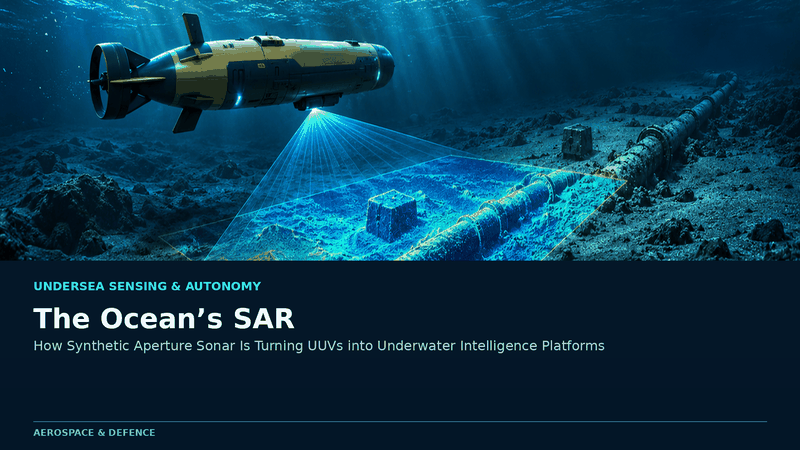
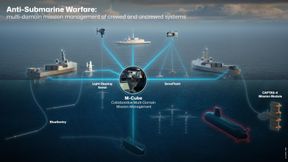
In October 2026, the UK announced that it would lead development of three payload families for AUKUS uncrewed underwater vehicles: synthetic aperture sonar, a deployable anti-submarine-warfare sensor and a deployable non-kinetic effector. Delivery across Australian, British and US UUV fleets is intended to begin from 2027.The announcement illustrates a broader shift: the centre of gravity in undersea autonomy is moving from the vehicle towards the payload and the information architecture around it. A UUV can travel for hours or days. Operational value depends on whether it can transform that motion into reliable knowledge of the seabed and the objects on it.
Sign in or register and read on
Please log in or register and read this article. To be able to read this article in full, you must be registered. Free registration gives you access to exclusive specialist information.
Already registered? Log in here