The German Aerospace Center (DLR) has developed and successfully flight-tested a highly precise laser sensor that measures airspeed and flow angles without contact, offering a reliable alternative to conventional probes and potentially improving flight safety.
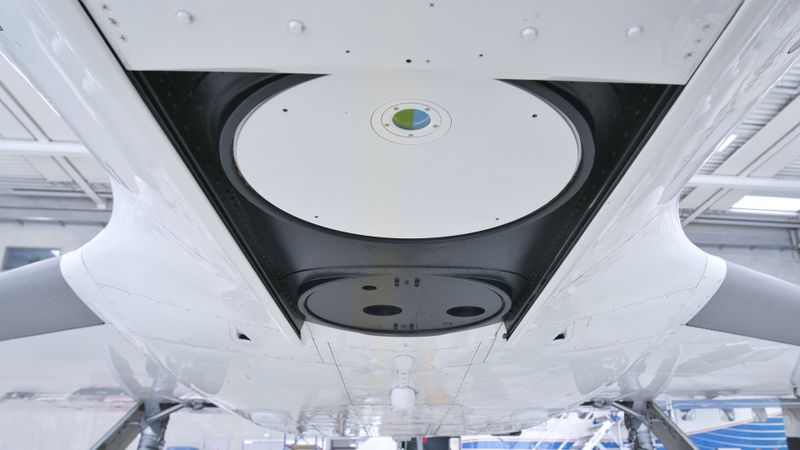
New DLR Laser Sensor Undergoes Testing: Laser Doppler Anemometer Measures the Speed and Direction of Airflow Around the Aircraft.
(Source: DLR (CC BY-NC-ND 3.0))
The German Aerospace Center (DLR) has developed a highly precise laser sensor that reliably measures airspeed and flow angles without contact. This data is essential for safely controlling an aircraft. A laser Doppler anemometer measures the airflow around the aircraft using laser beams scattered by dust particles and aerosols. Unlike conventional airflow probes, the laser sensor cannot unknowingly deliver incorrect readings if it becomes iced up or contaminated.
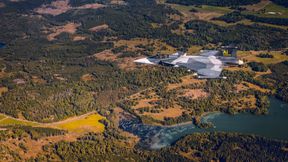
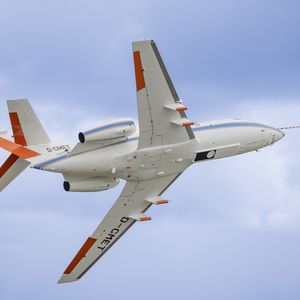
The DLR project team has successfully tested the sensor during several test flights over southern and eastern Germany. In the future, the optical technology could complement or even replace conventional measurement probes.
Laser instead of pitot tubes
For an aircraft to fly safely and stably, the airflow around its wings must consistently generate lift. Pitot tubes mounted on the outside of the aircraft fuselage continuously measure the static and dynamic pressure of the airflow, while small movable vanes measure the direction of the airflow. If these sensors become iced up or contaminated during flight, the flight instruments may display incorrect readings. They also require extensive calibration.
A laser sensor developed by the DLR Institute of Technical Physics addresses these problems: it measures airflow parameters using purely optical means and has no moving parts. The sensor is based on a technique known as laser Doppler anemometry. This laser-based measurement technology is so precise that it does not require calibration. Dirt or ice on the sensor only affects the strength of the measurement signal—not the readings themselves. The sensor detects this immediately and issues a warning.
Gallery
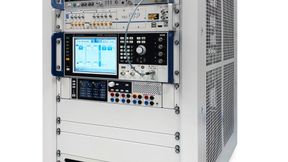
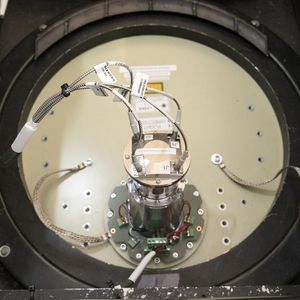
The DLR sensor is so compact that it fits into a box measuring just two shoeboxes in size. The use of fibre lasers enables a robust design suitable for flight applications. Thanks to optimised data analysis, the sensor achieves sufficient accuracy and measurement speed for integration into flight instruments. Optical flight sensors could therefore make an important contribution to the safety and reliability of modern aviation in the future.
Airflow changes the wavelength of scattered laser light
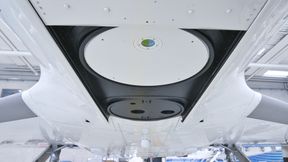
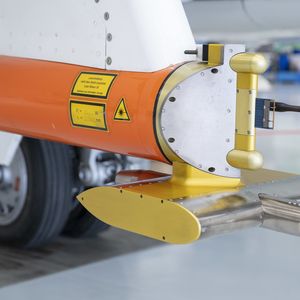
The laser sensor emits four infrared laser beams through a small window in the aircraft fuselage. The beams are focused approximately half a metre from the aircraft. When dust particles pass through the focal points, they scatter the laser light, and some of it returns to the sensor. "Due to the so-called Doppler effect, the wavelength of the scattered light shifts slightly compared with the laser wavelength. The difference between these two wavelengths can be used to calculate the flow velocity," explains Dr Oliver Kliebisch from the DLR Institute of Technical Physics. "This is comparable to the siren of a passing fire engine. When the vehicle approaches us, the siren sounds higher; when it moves away, it sounds lower."
Since the beams point in different directions, the sensor can also determine the direction of the airflow. The flight instruments use this information to calculate the aircraft's angle of attack and sideslip angle. These values indicate the aircraft's orientation relative to the incoming airflow. Both are crucial for lift and flight stability.
The sensor operates in a way that is safe for the eyes. The laser remains switched off on the ground, while its intensity during flight is adjusted to ensure that nobody is exposed to danger.
Measuring outside the boundary layer
The laser sensor offers another advantage: it measures airflow outside the so-called boundary layer. This is an air layer only a few centimetres thick surrounding the aircraft, in which the flow velocity is lower than in the surrounding air. Depending on the flight manoeuvre, the thickness of the boundary layer can also change.
Date: 08.12.2025
Naturally, we always handle your personal data responsibly. Any personal data we receive from you is processed in accordance with applicable data protection legislation. For detailed information please see our privacy policy.
Consent to the use of data for promotional purposes
I hereby consent to Vogel Communications Group GmbH & Co. KG, Max-Planck-Str. 7-9, 97082 Würzburg including any affiliated companies according to §§ 15 et seq. AktG (hereafter: Vogel Communications Group) using my e-mail address to send editorial newsletters. A list of all affiliated companies can be found here
Newsletter content may include all products and services of any companies mentioned above, including for example specialist journals and books, events and fairs as well as event-related products and services, print and digital media offers and services such as additional (editorial) newsletters, raffles, lead campaigns, market research both online and offline, specialist webportals and e-learning offers. In case my personal telephone number has also been collected, it may be used for offers of aforementioned products, for services of the companies mentioned above, and market research purposes.
Additionally, my consent also includes the processing of my email address and telephone number for data matching for marketing purposes with select advertising partners such as LinkedIn, Google, and Meta. For this, Vogel Communications Group may transmit said data in hashed form to the advertising partners who then use said data to determine whether I am also a member of the mentioned advertising partner portals. Vogel Communications Group uses this feature for the purposes of re-targeting (up-selling, cross-selling, and customer loyalty), generating so-called look-alike audiences for acquisition of new customers, and as basis for exclusion for on-going advertising campaigns. Further information can be found in section “data matching for marketing purposes”.
In case I access protected data on Internet portals of Vogel Communications Group including any affiliated companies according to §§ 15 et seq. AktG, I need to provide further data in order to register for the access to such content. In return for this free access to editorial content, my data may be used in accordance with this consent for the purposes stated here. This does not apply to data matching for marketing purposes.
Right of revocation
I understand that I can revoke my consent at will. My revocation does not change the lawfulness of data processing that was conducted based on my consent leading up to my revocation. One option to declare my revocation is to use the contact form found at https://contact.vogel.de. In case I no longer wish to receive certain newsletters, I have subscribed to, I can also click on the unsubscribe link included at the end of a newsletter. Further information regarding my right of revocation and the implementation of it as well as the consequences of my revocation can be found in the data protection declaration, section editorial newsletter.
The focal points of the laser beams are located in an airflow region that is barely affected by the aircraft fuselage. The measurements therefore correspond almost exactly to the actual airflow velocity. Unlike conventional probes mounted on the outside of the aircraft fuselage, the laser sensor is consequently less dependent on its installation position.
No particles, no measurement signal
For the laser sensor to work, there must be sufficient aerosols in the air—without them, it cannot generate a measurement signal. Even at altitudes above 10,000 metres (approx. 32,808 feet), there are still enough particles. The more particles scatter the laser light, the more accurate the measurements become through statistical analysis. The DLR laser sensor measures velocity with at least the accuracy required by certification regulations—and, depending on the number of particles, can even achieve an accuracy of better than one metre per second. The detector is designed to register only particles passing through the focal points of the laser beams. Sunlight, searchlights, navigation lights and light at other wavelengths do not interfere with the measurements.
To determine how the properties of aerosols affect the measurement signal, a team from the DLR Institute of Atmospheric Physics simultaneously measured particle distributions during the test flights. The DLR researchers determined particle concentrations and sizes under different atmospheric conditions and at various flight altitudes. "Only in this way was it possible to establish a direct relationship between the properties of the particles and the sensor's operating parameters," explains team member Peter Mahnke.
Particle size and composition are crucial. Larger particles generally scatter more light than smaller ones and produce a stronger measurement signal. "This enabled us to optimally match the laser power and detector sensitivity. This was at the limits of what is physically possible," emphasises Oliver Kliebisch.
One particularly challenging aspect was calculating the airflow parameters from the measurement data in real time. Conventional computers are too slow for this task. The solution involved field-programmable logic chips, which can accelerate specific computational operations.
Flight tests successfully completed
The multi-hour test flights departing from the DLR site in Oberpfaffenhofen (Germany) covered routes over Bavaria, Baden-Württemberg and Saxony. The sensor passed all tests without any problems over more than 20 flight hours. Rain, cold, air pressure fluctuations and strong vibrations had no adverse effect on the measurements or the hardware. "We have demonstrated that the technology works reliably and can also be used under challenging weather conditions," says Oliver Kliebisch.